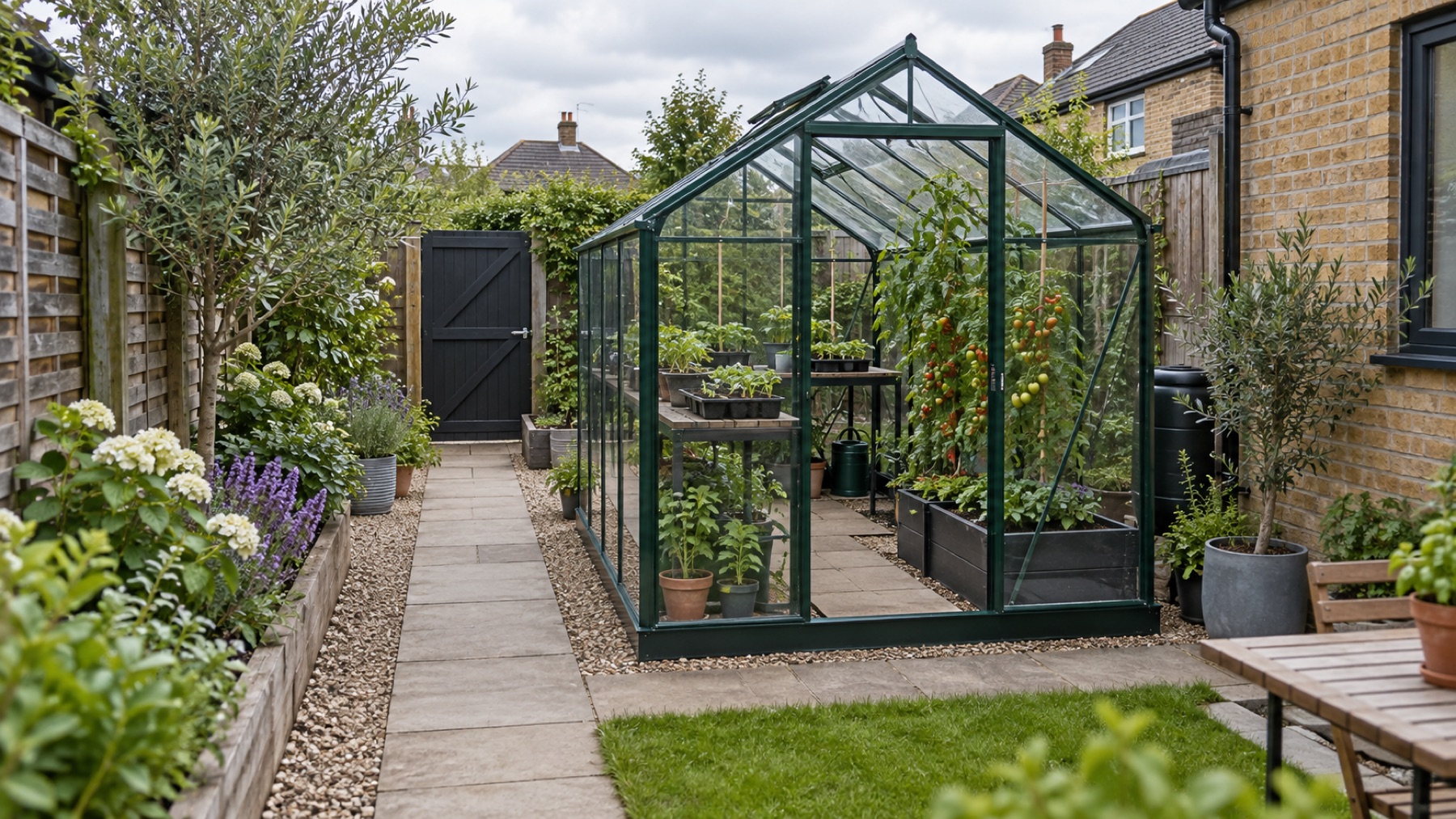
The right greenhouse is the one that fits both the plot and the work you want to do inside it. A quoted outside size is only the starting point. You also need a usable path, room for staging or grow bags, a door you can approach easily, ventilation that suits the volume, and enough clearance to clean and repair the structure.
Begin with three measurements
Measure the available base, the route from the street or drive to the site, and the space that remains around the finished structure. Then sketch the inside: path width, staging depth and the height of likely crops. That simple plan usually reveals whether a 6 × 4 is genuinely useful, whether a longer 6 × 8 earns its extra footprint, or whether a lean-to makes better use of a wall.
Compare materials by consequence
Aluminium is low-maintenance and uses relatively slim frame sections. Timber has a different visual weight and upkeep cycle. Our wooden versus aluminium comparison turns those differences into a practical ownership decision.
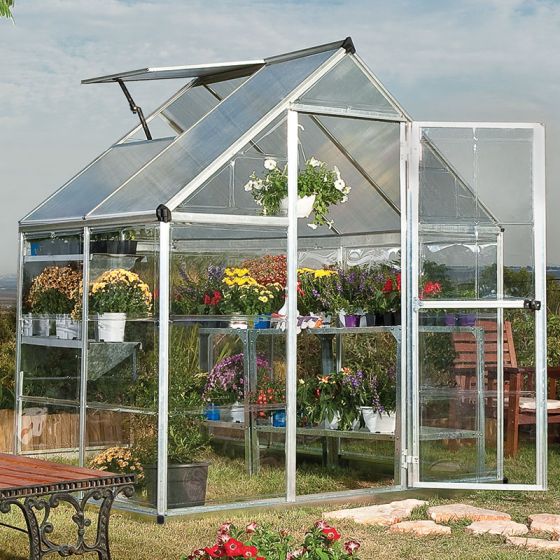
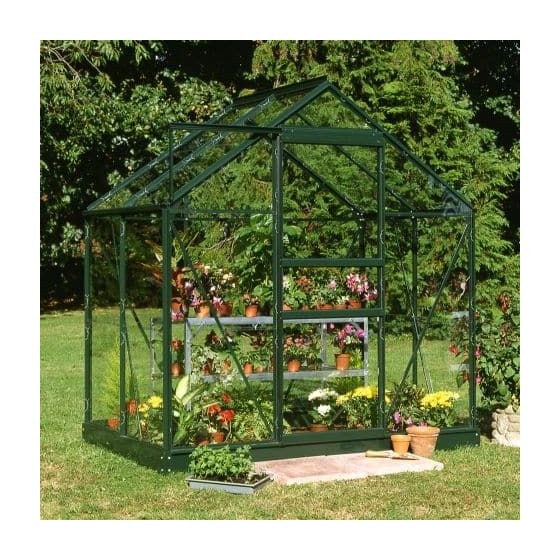
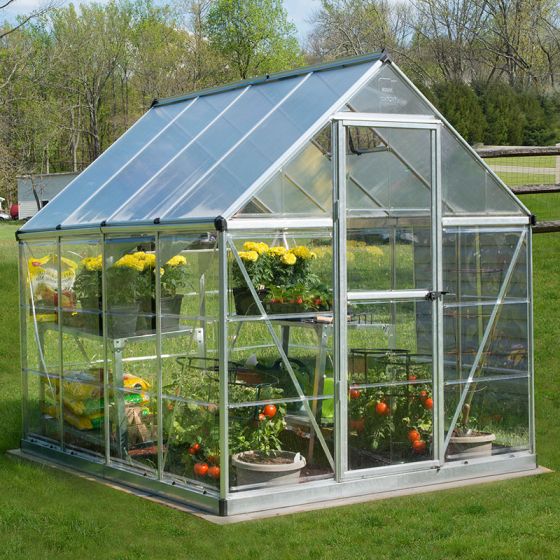
Clear glass gives an unobstructed view, while twin-wall polycarbonate is lighter and diffuses light, but can be less visually transparent. Use the glass versus polycarbonate guide before narrowing the shortlist. Toughened safety glass and the manufacturer's fixing system deserve particular attention where children, pets or exposed positions are involved.
The comparison should always end with the exact model. “Polycarbonate” can mean different panel constructions and thicknesses; included bases, vents and doors also vary. Check the current specification and assembly manual before preparing foundations.
Follow the decision in the right order
If this is your first purchase, begin with how to choose a greenhouse, then use the first-greenhouse checklist to turn the decision into an order and installation plan. If you already know the space you have, the UK greenhouse comparison is a faster route to suitable formats.
There are three different decisions hidden inside a shortlist. Format determines whether you walk inside or reach in from outside. Size determines how crops, staging and a usable path can coexist. Frame and glazing determine upkeep, appearance, handling and the parts you may need later. Resolve them in that order rather than letting one attractive photograph decide the whole project.
For a shallow patio, visit small-space growing. For a wall-side plot, compare the lean-to buying guide with the wall-greenhouse guide: a cabinet with its own back is not the same installation as a structure attached to the wall. For more floor room, the 8 × 10 guide helps you consider the larger layout before committing to groundworks.
Compare the whole project, not only the kit
Set aside separate lines for the structure, foundation, installation and growing equipment. Our greenhouse cost guide explains that breakdown without relying on a price that may change next week. Use what is included with a greenhouse to compare two quotations on the same basis.
Second-hand buying is a different calculation. A low asking price can be outweighed by missing glazing bars, transport, dismantling and unavailable replacement panes. The used-greenhouse checklist is the useful starting point before agreeing to collect one.
Check the shortlist against independent guidance
The RHS guide to choosing greenhouses is a useful independent overview of growing needs, frames and glazing. For installation details, obtain the exact model's instructions; the Halls assembly-instruction library illustrates why dimensions and base requirements must be checked by model. Once the shortlist survives those checks, move to bases, positioning and installation before ordering.