
Frame buying guide
Aluminium greenhouse buying guide
Compare aluminium greenhouse frames, finishes, glazing, doors, vents and bases, with practical UK buying advice and current Shedstore examples.
Our recommendations
Aluminium greenhouse formats to compare
These examples show how the same frame material can support compact glass, lightweight polycarbonate and longer 6 × 8 layouts.
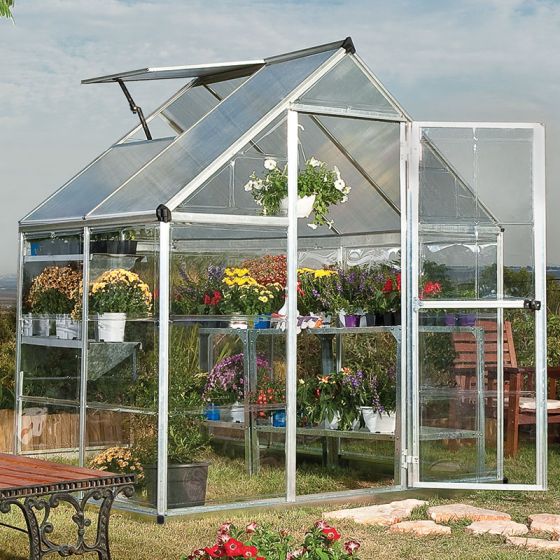
Palram Canopia Hybrid 6 × 4 greenhouse
Best for: a compact first walk-in greenhouse
A compact walk-in with a 1.85 × 1.25m base, diffusing twin-wall roof panels and clear polycarbonate sides. It is the most balanced fit here for a small garden that can still keep a central path.
What stands out
- Compact walk-in footprint
- Clear sides and diffusing roof
- Steel perimeter base included
Keep in mind
- Single 565mm door
- One roof vent means summer airflow needs planning
- 1.85 × 1.25m base
- aluminium
- polycarbonate
- one roof vent
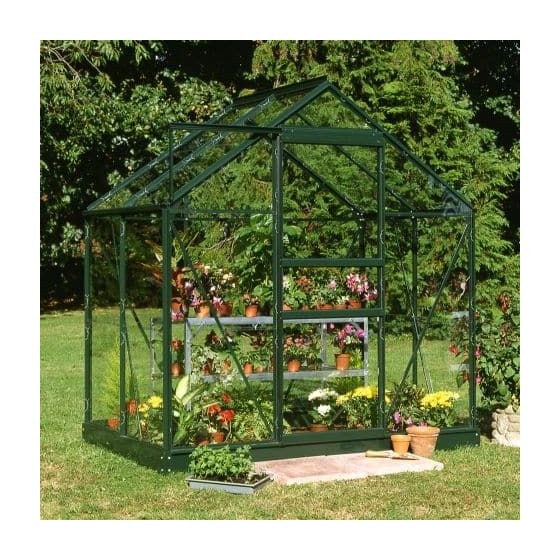
Halls Green Frame 6 × 4 greenhouse
Best for: toughened glass in a compact plot
A traditional-looking 6 × 4 with a green aluminium frame and large panes of toughened glass. It is the clearest fit if you want glass in a small footprint and accept a separate base.
What stands out
- Large-paned toughened glass
- Low-maintenance coated aluminium
- Roof vent and gutters included
Keep in mind
- Matching base costs extra
- Heavy panes need careful assembly
- 1.93 × 1.33m base
- green aluminium
- toughened glass
- optional base
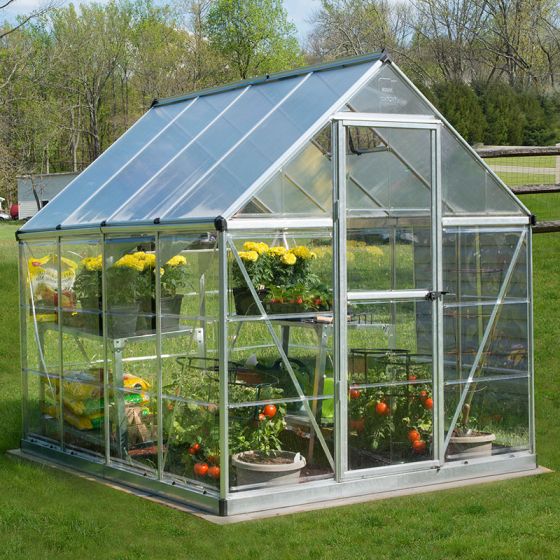
Palram Canopia Hybrid 6 × 8 greenhouse
Best for: more useful growing length
The same 1.85m width extended to 2.46m at the base. The extra length makes a more workable layout for staging plus floor crops if the site can spare the footprint and access around it.
What stands out
- Length for staging and tall crops
- Clear walls and diffusing roof
- Perimeter base included
Keep in mind
- Needs much more prepared base
- Door remains 565mm wide
- 1.85 × 2.46m base
- aluminium
- polycarbonate
- integrated gutters

Halls Green Frame 6 × 8 greenhouse
Best for: a traditional 6 × 8 glass greenhouse
A 1.93 × 2.57m aluminium greenhouse with large-paned toughened glass, a 600mm sliding door, roof vent and integral gutters. It brings a traditional glass finish to the more useful 6 × 8 format.
What stands out
- Large panes of toughened glass
- 600mm sliding door
- Roof vent and integral gutters
Keep in mind
- Matching base costs extra
- Large glass panes require careful handling
- 1.93 × 2.57m base
- green aluminium
- toughened glass
- optional base
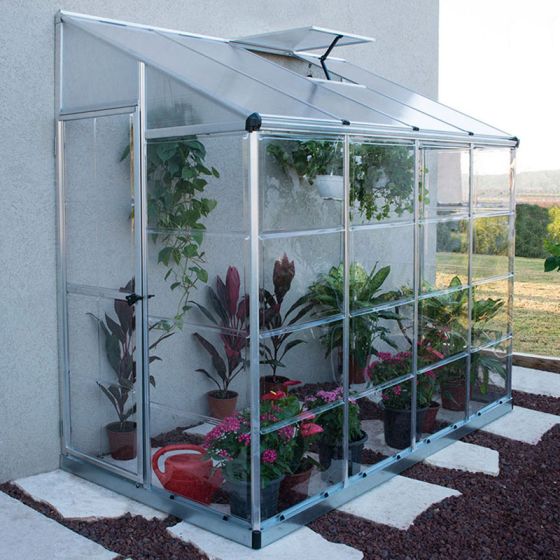
Palram Hybrid Lean-To 8 × 4 greenhouse
Best for: a long, narrow wall-side plot
A long, shallow walk-in lean-to with a side door, diffusing twin-wall roof and clear side panels. It turns roughly 1.25m of projection into a useful 2.44m run against a suitable wall.
What stands out
- Makes use of wall length
- Side door suits the narrow layout
- Perimeter base and wall kit included
Keep in mind
- Needs a suitable wall
- 1.21m width limits two-sided staging
- 2.44 × 1.25m overall
- lean-to
- polycarbonate
- wall-mount kit
| Model | Published footprint | Glazing | Base arrangement | Access and vents |
|---|---|---|---|---|
| Palram Hybrid 6 × 4 | 1.85 × 1.25m base | Polycarbonate | Steel perimeter base included | 565mm door; one roof vent |
| Halls Green Frame 6 × 4 | 1.93 × 1.33m base | Toughened glass | Matching base optional | 600mm sliding door; one roof vent |
| Palram Hybrid 6 × 8 | 1.85 × 2.46m base | Polycarbonate | Steel perimeter base included | 565mm door; one roof vent |
| Halls Green Frame 6 × 8 | 1.93 × 2.57m base | Toughened glass | Matching base optional | 600mm sliding door; one roof vent |
| Palram Hybrid Lean-To 8 × 4 | 2.44 × 1.25m overall | Polycarbonate | Perimeter base included | Side door; roof vent |
What makes an aluminium greenhouse a good buy?
Aluminium has become the standard frame material for many domestic greenhouses because it combines slim sections with low routine upkeep. Narrow glazing bars cast less shade than bulky framing, and the frame does not need the regular protective coating expected of many timber structures. That makes aluminium especially useful where the greenhouse is bought primarily as a working growing space rather than as a decorative garden building.
It is not maintenance-free in the literal sense. Door tracks collect grit, roof vents need free-moving hinges, gutters block, bolts loosen and anchors can be stressed by wind. The useful distinction is that the frame itself normally needs cleaning and inspection rather than sanding and retreating.
Natural silver or powder-coated colour?
Mill-finish silver is the simplest option and often the least expensive within a range. A green or black coated frame can blend more comfortably with planting, fences and traditional houses. A sound factory finish also gives another barrier between the aluminium and the weather, but it should not be treated as a substitute for good assembly or drainage.
Look closely at what has actually been coated. Product photographs may show a coloured frame while the base, bolts or interior braces use a different finish. If appearance matters, inspect the full specification and installation manual rather than relying on the hero image.
Frame shape, bracing and wind exposure
Two greenhouses with the same nominal size can use different profiles, ridge bars and diagonal bracing. More metal is not automatically better, but the structure must transfer wind loads through the frame into a properly anchored base. A greenhouse assembled square on a rigid foundation lets its doors, vents and panels work as designed; a twisted frame creates gaps and concentrated loads.
For an exposed plot, prioritise:
- a positive panel-retention system rather than loose panels;
- clear anchoring instructions for the chosen foundation;
- closable doors and vents that cannot flap in wind;
- replacement glazing and clips that remain obtainable;
- sensible shelter that does not put the greenhouse under branches.
Do not use a hedge or solid fence as a reason to neglect anchoring. Wind can accelerate around corners and over barriers, creating turbulence on the sheltered side.
Match the frame to the glazing
Aluminium frames are sold with several glazing systems. Large-pane toughened glass gives high clarity and a traditional look, but the panes are heavy and demand careful handling. Polycarbonate panels are lighter and resist shattering; twin-wall roof panels also diffuse strong light. Some hybrid models combine a diffusing roof with clearer sides.
The panel-retention method matters as much as the material. Check how roof panels are secured, how the glazing is sealed, whether clips are exposed to accidental dislodging and how replacements are specified. Read our glass versus polycarbonate comparison before choosing a glazing variant.
Doors, vents and usable height
A narrow sliding door saves swing space, but its clear width can still limit wheelbarrows, large pots and mobility access. Check the stated door width and threshold. Sliding doors also depend on a clean, level track; hinged doors need room to open and a positive catch to stop them moving in wind.
Roof vents release rising hot air. The number stated on the product page is useful, but vent size and position also matter. A long greenhouse with one small roof vent may need an extra vent, low-level louvre or disciplined use of the door in summer. Confirm that any automatic opener is compatible with the exact vent.
Eaves height determines how much of the side space can hold mature plants and comfortable staging. A generous ridge height does not compensate for very low eaves along both sides.
Base and assembly planning
An included metal base is a perimeter plinth, not a finished foundation. It must still sit on a level, stable surface and be anchored by the method in the manual. Optional bases should be included in the total comparison cost because they can simplify squaring and anchoring the frame.
Before ordering, download the technical drawing and mark the precise footprint on the site. Add room for external cleaning, gutter connections, door access and installation. Package lengths and the route from kerb to garden also matter: aluminium frame members can be long even when the completed greenhouse is compact.
Who should choose aluminium?
Aluminium is well suited to gardeners who want a conventional walk-in greenhouse with low frame upkeep, a broad choice of glazing and readily available accessories. It also suits small gardens because slim frame members keep the structure visually light.
Choose timber instead when its warmer appearance, substantial joinery or ability to accept shelves and fixings is central to the brief—and when you are willing to follow the maker's care schedule. Our wooden versus aluminium greenhouse guide compares the two materials directly.
Final buying checks
Confirm the exact footprint, overall height, door opening, vent arrangement, glazing thickness, included base parts, anchor specification, gutter outlets and delivery exclusions. Then check the warranty terms for the frame and glazing separately. The strongest purchase is not the longest list of features; it is the model whose frame, panels and base make sense for the real site.
The RHS frame-selection guidance is useful background, while the exact model determines the final choice. Compare the wooden-frame guide and wooden versus aluminium comparison before deciding that lower upkeep outweighs the appearance you prefer.
Common questions
Frequently asked questions
Are aluminium greenhouses strong enough for UK weather?
A correctly assembled and securely anchored aluminium greenhouse can be a durable choice, but strength varies by frame profile, bracing, base and panel-retention system. Exposed gardens need particular attention to the manufacturer's anchoring instructions and to keeping doors and vents closed during high winds.
Does an aluminium greenhouse rust?
Aluminium itself does not rust like untreated steel, although fixings, base components and coatings still need inspection. Keep gutters and drainage clear, repair damaged finishes as directed and avoid incompatible chemicals or fixings that could encourage corrosion.
Is a green-coated aluminium frame better than a silver one?
The coating mainly changes appearance and can help the frame sit more quietly in a planted garden. It does not make an unsuitable size, glazing system or base arrangement better, so compare those practical details first.
Should I choose glass or polycarbonate in an aluminium frame?
Choose toughened glass for clear views and a traditional finish; choose polycarbonate for lighter, shatter-resistant panels and diffused light. Site exposure, assembly access, maintenance and replacement-panel availability should decide the choice.
Do aluminium greenhouses come with a base?
Some include a metal perimeter base, some offer a matching base separately and some rely on a separately prepared foundation. An included base still needs a flat support and secure anchoring, so read the exact model instructions before laying paving or concrete.