
Polycarbonate care
How to clean a polycarbonate greenhouse
Clean twin-wall or solid polycarbonate greenhouse panels without scratching, clouding or flooding the channels, using mild soap and soft tools.
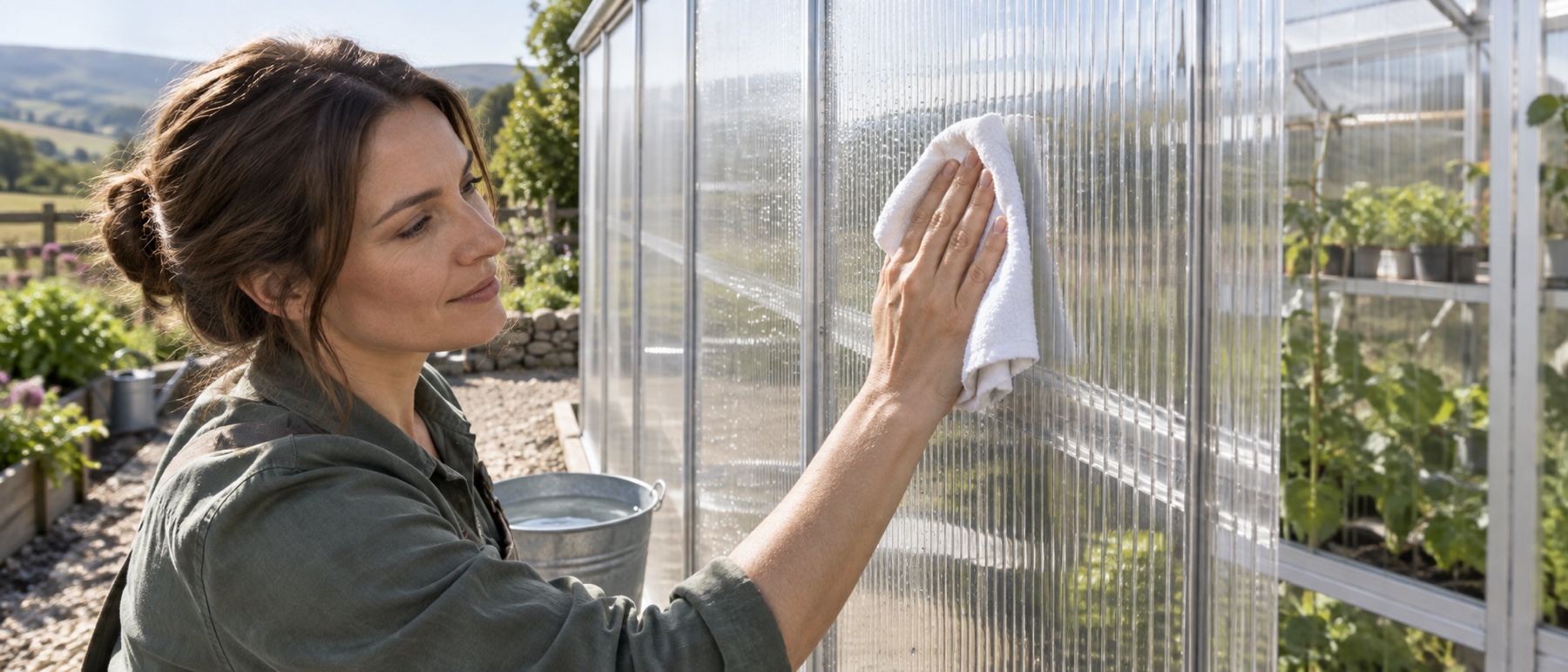
Work on a cool, calm day so solution does not dry rapidly on the surface.
Keep water out of twin-wall channels and preserve edge tapes, caps and UV orientation.
Clean only safely reachable areas; use a long-handled soft tool from the ground.
Test any permitted product on a small inconspicuous area before wider use.
Identify the panel before cleaning
Greenhouse “plastic” may be solid polycarbonate, twin-wall polycarbonate or acrylic. Twin-wall sheet has internal flutes and sealed or vented edges; solid sheet resembles glass. Find the greenhouse manual, sheet markings or supplier record before choosing a cleaner.
The outward face of many polycarbonate sheets carries UV protection. Cleaning should not remove labels needed to preserve orientation during future repairs. Never use an abrasive method to chase a mark that may be inside the panel rather than on its surface.
Choose suitable conditions
Clean on a mild, overcast or shaded day when panels are cool. Hot sun can dry detergent before it is rinsed and encourages streaking. Wind makes long-handled tools difficult to control and carries grit back onto the surface.
Move plants and portable electrical equipment away from the working area. Isolate permanent electrical supplies as appropriate before wet work. Put towels or a controlled container below indoor cleaning so water does not create a slippery path.
What to use
Palram's published polycarbonate care guidance permits a soft sponge or 100% cotton cloth, lukewarm water and mild dishwashing detergent for the products it covers. Your greenhouse instructions remain the deciding source.
Prepare two clean buckets: one for mild wash solution and one for rinsing the cloth. Use a low-pressure hose or watering can for an initial and final rinse where drainage is safe. A clean long-handled soft brush can reach upper panels from the ground.
Keep several soft cotton cloths available so a gritty or heavily soiled one can be set aside immediately. Use a fresh cloth for the final wipe; washing the same dirty rag in one bucket and repeatedly returning it to the panel can drag grit across the surface.
What to avoid
Do not use abrasive pads, wire brushes, razor blades, metal scrapers or gritty recycled cloths. Avoid solvents, petrol, acetone, strong alkalis and unapproved glass cleaners. Do not mix chemicals or assume a product is safe because it is described as natural.
Avoid steam cleaners and forceful jets. Heat, concentrated pressure and unsupported body force can damage the surface, move a panel or break its retention system.
Step 1: remove loose debris
Lift leaves from accessible gutters and brush loose cobwebs and dust downwards. Rinse the panel lightly so sand and grit float away rather than being dragged over the surface. If grit remains, repeat the rinse instead of pressing harder.
Inspect caps and tapes before washing. A loose upper closure can admit water and debris into the flutes. Do not peel intact tape merely to make cleaning easier.
Step 2: wash in small sections
Dip a soft cloth or sponge in the mild solution and wipe with light, overlapping strokes. Work from top to bottom on safely reachable bays. Rinse the cloth frequently; a dirty cloth becomes an abrasive.
Support only where the manufacturer permits and never lean body weight on a panel. Polycarbonate can flex without visibly cracking, but its edges and fixings may be overstressed.
Step 3: clean frame interfaces gently
Use the corner of a soft cloth or a soft brush around glazing bars. Do not drive a tool into gaskets or twin-wall edges. Dirt trapped in a drainage channel should be lifted out carefully without puncturing tape.
Check that panel clips, cappings and gaskets remain seated. A panel that has slipped out of square needs a retention repair, not extra pressure during cleaning.
Step 4: rinse and dry
Rinse thoroughly with clean, low-pressure water so detergent does not dry on the sheet. Allow most water to drain, then blot or wipe with a clean soft cotton cloth if the manufacturer recommends drying. Do not use a squeegee with a damaged or gritty blade.
Open the greenhouse for ventilation in calm weather and let surfaces dry before returning electrical equipment or dense staging.
Cleaning inside twin-wall channels
Do not pour detergent into the flutes. Condensation may drain naturally through a correctly detailed lower vent tape, but algae, insects or heavy debris inside a sheet can indicate failed closure or prolonged water ingress.
Photograph the edge detail and consult the greenhouse or panel manufacturer. The solution may involve removing the sheet, replacing tapes and caps or installing a new correctly oriented panel. Improvised sealing at both ends can trap moisture rather than cure it.
Removing labels, paint or sealant marks
Ask the panel manufacturer which adhesive remover is compatible with the exact sheet. Many common solvents attack polycarbonate. Start with warm water and patient soaking where appropriate; never scrape a residue with a metal blade.
If shading compound or paint has been used, follow both the shading-product removal directions and the panel-maker's compatibility advice. Prevention is better: use a shade product explicitly suitable for polycarbonate.
Scratches and permanent clouding
Cleaning cannot restore deeply scratched or UV-degraded material. Polishing products can alter light transmission and surface protection, so do not apply them without written compatibility confirmation. A cracked, badly yellowed or structurally weakened sheet should be assessed for replacement.
Clouding between twin walls is different from surface haze. Check edge closures, drainage direction and sheet orientation. Correct the water-entry route before fitting a replacement or the new sheet may develop the same problem.
Keep it cleaner for longer
Clear gutters and overhanging leaves, maintain ventilation and prevent sprinklers spraying mineral-rich water onto panels. Tie plants away from glazing so foliage does not hold moisture against the surface. Wipe early algae growth gently instead of waiting for a thick abrasive deposit.
Inspect upper tapes, lower vent tape and caps during the annual clean. Record the sheet thickness and channel structure while markings remain visible for future replacement.
Sources and related guides
The Palram polycarbonate care guide specifies soft cotton or sponge, lukewarm water and mild dishwashing detergent for the listed sheets. The RHS greenhouse-cleaning guide covers safe access and long-handled tools. See our replacement-glazing guide if cleaning reveals damaged panels.
If a sheet is split, bowed or repeatedly leaving its channel, stop treating the problem as dirt. Read why greenhouse panels blow out and the polycarbonate buying guide for the retention and sheet-identification checks before replacing it.
Helpful products
Gentle cleaning tools, subject to panel guidance
Rinse grit away first. Soft cotton cloths suit the care guidance for some sheets; use the soft brush only if your panel maker permits brushing, and never scrub a dry or gritty surface.

VALENGO 100% cotton cleaning cloths, seven pack
Best for: soft wiping and drying
Seven washable, low-lint jersey-cotton cloths listed at about 43 × 43cm each. A clean cloth is useful for wiping pots, staging and delicate panels where the manufacturer specifies soft cotton.
What stands out
- Suitable soft material for permitted delicate-surface cleaning
- Reusable and washable
- Separate cloths for clean and dirty jobs
Keep in mind
- A gritty cloth can still scratch a panel
- Not a substitute for rinsing loose dirt first
- seven cloths
- 100% cotton listed
- about 43 × 43cm each
- machine washable

Vikan 41942 soft hand washing brush
Best for: gentle hand washing of accessible surfaces
A 270mm short-handled brush with soft split bristles for wet cleaning accessible, delicate surfaces. Vikan names glass and Perspex; always check the greenhouse surface maker's instructions before use.
What stands out
- Soft fibres for delicate permitted surfaces
- Easy to rinse and dry
- Short handle gives close control
Keep in mind
- Not a long-reach roof tool
- Panel compatibility still needs checking
- 270mm length
- soft split bristles
- short handle
- washable design
Common questions
Frequently asked questions
Can I use washing-up liquid on polycarbonate greenhouse panels?
A small amount of mild dishwashing detergent in lukewarm water is permitted by some major polycarbonate manufacturers, including Palram. Check the specific sheet or greenhouse instructions first, then rinse thoroughly.
Can I use vinegar to clean polycarbonate?
Do not assume a household acid or cleaner is compatible. Polycarbonate manufacturers publish restricted chemical lists and care instructions. Use their approved mild method rather than experimenting with vinegar, solvents or strong cleaners.
Can I pressure-wash a polycarbonate greenhouse?
High pressure can force water into channels, disturb tapes and seals or flex panels. Unless the greenhouse manufacturer explicitly permits a controlled method, use low-pressure rinsing and soft hand tools.
How do I remove algae from twin-wall polycarbonate?
Gently wash accessible exterior surfaces with the approved mild method. If growth is inside the channels, investigate failed edge tape, caps or drainage rather than forcing cleaner inside; panel removal or replacement may be needed.
Why is my polycarbonate greenhouse cloudy?
Dirt may be removable, but clouding can also come from surface damage, ageing, condensation or debris inside twin-wall channels. Clean gently first, then inspect seals, UV orientation and sheet condition.