
Frame comparison
Wooden vs aluminium greenhouses
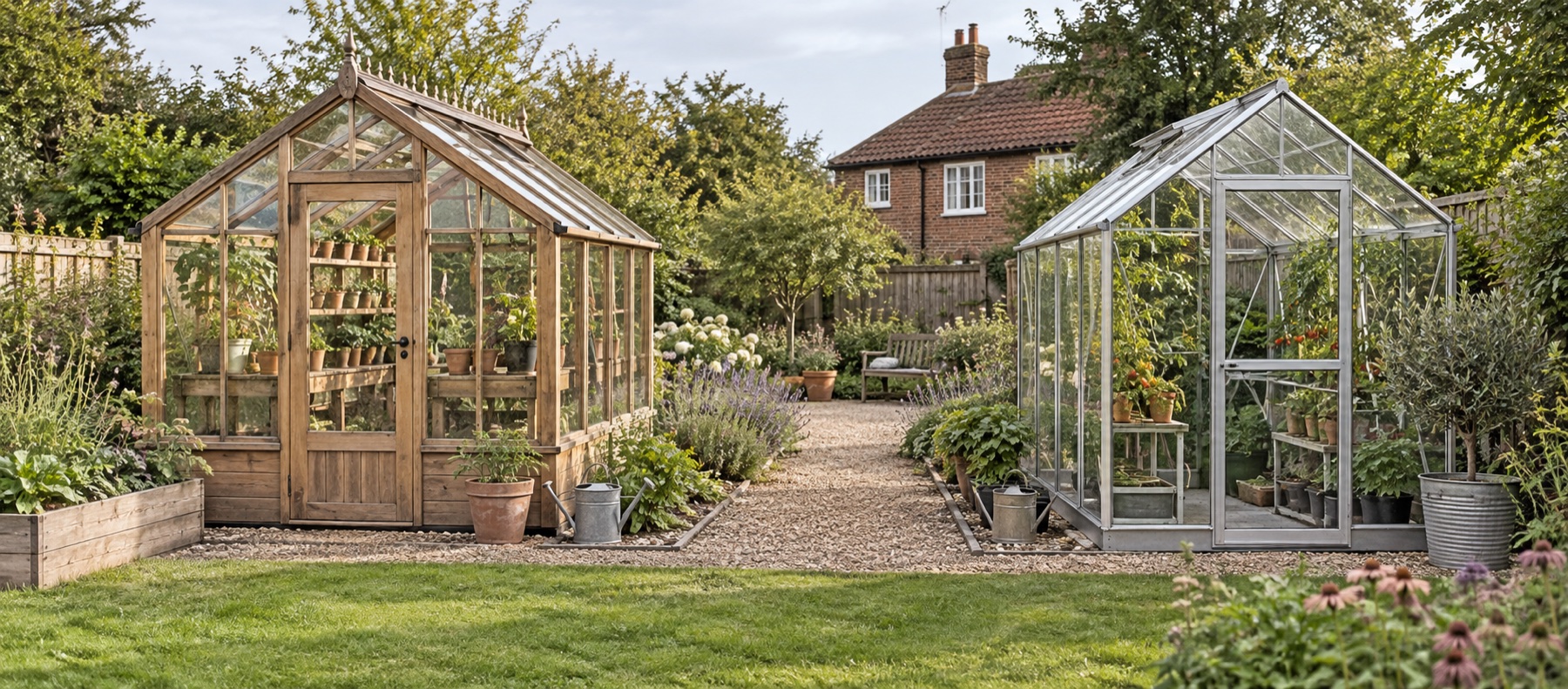
Compare wooden and aluminium greenhouses for maintenance, light, strength, installation, appearance and long-term ownership in a UK garden.
Our recommendations
Comparable frame choices
These examples show the range within each material, from compact structures to conventional walk-in greenhouses.

Coppice Ashdown 6 × 6 wooden greenhouse
Best for: a premium full-size timber greenhouse
A full-size oiled and pressure-treated timber greenhouse with a 1.905 × 1.93m footprint, 3mm toughened glass, a 720mm hinged door, two roof vents and two-shelf staging. Professional installation is included in the listed package.
What stands out
- Professional installation included
- 720mm glazed door
- Staging and two roof vents included
Keep in mind
- Premium price level
- Wood requires annual retreatment
- 1.905 × 1.93m footprint
- pressure-treated timber
- 3mm toughened glass
- two roof vents

Forest Victorian 3 × 4 walkaround greenhouse
Best for: compact timber growing with flexible access
A compact pressure-treated timber greenhouse with a 0.90 × 1.20m base, four configurable doors, removable staging and opening windows including one automatic vent. It gives access from several sides without needing a full internal aisle.
What stands out
- Access from several sides
- Removable staging and growbag space
- One automatic vent window included
Keep in mind
- Not a conventional walk-in
- Narrow individual door openings
- 0.90 × 1.20m base
- pressure-treated timber
- styrene glazing
- four configurable doors
Halls Green Frame 6 × 4 greenhouse
Best for: toughened glass in a compact plot
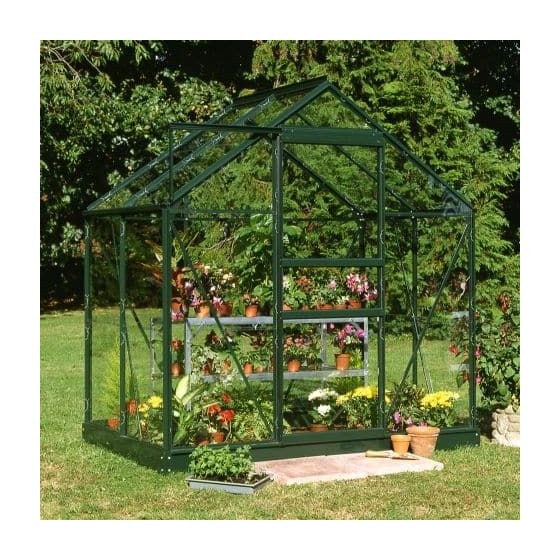
A traditional-looking 6 × 4 with a green aluminium frame and large panes of toughened glass. It is the clearest fit if you want glass in a small footprint and accept a separate base.
What stands out
- Large-paned toughened glass
- Low-maintenance coated aluminium
- Roof vent and gutters included
Keep in mind
- Matching base costs extra
- Heavy panes need careful assembly
- 1.93 × 1.33m base
- green aluminium
- toughened glass
- optional base
Palram Canopia Hybrid 6 × 4 greenhouse
Best for: a compact first walk-in greenhouse
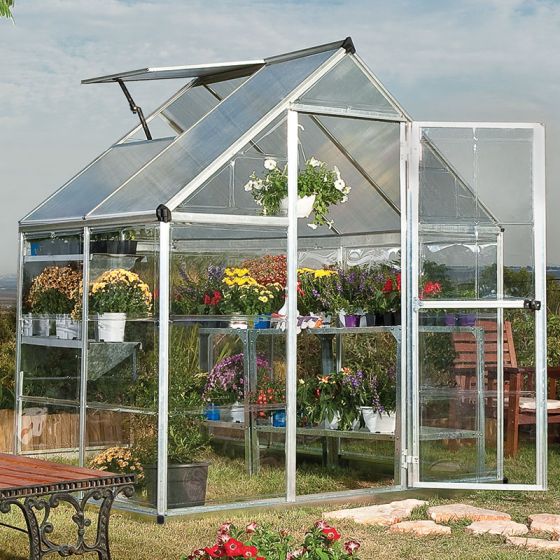
A compact walk-in with a 1.85 × 1.25m base, diffusing twin-wall roof panels and clear polycarbonate sides. It is the most balanced fit here for a small garden that can still keep a central path.
What stands out
- Compact walk-in footprint
- Clear sides and diffusing roof
- Steel perimeter base included
Keep in mind
- Single 565mm door
- One roof vent means summer airflow needs planning
- 1.85 × 1.25m base
- aluminium
- polycarbonate
- one roof vent
| Question | Wooden greenhouse | Aluminium greenhouse |
|---|---|---|
| Routine frame care | Varies by species and treatment; may require coating | Usually cleaning and inspection rather than painting |
| Glazing bars | Typically broader and more visually substantial | Typically slimmer with less frame shadow |
| Appearance | Warm, traditional and easy to integrate with planting | Light, crisp and available in silver or coated colours |
| Fixing accessories | Purpose-designed shelves and hooks can be easy to attach | Usually uses dedicated clips, channels and accessory bolts |
| Assembly | Heavier sections; movement and moisture must be managed | Many small parts; base must be square for panels and doors |
| Best fit | Buyers who value material character and accept its care plan | Buyers who prioritise low upkeep and a broad model choice |
The choice is about ownership, not just looks
Frame material affects how a greenhouse looks on day one, but the more useful comparison is how it behaves over years. Timber asks for closer attention to moisture and finishes. Aluminium asks for careful assembly, compatible fixings and reliable anchoring. Both need cleaning, moving-part checks and a level foundation.
Start by deciding whether the greenhouse is primarily a working structure, a prominent garden feature or both. Then compare specific models. A premium installed timber glasshouse and a lightweight aluminium polycarbonate kit do not represent every greenhouse made from those materials.
Maintenance
Aluminium normally needs the lighter care schedule. Wash away algae and dirt, clear channels and gutters, lubricate moving parts as instructed and inspect anchors and fasteners. Painted or powder-coated frames should be checked for damage, especially near the base.
Timber care depends on treatment. Some pressure-treated structures require no routine preservative during the guarantee period; others ask for annual retreatment. Lower rails, cut ends and door bottoms deserve attention because they experience splashback and prolonged damp. Never assume that a long anti-rot guarantee means site drainage is irrelevant.
If you enjoy maintaining timber garden buildings, the schedule may be a pleasure rather than a burden. If you already struggle to clean the glazing, aluminium is the more realistic choice.
Light and internal shadow
Slim aluminium glazing bars leave more of each wall and roof as glazing. That is valuable in winter and in compact houses where every shadow covers a larger share of the growing area. Timber bars are broader, though their shade moves across the day and does not make a well-sited greenhouse unusable.
Glazing has a larger effect than frame colour. Clear toughened glass, horticultural glass and twin-wall polycarbonate transmit and scatter light differently. Compare the full frame-and-glazing package rather than treating material decisions separately.
Strength and exposure
Wood feels substantial; aluminium feels light. Neither impression proves how the assembled greenhouse will handle wind. Strength comes from profile design, joints, bracing, panel retention, geometry and the connection to the foundation.
On an exposed site, a rigid base and anchors are essential. Keep the structure out of severe wind funnels and away from falling branches, while avoiding deep shade. Doors and vents should close positively. If the manufacturer limits suitable wind or snow exposure, take that seriously.
Installation and adjustment
Aluminium kits typically contain many small sections, clips and bolts. Assembly rewards methodical sorting and a perfectly square base. Do not fully tighten everything before the instructions call for it; the frame may need adjustment as glazing and doors are aligned.
Timber structures use larger, heavier components. Frames may be supplied in panels or installed professionally, but the base still has to meet the maker's tolerances. Timber can be worked and repaired with familiar tools, yet careless site cutting may expose untreated wood or invalidate a guarantee.
Delivery access can decide the material. Long aluminium packs may pass through a narrow route, while pre-assembled timber panels and large glass panes may not. Check package information before ordering.
Accessories and internal layout
Timber offers intuitive fixing points, provided the manufacturer permits them and the loaded accessory will not weaken the frame. Aluminium uses proprietary clips, channels and bolts, which preserve the frame but require compatible parts.
Do not let accessory convenience distract from basic working space. Door width, threshold, eaves height, vents and staging depth determine daily usefulness. A compact timber walkaround with doors on several sides can be more accessible than a nominally larger aluminium greenhouse with a narrow central opening.
Appearance and planning context
Timber often suits older buildings, conservation-minded settings and gardens where the greenhouse is visible from the house. Aluminium can recede visually, particularly with a dark green finish and planting around the base. Silver frames reflect more light and have a clean utilitarian appearance.
Appearance can matter to a planning authority in sensitive locations, but choosing timber does not automatically remove the need for permission. Check the rules for your nation, property and site using our UK greenhouse planning permission guide.
Cost over the life of the greenhouse
Compare more than the purchase price. Include the base, anchors, glazing option, vents, staging, delivery access, installation, replacement parts and maintenance coatings. A professionally installed wooden greenhouse may cost substantially more at the start but include staging and labour. An aluminium kit may be cheaper but require a base, extra vents and self-assembly time.
There is no honest universal payback calculation because exposure, maintenance and product quality vary. The sound choice is the frame you can install correctly and care for consistently.
Which should you buy?
Choose aluminium if low frame upkeep, slim glazing bars, broad availability and kit-format delivery are priorities. It is the dependable default for many ordinary gardens.
Choose wood if the material is important to the garden, you want substantial joinery or easy compatible fixing points, and the care schedule fits your habits. Treat it as a long-term garden building rather than a decorative impulse purchase.
Whichever you choose, verify the exact footprint and prepare the right greenhouse base. A modest frame on a square, anchored foundation will usually serve better than a premium structure forced onto an unsuitable site.
The RHS frame-selection guidance is useful background, but the exact model's treatment and warranty matter more than a material slogan. Our separate wooden and aluminium guides cover those buying checks.
Common questions
Frequently asked questions
Is a wooden greenhouse warmer than an aluminium greenhouse?
Timber conducts less heat than aluminium, but domestic greenhouse heat loss is dominated by the glazing, gaps, ventilation and exposed surface area. Glazing type, sealing and the use of the greenhouse matter more than frame material alone.
Which greenhouse frame lasts longer?
Either can last well when correctly made, installed and maintained. Aluminium avoids rot and routine coating, while repairable timber can remain serviceable for many years if water is kept out of vulnerable joints and the specified finish is maintained.
Which frame is better for a windy garden?
Wind performance depends on the complete system—frame profiles, bracing, glazing retention, base and anchors—not just wood versus aluminium. Choose a model with clear exposure guidance and anchor it to a suitable foundation.
Does a timber greenhouse block too much light?
Timber bars are generally broader and cast more shadow than slim aluminium sections, but good siting and clean glazing can still provide excellent growing light. The difference matters most during low-light months.
Is an aluminium greenhouse cheaper than a wooden one?
Entry-level aluminium greenhouses are commonly less expensive than substantial timber models, but prices overlap. Compare the complete installed package, including base, glazing, staging, delivery, installation and future maintenance materials.