
Year-round greenhouse care
Greenhouse maintenance checklist
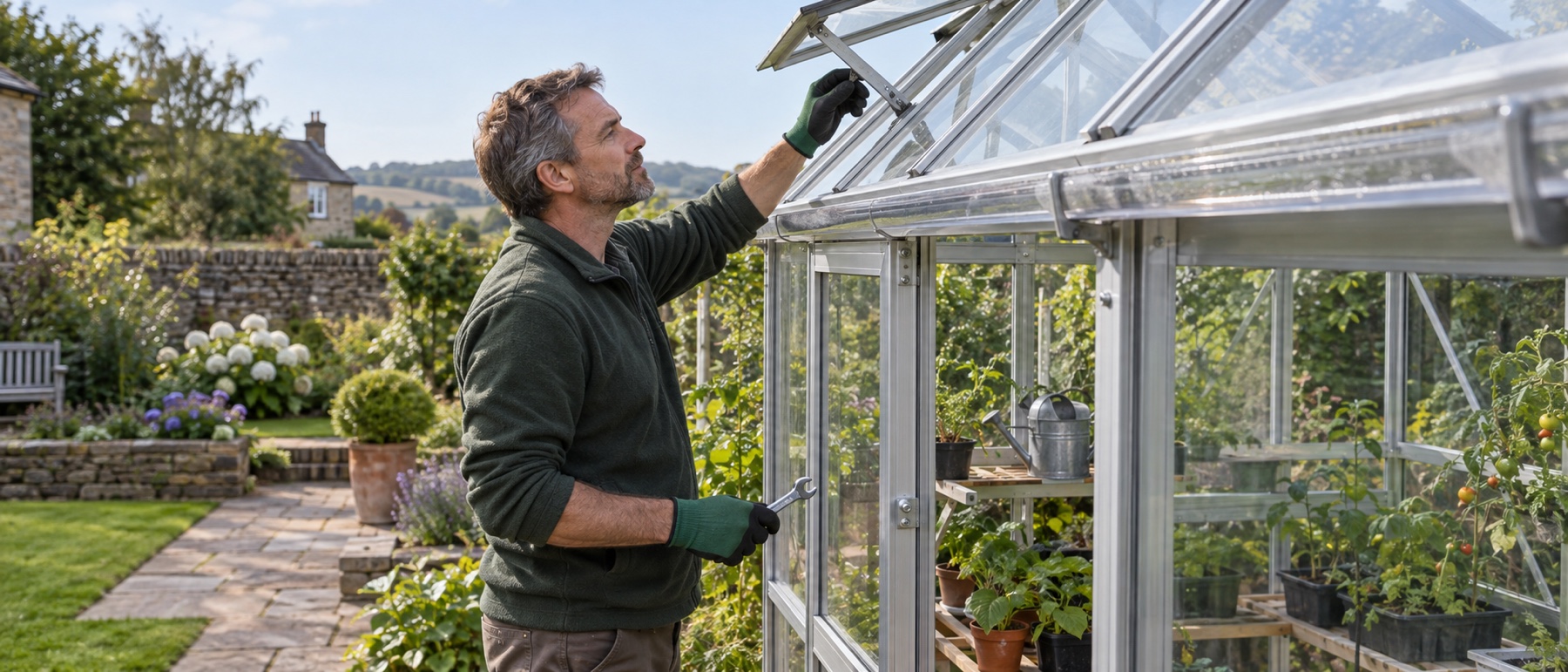
Use this seasonal greenhouse maintenance checklist to inspect glazing, frames, vents, gutters, doors, bases, water systems and electrics.
[object Object]
[object Object]
[object Object]
[object Object]
Keep a greenhouse record
Write down the manufacturer, model, nominal size, glazing type, panel thickness and base arrangement. Save the assembly manual and photographs of original clips, seals, vent openers and door hardware. This record turns an urgent repair into a part-matching exercise instead of guesswork.
Note alterations and replacement dates without creating a maintenance burden: “north lower pane changed to 4mm toughened glass” is more useful than a diary of every routine wipe. Keep spare keys, clips and touch-up materials labelled together.
Monthly quick check
- Walk around the structure and look for missing clips, slipped panes and loose cappings.
- Open and latch the door; clear grit from tracks and confirm it cannot lift out.
- Operate manual vents and observe automatic openers in suitable conditions.
- Look for water marks at gutters, downpipes, base rails and timber joints.
- Remove dead leaves, spilled compost and algae from paths and beneath staging.
- Check irrigation filters, tubes and emitters for leaks, blockages and abrasion.
- Inspect cables, heaters and controllers visually without opening electrical equipment.
Do the exterior check from the ground. Binoculars or a phone camera can reveal a roof issue without climbing. If you see a loose pane or structural movement, keep people away until the area is made safe.
Late-winter and spring checklist
Clean for light and hygiene
Wash reachable glazing with warm water and a soft cloth or brush. Clear gutters and the top of downpipes. Remove staging to reach debris and pests beneath it, then clean and dry the equipment before returning it.
Recommission ventilation
Check roof vents, louvres and the door before warm days arrive. Hinges should move freely and opener brackets must be tight in the correct positions. Replace a failed wax cylinder or mechanism only with a compatible part.
Test watering
Flush irrigation lines, clean filters and collect output from the first and last emitters. Replace brittle tube and secure routes away from paths and sharp frame edges. Confirm the timer battery and backflow protection.
Review the layout
Make sure spring shelving does not block vents or prevent pane replacement. Check the wet weight of planned trays against shelf ratings. Prepare the summer changeover before tall crops fill the space.
Summer checklist
Ventilation and shade
Observe whether vents open early enough and close reliably. Secure seasonal shading so it cannot flap against glazing or become a sail. Do not paint or cover automatic opener components unless their instructions allow it.
Water and drainage
Inspect frequently for split connections because high temperatures increase watering demand. Keep the path dry enough for safe use and stop emitters spraying the frame, heater or electrical fittings.
Crop supports
Check ties before fruit loads become heavy. Use approved crop bars or independent supports; do not attach weight to vents or glazing clips. Prune growth that obstructs the exit.
Autumn checklist
Prepare for wind
Consult the forecast, close and latch doors and vents, remove loose objects and replace missing glazing retention while conditions are calm. Do not add improvised ropes or braces to unknown frame members; ask the manufacturer about approved storm kits where needed.
Clear water routes
Remove leaves from gutters, filters and downpipes. Direct discharge away from the base and check for settlement or erosion. A blocked gutter can wet timber and overload fixings.
Repair glazing
Replace cracked panes and missing clips before storms and frost. Identify the exact glazing, overlap and retention system. If the pane is overhead, large or difficult to access, use a competent professional.
Remove summer shade
Take down removable shade when it is no longer required so winter crops receive available light. Clean and dry fabric before storing it.
Winter checklist
Reduce watering, keep paths free of algae and ventilate briefly on suitable mild days. Confirm heaters have safe clearances and a suitable professionally planned supply. Use a separate max/min thermometer to verify plant conditions rather than trusting a thermostat dial alone.
Drain or protect exposed irrigation parts as instructed. Snow loading, frozen doors and brittle plastics should be approached conservatively: do not strike glazing or climb onto a glasshouse roof.
Aluminium-frame checks
Look for distorted glazing bars, white corrosion deposits, loose base fixings and damaged coating. Clean channels without blocking designed drainage. Tighten only according to the manufacturer; light extrusions can deform under excessive force.
Check steel base components separately for coating damage and rust. Movement at the base can indicate anchoring, foundation or drainage problems that clips alone will not solve.
Timber-frame checks
Probe only with a non-damaging inspection method around lower rails, joints and end grain. Look for persistent damp, peeling finish, open joints and vegetation holding moisture against the frame. Use the maker's compatible treatment and allow timber to dry before recoating.
Do not seal in rot or bridge drainage paths with filler. Structural decay around a glazed panel needs competent repair.
Glazing and seal checks
For glass, look for cracks, chipped edges, failed overlaps and absent W or Z clips. For polycarbonate, check for slipped panels, open edge tape, debris in channels, yellowing, cracks and incorrect outward orientation after a previous repair.
Rubber gaskets and cappings should remain seated without being stretched or painted. Order by the greenhouse system, not by appearance alone.
After severe weather
Wait until the wind, lightning or falling debris risk has passed. Inspect from a distance first and keep children and pets away. Do not touch a frame if an overhead electrical line has fallen nearby; follow the emergency guidance from the network operator.
Photograph damage before moving parts where safe. Wear suitable gloves around broken glass, isolate the area and use a professional for roof glazing, a racked frame or widespread failures. Repair the cause—loose door, failed anchoring, corroded base—not only the visible pane.
Sources and related guides
The RHS greenhouse-cleaning guide covers annual cleaning and inspection, while the HSE work-at-height guidance explains why inaccessible work requires proper planning and equipment. Use our storm-preparation checklist ahead of wind and replacement-glazing guide when a panel is damaged.
Helpful products
Cleaning and compatible repair spares
A soft hand brush helps clear accessible frame joints; mixed clips and bolts are useful only after comparison with the greenhouse manual and an undamaged original fitting.

Homgaty 240-piece greenhouse repair kit
Best for: compatible clips, bolts and nuts
A mixed pack of W clips, Z overlap clips, aluminium bolts and nuts. It is a useful spares box only for frames and glazing systems that use these exact types and sizes.
What stands out
- Covers several common repair consumables
- Compact spares-box format
- Enough duplicates for routine replacement
Keep in mind
- Not universal
- Incorrect clips or bolts can leave glazing insecure or damage a frame
- 240 pieces
- 60 W clips
- 60 Z overlap clips
- 60 bolts and 60 nuts

Vikan 41942 soft hand washing brush
Best for: gentle hand washing of accessible surfaces
A 270mm short-handled brush with soft split bristles for wet cleaning accessible, delicate surfaces. Vikan names glass and Perspex; always check the greenhouse surface maker's instructions before use.
What stands out
- Soft fibres for delicate permitted surfaces
- Easy to rinse and dry
- Short handle gives close control
Keep in mind
- Not a long-reach roof tool
- Panel compatibility still needs checking
- 270mm length
- soft split bristles
- short handle
- washable design
Common questions
Frequently asked questions
How often should a greenhouse be maintained?
Do a quick visual and operational check about monthly and after severe weather, plus a deeper clean and inspection at least annually. Intensively used or exposed structures may need more frequent attention.
Should greenhouse bolts be fully tightened?
Follow the manufacturer's torque and assembly guidance. Overtightening can distort light aluminium sections or glazing systems, while loose fixings allow movement. Do not guess where structural movement is visible.
How do I know which glazing clips to buy?
Identify the greenhouse make, model, glazing thickness and original clip type. Compare with an undamaged clip and consult the manual or manufacturer. Similar-looking W and Z clips are not universal.
What maintenance does a wooden greenhouse need?
Inspect joints, end grain, lower rails and glazing rebates for moisture, failed finish and soft timber. Maintain the coating specified by the maker and address drainage or vegetation that keeps wood wet.
When should I call a greenhouse professional?
Use a competent professional for inaccessible or large panes, roof work, multiple failures, a distorted frame, base movement, unknown structural damage or electrical faults. Do not work at height or in strong wind to save a minor repair cost.