
Heated propagator comparison
Best heated propagators
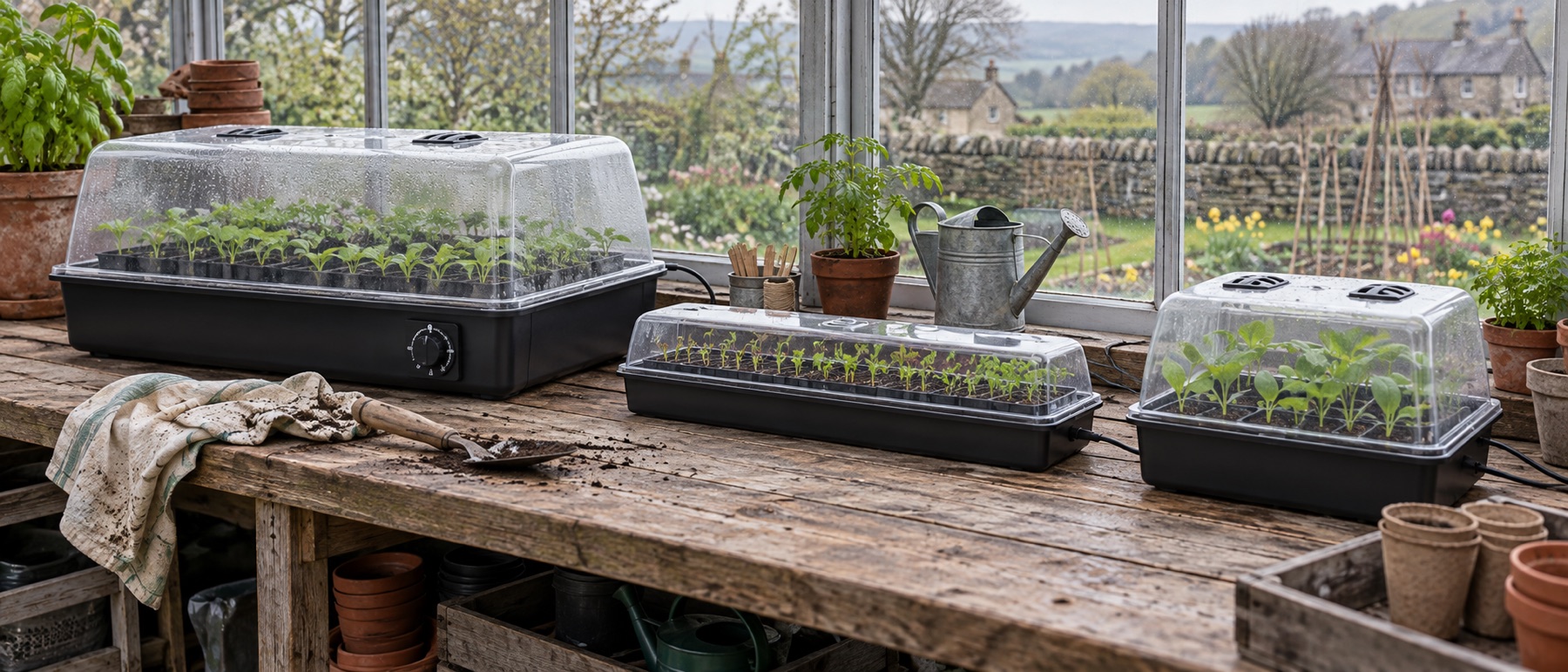
Compare three heated propagator formats for UK seed starting, including an adjustable large tray, a narrow multi-pot windowsill unit and a compact covered tray.
Our recommendations
Three useful heated-propagator formats
Compare available bench length, stated control type, dome headroom and a safe electrical location before choosing. Published sizes are listing dimensions, not a guarantee of usable tray interior.
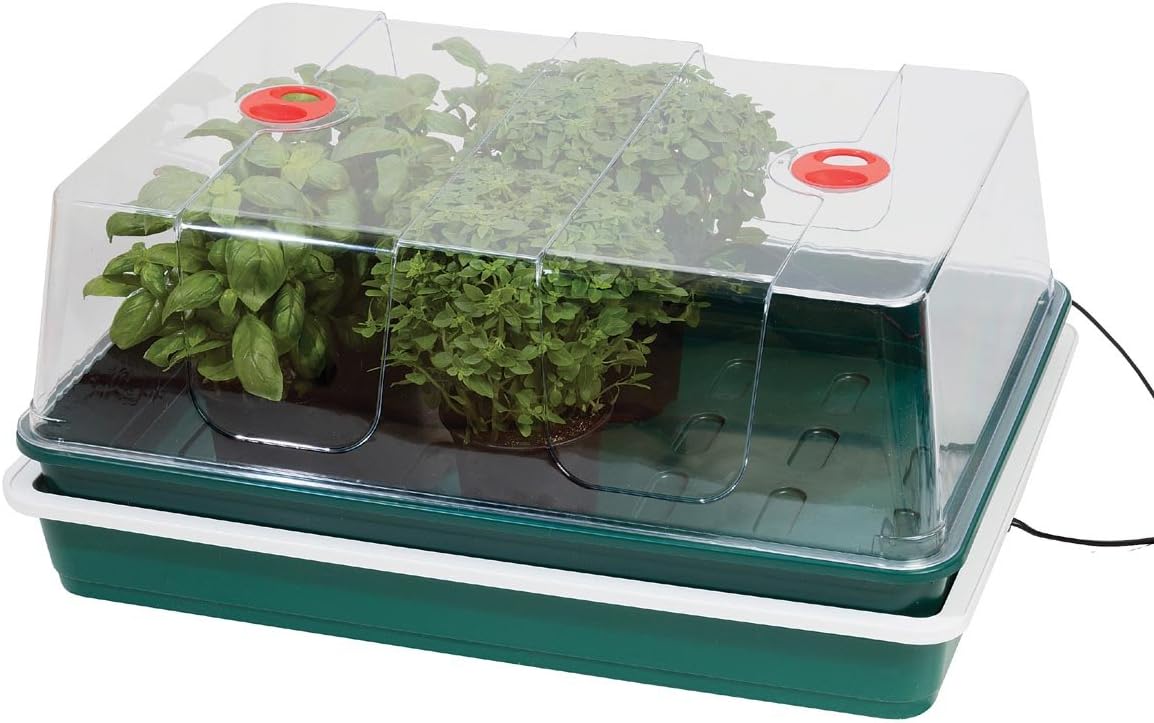
Garland 50W variable-temperature electric propagator
Best for: adjustable heat for several trays
A broad heated base with a tall clear dome and adjustable temperature control. Its listed 59 × 41cm footprint gives room for several seed trays, provided there is a safe supply and enough light.
What stands out
- Useful tray capacity
- Adjustable control
- Tall lid gives seedlings headroom
Keep in mind
- Wide bench footprint
- Warm base does not heat the whole greenhouse
- 59 × 41 × 27cm listed size
- 50W
- adjustable temperature control
- tall clear dome

Garland Super7 heated windowsill propagator
Best for: multiple small windowsill sowings
Seven separate mini propagators sit on a narrow heated base. The listing gives a 76 × 18.5cm footprint, making it practical on a bright windowsill where a broad greenhouse bench is unavailable.
What stands out
- Separates seven batches
- Narrow footprint
- Easy to label crops independently
Keep in mind
- Limited headroom in individual lids
- Long unit still needs a suitably sized sill
- 76 × 18.5 × 15cm listed size
- seven mini propagators
- heated base
- narrow windowsill format

Stewart 52cm thermostatic electric propagator
Best for: one compact protected sowing area
A compact covered propagator with a listed 8W heated base and thermostatic control described as maintaining roughly 18–23°C under suitable conditions. Ambient greenhouse cold can still overwhelm a small unit.
What stands out
- Modest power rating
- Simple covered format
- Fits a smaller growing area
Keep in mind
- Less tray capacity
- Actual temperature depends on surrounding conditions
- 52cm listed length
- 8W
- thermostatic control
- clear cover
| Option | Listed overall size | Heating or control | Best fit |
|---|---|---|---|
| Garland adjustable | 59 × 41 × 27cm | 50W; variable control | Several trays on a bench |
| Garland Super7 | 76 × 18.5 × 15cm | Heated base; seven small domes | Mixed batches on a long sill |
| Stewart 52cm | 52cm listed length | 8W; thermostatic design | One modest sowing area |
How we chose these options
We selected three different forms rather than three near-identical boxes: a sizeable adjustable greenhouse-bench unit, a long windowsill base with seven separate domes and a compact single covered tray. The comparison uses current Amazon UK listing information to explain differences in dimensions, temperature control and growing layout.
Published sizes, included trays and control specifications can change. Check the live listing and manufacturer's instructions before ordering. We do not treat sales ratings as horticultural evidence, and we do not claim that a more expensive propagator will make every species germinate faster.
Best for several trays: Garland variable-temperature propagator
The Garland 50W unit has a listed overall size of 59 × 41 × 27cm. Its broad base gives the most room in this group for a repeatable spring sowing routine, while the taller clear dome helps when seedlings need a little headroom before transfer. Adjustable control is its main advantage over a simple base heater.
Measure a real bench, including the space a plug and lead need. A unit that occupies most of the staging can crowd out the essential bright growing-on area. The lid helps retain humidity but still requires daily checking and venting. As soon as seedlings emerge, keeping them warm under a cover without enough light can make growth weak.
This is the logical format if you sow multiple trays of tomatoes, peppers or ornamentals over several weeks and can provide a safe electrical supply. It is less persuasive for a gardener who sows only one small tray a year.
Best for a narrow sill: Garland Super7
At a listed 76 × 18.5 × 15cm, the Super7 is long but narrow. Seven mini-propagators let you separate varieties and sowing dates rather than forcing plants with different germination rates under a shared lid. A bright domestic windowsill may be warmer and easier to supervise than a remote greenhouse bench.
The trade-off is limited individual headroom and small batches. Check the sill's uninterrupted length and whether the lid can be lifted without catching blinds or window handles. The listing's heated-base design should not be mistaken for independent temperature control of each mini-unit. Label each compartment, ventilate according to emergence and remove small pots before roots crowd.
For gardeners without greenhouse electrics, this may be a more practical route: start seeds indoors, then move suitably hardened plants to the greenhouse when it is safe.
Best compact covered tray: Stewart 52cm
The Stewart is listed as a 52cm thermostatic electric propagator with an 8W base. The retailer describes a temperature-control range around 18–23°C, but the achieved compost temperature depends on ambient conditions, fill, cover and placement. Treat the figure as product information, not a promise that a freezing greenhouse will remain at that temperature.
Its appeal is simplicity and modest size. It suits one small sowing area better than a production line of large modules. Compare the usable interior with your preferred tray or pots, not only the overall product length. If you plan several crops with different sowing windows, you may need to cycle batches through it.
What a heated propagator actually does
Most units warm the root zone and enclose humid air around a tray. That improves the chance of holding an appropriate germination environment for seeds that need warmth. It does not create extra daylight, prevent fungal disease automatically or keep a whole greenhouse warm enough for tender plants. The RHS cautions that a propagator in an unheated greenhouse may struggle in cold weather and that germinated seedlings still need a light, frost-free place to grow on.
The seed packet is the authority for crop-specific temperature and covering depth. Some hardy seeds need no powered help. Others may do better on a bright indoor sill than in a cold greenhouse with a small heater fighting the weather. Our seed-starting guide lays out the full sequence.
Size: count plants after germination
Compare a propagator's footprint with the mature plants you can actually grow. A greenhouse can hold dozens of tomato modules in spring but only a small number of adult tomato plants in summer. Avoid buying capacity that produces more seedlings than the beds, pots and garden can accept.
Check lid clearance, access to vents, tray compatibility and ease of cleaning. Seven small domes are good for separating batches but create seven little moisture checks. A single larger dome is quicker to open but can put early and late emerging crops together. Neither arrangement is inherently superior.
Electricity and moisture need a plan
Place the unit on stable staging where water cannot pool around the base or plug. Route the lead so it cannot be snagged by a watering can or crushed in a door. Follow the maker's specified operating environment. If a greenhouse needs a new supply or fixed socket, use a competent electrician and appropriate protection rather than improvising an extension route.
Do not submerge a heated base during cleaning. Unplug and let it cool, then clean according to its manual. Avoid leaving a water-fed irrigation line able to spray the electrical unit. A propagator is a reason to make the wet and electrical zones clearer, not blur them.
Avoid the warm-and-dark trap
Check the tray daily. Once seeds appear, open the vents and move emerged seedlings into sufficient light. Keep the compost moist rather than saturated, remove collapsed or diseased seedlings promptly and do not leave excess condensation running back onto foliage. If a batch emerges unevenly, move the earliest seedlings into a separate tray rather than making every plant wait under the lid.
A simple thermometer at seed level can reveal what the base actually achieves. Separately, monitor the greenhouse overnight with a max/min thermometer to decide when plants can safely leave the propagator. For a complete crop plan, use our greenhouse propagation guide and UK growing calendar.
Sources and methodology
The RHS greenhouse-vegetable guide explains the distinction between germination heat and growing-on conditions. The RHS seed-sowing guide covers compost and seedling care. Product dimensions and control descriptions come from the linked Amazon UK pages; confirm the current variant before purchase.
Common questions
Frequently asked questions
Is a heated propagator worth it in an unheated greenhouse?
It can provide a warmer germination zone, but in very cold weather a small heater may not maintain the target compost temperature. More importantly, the greenhouse must still be suitable for seedlings after they leave the propagator.
Is a thermostat necessary?
Adjustable control is useful when you sow crops with different temperature needs. A simple thermostatic or fixed-heat unit can work for a narrower set of seeds if you measure actual conditions and follow packet guidance.
How long should seeds stay in a heated propagator?
Usually only through germination and the earliest stage, depending on the crop and product guidance. Vent or remove the lid as seedlings emerge, and move them into bright conditions that meet their growing-on temperature needs.
Can I use a heated propagator outdoors?
Only if the manufacturer explicitly rates the unit and its electrical connection for that environment. An ordinary indoor propagator should not be exposed to rain, standing water or an unsuitable outdoor extension lead.
Will a propagator stop leggy seedlings?
Not by itself. Warmth without sufficient light often makes legginess worse. Provide strong light after emergence and avoid keeping seedlings under a warm cover longer than necessary.