
Seedling transitions
When to move seedlings into a greenhouse
Decide when indoor-raised seedlings can move to an unheated UK greenhouse by checking crop tolerance, night lows, light and a gradual transition.
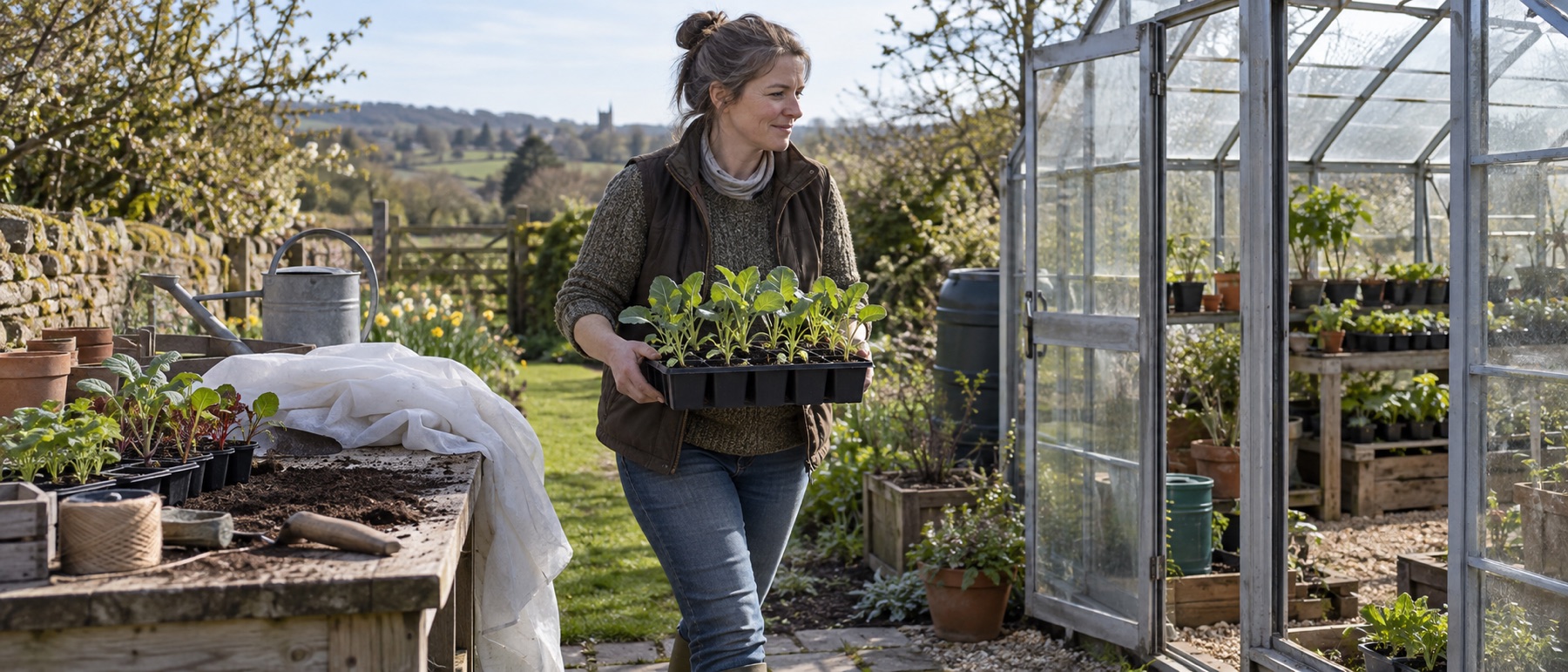
Separate hardy crops from tomatoes, cucumbers and peppers.
Record several greenhouse night minima at seedling height.
Move plants in stages and watch for stress the next morning.
Keep a warmer fallback space available during a cold snap.
Read the greenhouse, not the calendar
An unheated greenhouse is useful protection from wind and rain, but it is not a heated room. On a clear spring day it can warm rapidly; after dark, the air can fall close to the outdoor temperature. A single warm afternoon is therefore a poor reason to move a tray of tender seedlings permanently. Record the minimum overnight temperature for several nights, including a colder forecast night, and compare it with the needs of the crop. Put the thermometer where the trays will stand rather than high at the ridge.
The RHS greenhouse vegetable guide distinguishes starting hardy vegetables early from moving tender summer crops into their final growing positions later. Lettuce and other hardy seedlings may be ready for cool protected growing while peppers, cucumbers and tomatoes still need warmth. A greenhouse in a sheltered southern garden and one exposed to a northern wind will not have the same usable start date.
Group seedlings by cold tolerance
Label every tray with crop and sowing date. Hardy salads and brassicas can often make the transition earlier, provided they are sturdy, rooted and not suddenly exposed to a hard freeze. Tender crops are different. The RHS cucumber guide, for example, advises planting greenhouse cucumbers when the inside temperature is consistently above 12°C. The RHS sweet-pepper guide notes that peppers grow better above 15°C. These are crop-specific guides, not a universal threshold for every seedling.
Plants from a heated propagator need light as soon as they emerge. A warm base does not compensate for a dark greenhouse or a cold night outside the covered unit. If a crop has germinated indoors but the greenhouse is not ready, pot it on into a bright, suitable protected position rather than rushing the move because roots have filled the tray. For sowing fundamentals, see starting seeds in a greenhouse.
Make a gradual transfer
Start with short daytime visits on mild, bright-but-not-scorching days. Increase time under glass, then leave plants overnight only when the measured minimum is suitable for that crop. Open vents as appropriate so plants become used to air movement, but avoid a strong draught over small trays. Check compost moisture: a tray that remained damp indoors may dry much faster in sun and wind. Conversely, a cool tray needs less water and should not sit saturated.
This move into an unheated greenhouse is a transition between protected environments. If the plants will eventually go outside, they still need hardening off to outdoor sun, wind and cooler air. The RHS describes a gradual two- to three-week outdoor acclimatisation for tender plants; a few greenhouse days alone do not make a cucumber frost-hardy.
Watch for evidence that the timing was wrong
Limp or scorched leaves after a bright day can indicate an abrupt light or water change. Darkened or collapsed tender leaves after a cold night point to temperature stress. Long, pale stems signal too little light relative to warmth; see the leggy seedling guide. If plants wilt despite moist compost, inspect roots and stems rather than automatically adding water.
Keep a simple fallback: a frost-safe indoor space, a clean coldframe with appropriate protection for hardy crops, or a plan to bring tender trays inside before a cold night. Fleece can add limited protection but cannot turn an unheated greenhouse into a reliably warm one. Check the forecast and the thermometer each morning until the move is established. Once plants are growing strongly, use the UK greenhouse calendar to plan their next stage.
Helpful products
Measure the coldest part of the move
A max/min thermometer records the overnight low you may miss. A propagator is for warm germination, not a promise that the surrounding greenhouse stays warm.

Brannan Quickset digital max/min greenhouse thermometer
Best for: easy daily max/min checks
A wall-mounted digital thermometer with current, maximum and minimum readings and a one-button reset. The published measuring range is −20°C to 50°C with ±1°C stated accuracy.
What stands out
- Large separate readings
- One-button reset
- Wall-mounted greenhouse format
Keep in mind
- No humidity reading
- No remote alerts or history graph
- −20°C to 50°C range
- ±1°C stated accuracy
- max/min memory
- AAA battery included
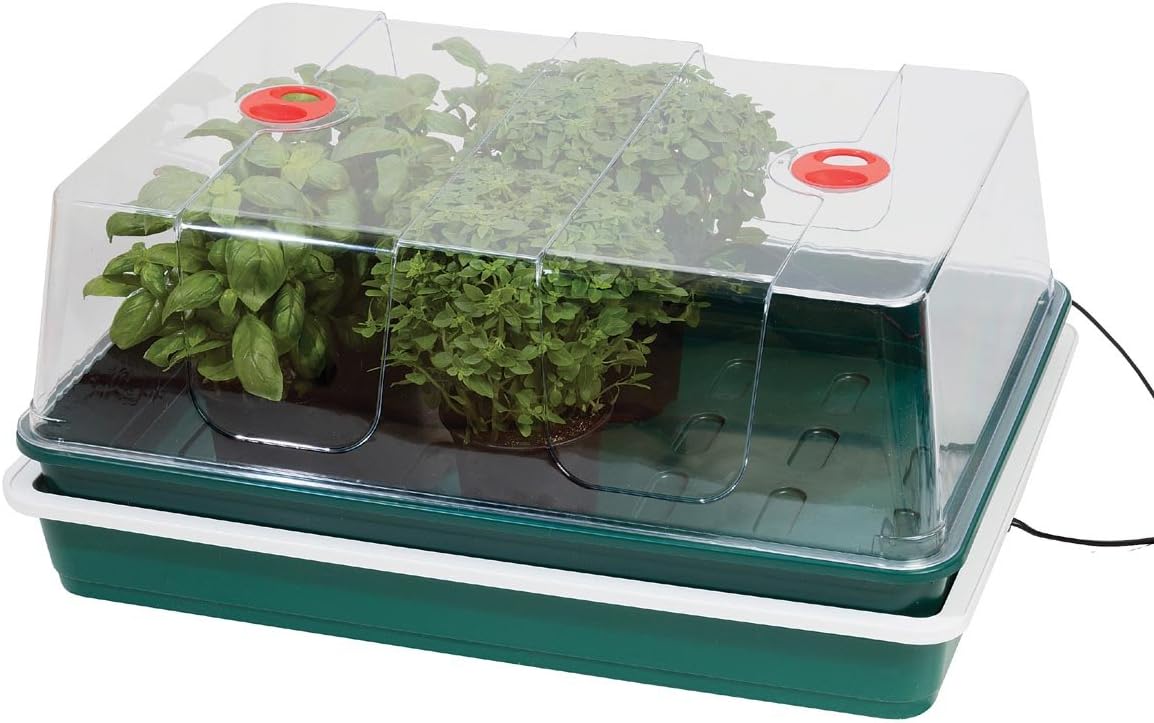
Garland 50W variable-temperature electric propagator
Best for: adjustable heat for several trays
A broad heated base with a tall clear dome and adjustable temperature control. Its listed 59 × 41cm footprint gives room for several seed trays, provided there is a safe supply and enough light.
What stands out
- Useful tray capacity
- Adjustable control
- Tall lid gives seedlings headroom
Keep in mind
- Wide bench footprint
- Warm base does not heat the whole greenhouse
- 59 × 41 × 27cm listed size
- 50W
- adjustable temperature control
- tall clear dome
Common questions
Frequently asked questions
What month can seedlings go into an unheated greenhouse?
There is no single UK date. Use the crop's tolerance and measured night lows in your own greenhouse; region, exposure and the weather change the answer.
Can tomato seedlings go straight from a warm room into a greenhouse?
Avoid a sudden move into cold nights or harsh light. Acclimatise them, keep them warm enough for the crop and bring them back under protection if a cold spell is forecast.
Is a sunny greenhouse warm enough overnight?
Not necessarily. An unheated structure loses heat after sunset, so check its minimum temperature rather than its warm afternoon reading.
Do hardy seedlings need the same treatment as cucumbers?
No. Hardy crops generally tolerate cooler conditions; cucumbers and other tender crops need a much warmer transition. Follow the crop-specific guidance.
Should I leave a propagator lid on after germination?
Remove or ventilate the cover as seedlings emerge according to the crop instructions; prolonged warmth and humidity with inadequate light can make growth weak.