
Greenhouse heating comparison
Best greenhouse heaters
Compare greenhouse heaters for whole-space warming and background frost protection, with thermostat, output, IP rating and electrical-safety guidance.
Our recommendations
Greenhouse heaters for different heat loads
Output figures cannot be compared without greenhouse size, glazing, draughts, outside design temperature and the target temperature.
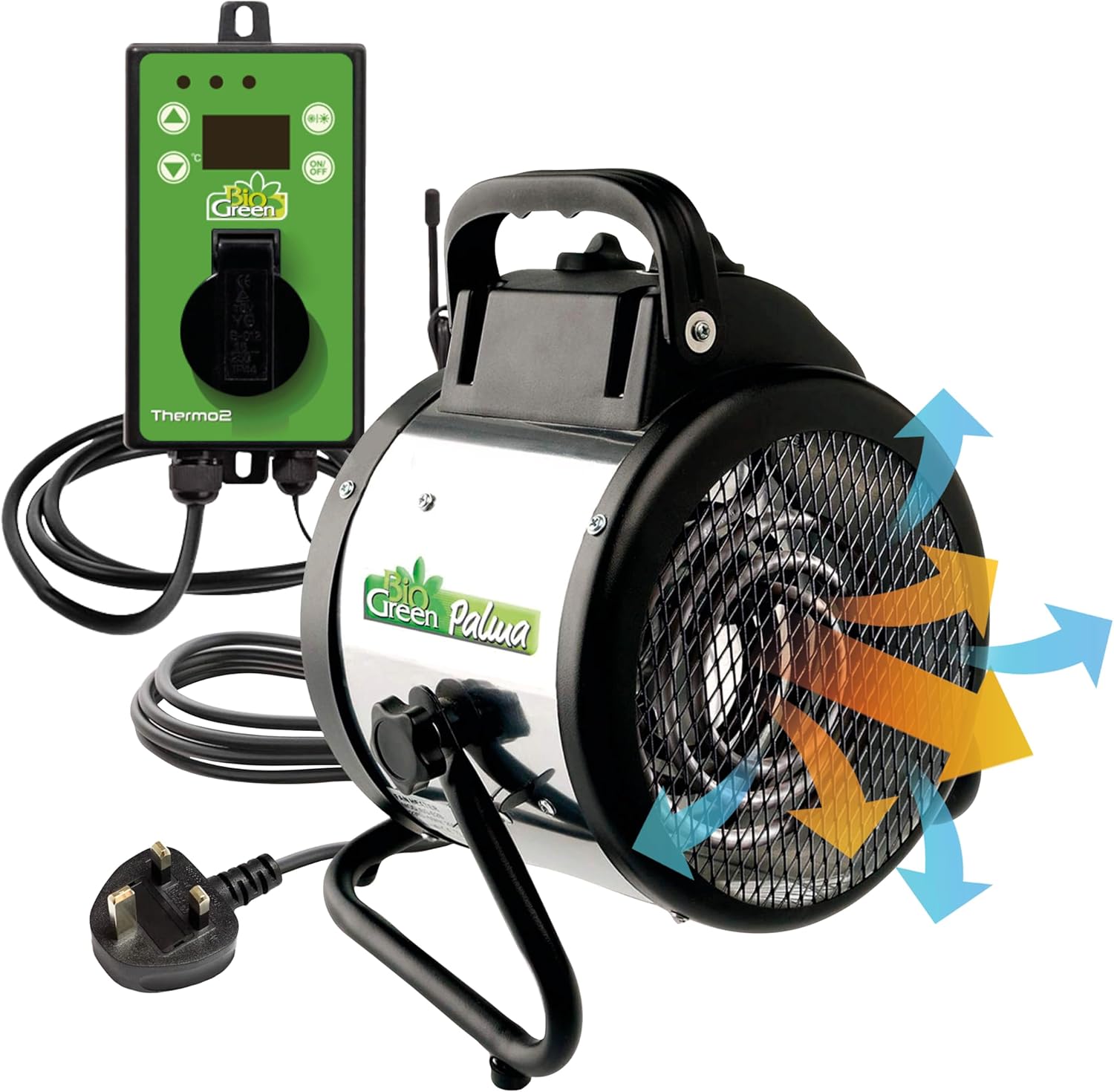
Bio Green Palma 2kW greenhouse heater with digital thermostat
Best for: controlled whole-greenhouse heat
A purpose-sold greenhouse fan heater with a separate digital thermostat, 2kW output and IPX4-rated housing. Fan circulation makes it the most capable option here for distributing thermostatically controlled heat through a small domestic greenhouse.
What stands out
- Thermostatic control
- Fan helps reduce cold corners
- Designed for greenhouse conditions
Keep in mind
- Requires a safe permanent power plan
- Higher output means higher running cost when active
- 2kW output
- digital thermostat
- fan circulation
- IPX4 stated rating

Hylite Ecoheater 1000mm tube heater
Best for: long background frost protection
A 120W tubular heater with thermostat, 2m cable and IP44-rated housing. Its long, low-output format is designed for steady background warmth rather than quickly raising the temperature of an entire greenhouse.
What stands out
- Low, even background heat
- Thermostatic control
- Wall or floor mounting options
Keep in mind
- Not intended for rapid warm-up
- Capacity depends heavily on greenhouse heat loss
- 1000mm length
- 120W output
- built-in thermostat
- IP44 stated rating

Dimplex 80W 2ft tubular heater
Best for: a compact protected zone
A compact 80W tubular heater with a built-in thermostat, wall brackets, UK plug and IPX4 stated splash resistance. It is a small-zone frost-protection option, not a substitute for a correctly sized greenhouse heating calculation.
What stands out
- Compact format
- Thermostatic control
- Mounting brackets included
Keep in mind
- Very limited total output
- Still needs a safe RCD-protected supply
- 2ft length
- 80W output
- built-in thermostat
- IPX4 stated rating
| Recommendation | Type | Output | Control | Stated enclosure protection |
|---|---|---|---|---|
| Bio Green Palma | Fan heater | 2kW | Separate digital thermostat | IPX4 |
| Hylite Ecoheater 1000mm | Tubular heater | 120W | Built-in thermostat | IP44 |
| Dimplex 2ft tubular heater | Tubular heater | 80W | Built-in thermostat | IPX4 |
How we chose these heaters
We selected three current Amazon UK options that cover two distinct tasks: distributing thermostatically controlled heat through a small greenhouse and adding lower-output background heat to a compact protected zone. We prioritised products sold for greenhouse or frost-protection use, a thermostat, published output and a stated splash-resistance rating.
Heater capacity must be calculated for the individual greenhouse; the same 120W tube can be adequate in a small insulated cabinet and ineffective in a draughty glazed structure.
Best whole-greenhouse heater: Bio Green Palma 2kW
The Palma combines a 2kW heating element, fan circulation and a separate digital thermostat. That arrangement addresses two weaknesses of improvised heating: cold corners and a control dial affected by heat immediately beside the appliance.
Its listing states IPX4 protection and suitability for spaces up to 12m². Treat that area as product context, not a guaranteed greenhouse result. A tall single-glazed house in an exposed location can lose far more heat than a compact insulated structure with the same floor area.
The higher output makes electrical planning critical. Use a suitable permanent supply, RCD protection and the clearances in the manual. Keep the heater on a level dry surface, protect the thermostat sensor from direct sun and position the airflow so it circulates around plants rather than scorching one bench.
Best long tube heater: Hylite Ecoheater 1000mm 120W
The 1m Hylite tube spreads 120W along a long, narrow body. It is suited to background frost protection under staging or along a small insulated area, with wall or floor mounting options and a built-in thermostat.
Its listing states IP44 protection, a 2m cable and an automatic safety cut-off. The long format can distribute gentle heat more evenly than one very small source, but clearances still apply. Do not bury it behind bubble insulation, cover it with fleece or allow leaves and pots to touch it.
This is not a rapid warm-up heater. If calculations show that the greenhouse loses several hundred watts on a design night, 120W cannot bridge that gap simply by running continuously.
Best compact tube heater: Dimplex 80W 2ft
The Dimplex has an 80W output, built-in thermostat, mounting brackets and IPX4 stated splash resistance. It is the smallest option here and best treated as a local background heater for a compact protected section, propagation area or very small greenhouse.
Its compactness makes placement easier, but it also limits capacity. A wattage figure describes electrical input; it does not promise a particular greenhouse temperature. Measure overnight lows after installation and keep a contingency plan for severe cold.
Calculate the heating requirement first
A useful heat-loss estimate considers the exposed glazed area, glazing type, air leakage and the difference between the target internal temperature and expected outdoor temperature. Wind exposure increases infiltration, while bubble insulation and smaller heated compartments reduce the load.
Do not choose by greenhouse floor area alone. Two 6 × 8 structures can have different eaves heights, glazing and draughts. A specialist greenhouse-heating calculator or installer can turn the dimensions and construction into an estimated wattage, then add a sensible margin without grossly oversizing.
Electricity use
Estimate the cost of your heating hours
Use the heater's rated watts and your own electricity unit rate in pence per kWh. Enter the number of hours per day that the heating element is actually on, not simply how long the thermostat is plugged in. If that on-time is unknown, calculate alternative scenarios rather than treating a setting as measured consumption.
Your scenario
This is an energy-only estimate, not a predicted bill or a thermostat-duty calculation.
Standing charges, other appliances and any tariff changes are excluded. Rated wattage and assumed active hours do not tell you whether the heater is powerful enough for your greenhouse.
For comparison only, at a hypothetical 30p/kWh and eight hours of active heat each day for 30 days: 2,000W costs £144, 120W costs £8.64, and 80W costs £5.76 in energy. This uses equal on-time to show the effect of wattage; it is not a forecast of how often any thermostat will call for heat, nor a claim that a smaller heater will maintain the required temperature.
To improve the estimate, note actual energised hours or meter use in representative weather, and repeat for colder and milder periods. For a multi-rate tariff, calculate each rate period separately and add the energy costs. Keep the frost-protection plan and electrical safety checks separate from this price arithmetic.
Set the right target
Heating a whole greenhouse to living-room temperatures is rarely economical or necessary. The RHS describes about 4°C as a frost-free target for an average domestic greenhouse and recommends grouping plants or screening off a smaller section when only part of a large greenhouse needs heat.
Decide which plants genuinely need protection. Hardy crops may prefer the light of an uninsulated area, while a few tender containers can be clustered inside a screened section. Lower volume means less heat loss and a smaller heater.
Thermostat placement matters
A thermostat next to the heater switches off before the coldest plants are protected. A sensor against glazing or in a draught can make the heater run excessively. Position the sensing point near the protected plants at representative height, away from direct sun, doors and the warm air stream.
Use a separate max/min greenhouse thermometer to verify the overnight result. Built-in thermostat markings are controls, not calibrated records of the coldest point.
Electrical safety in a damp greenhouse
Greenhouses combine water, condensation, metal frames and contact with the ground. Electrical Safety First says sockets supplying outdoor equipment should be RCD protected and that cables and connections must be suitable for outdoor use. The RHS says greenhouse electrical connections should be professionally installed.
For a fixed supply, use a competent registered electrician and follow the rules for your UK nation. In England, Approved Document P expressly includes domestic greenhouses connected to a dwelling. Do not run a domestic extension lead through a doorway as a permanent winter supply, connect multiple reels or place plugs on a wet floor.
Inspect the heater, cable, plug, socket and RCD before use. Keep watering lines and cans away, maintain every required clearance, and stop using equipment with damage, overheating, buzzing or repeated tripping.
Improve efficiency before adding watts
Replace broken panes, adjust doors and vents, seal appropriate frame gaps and use reusable clear bubble insulation where it does not block light or ventilation. Group tender plants and screen a smaller heated zone. The RHS notes that insulation reduces light, so use it only where the heat saving is worth the trade-off.
Ventilate on suitable mild days to release damp air. A tightly wrapped, heated greenhouse can protect temperature while creating mould and rot if humidity is ignored.
Sources and safety basis
The RHS greenhouse heating guide covers heater types, the 4°C frost-free reference, insulation and professional electrical connection. Electrical Safety First’s outdoor-heater guidance supports RCD protection, safe clearances and suitable outdoor sockets. Approved Document P explains the England-specific building-regulation framework for electrical installations. Ofgem's bill explainer distinguishes the unit rate from the standing charge; the calculator uses only the unit rate you enter. Product facts come from the Amazon UK listings linked above.
Before selecting a heater, measure the unheated greenhouse's winter lows and work through frost protection. If a smaller protected zone is suitable for the plants, bubble insulation may reduce the area you need to heat without changing the safe-supply requirements.
Common questions
Frequently asked questions
What is the best heater for a small greenhouse?
For modest background frost protection, a correctly sized thermostatic tube heater may be enough. If the whole air volume needs a larger temperature rise, a purpose-sold greenhouse fan heater distributes heat more effectively. Calculate the heat loss before choosing.
What temperature keeps a greenhouse frost-free?
The RHS describes heating an average domestic greenhouse to around 4°C as frost-free protection for a wider range of tender plants. Individual plants may need more or less, so base the target on the crop rather than the label frost-free alone.
Can I use a normal fan heater in a greenhouse?
Use only equipment explicitly suitable for the greenhouse environment and follow its instructions. Damp, condensation, watering and dust make a greenhouse different from a dry room, and the electrical supply must be professionally installed and RCD protected.
Is a tube heater enough for a 6 × 8 greenhouse?
Not necessarily. A low-output tube mainly provides local background warmth. Whether it protects a 6 × 8 depends on glazing, draughts, insulation, outside temperature, wind exposure and the required internal set point.
Are paraffin greenhouse heaters safe?
Combustion heaters add moisture and gases and require ventilation, stable placement, fuel handling and strict clearance. For controllable domestic use, the RHS notes electric heaters are easier to control. We have focused this comparison on purpose-suitable electric options.
How much does a greenhouse heater cost to run?
Multiply rated kilowatts by the hours the element is actually energised, then by your electricity unit rate. A thermostat may switch a heater on and off, so hours plugged in are not necessarily heating hours. The estimate excludes standing charges and does not establish that the heater can protect the plants.