
Greenhouse tomato guide
Growing greenhouse tomatoes in the UK
Grow UK greenhouse tomatoes from sowing to harvest with practical advice on variety choice, planting, cordon support, watering, feeding, ventilation and common problems.
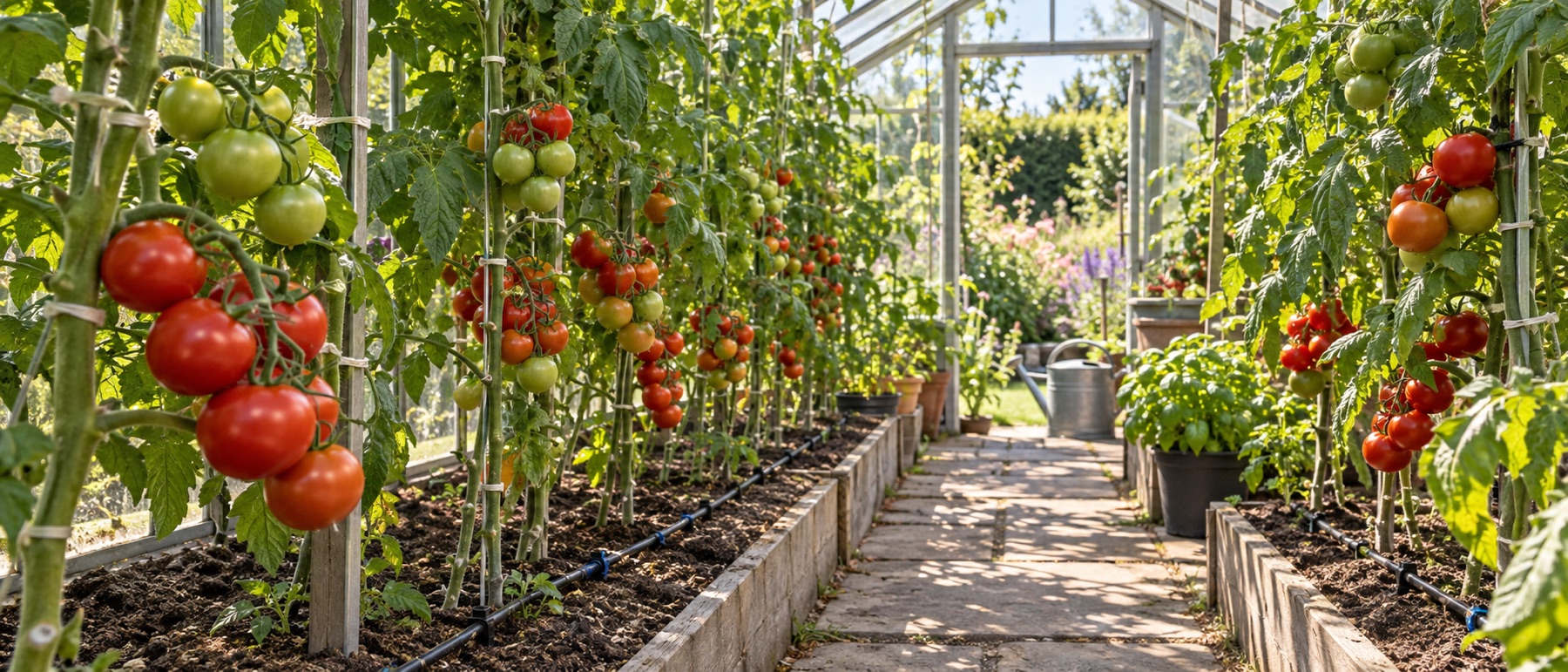
Select a greenhouse-suitable variety and understand whether it is cordon or bush.
Put a strong support in place before the vine becomes heavy with fruit.
Irregular watering is a common cause of fruit problems, including blossom-end rot.
Check leaf undersides for whitefly and other pests during routine training.
Choose the growth habit before the variety name
Greenhouse tomatoes can be tall cordons, compact bush types or forms between those habits. A cordon makes good use of height but needs training, support and regular side-shoot management. A bush type may need less pruning yet occupies more lateral space. Fruit size, flavour and disease-resistance claims also differ, so choose a variety whose mature habit fits the greenhouse and your appetite for routine work.
The RHS notes that greenhouse tomatoes generally crop earlier and more abundantly than outdoor ones, but they still need frost protection, moisture and attention. Start with a realistic plant count. A path to each plant, enough room to open vents and safe access to the back of the crop will help more than forcing in an extra vine.
Sow and grow on
The RHS describes late February to mid-March as a common sowing period for greenhouse tomatoes where suitable warmth is available. This is not a command to sow before you have bright, frost-free space for the seedlings. Tomato seed typically wants a warm germination environment around the high teens Celsius, but follow your variety's packet.
Use clean pots or modules and fresh peat-free compost. Sow at the stated depth, label immediately and keep the medium moist rather than sodden. A propagator can help germination; remove or vent the cover as shoots emerge and give the seedlings strong light. Pot on before roots become badly congested. Our greenhouse seed-starting guide covers this stage step by step.
Prepare the final position
Tomatoes can grow in greenhouse borders, suitably sized containers or growing bags. The RHS suggests one plant in a 30–45cm pot or two in a standard growbag as common arrangements. Check the bag's volume and the variety's vigour rather than treating every container as interchangeable.
A border offers more root run but may accumulate crop-specific soil problems when tomatoes are repeated. Containers make rotation and watering control easier, though they dry faster in warm weather. Whichever you use, provide a firm support and enough headroom. In a narrow greenhouse, a cordon at the wall may be more manageable than a sprawling bush blocking the aisle.
Plant out only when the night environment is suitable; a hot afternoon does not eliminate a cold overnight spell. The RHS guidance points to early summer for final greenhouse positions when conditions are reliably warm. Acclimatise plants gradually, water them in and avoid deep, soggy compost around the stem.
Train cordons securely
Install a cane, string or trellis rated for a heavy fruiting vine before the root zone is crowded. If using the greenhouse frame, use only fixings approved for that structure. A plant clip or soft tie secures stem to support but does not make a weak support stronger. Reposition clips as the stem thickens so they never constrict it.
For cordon varieties, remove side shoots from leaf axils while small, following the variety's instructions. Check weekly because shoots can develop quickly. Bush tomatoes are generally not pruned in the same way. The aim is a reachable, ventilated plant, not stripping every leaf. Remove yellowing lower leaves when appropriate and keep debris out of the border.
Water at the roots, regularly
Uneven moisture causes stress and can contribute to fruit splitting and blossom-end rot. Check the compost or border soil rather than using a rigid number of litres for every plant. Small pots may need attention much more often than deep beds during a heatwave. Water the root zone thoroughly, allow drainage and avoid leaving containers permanently in a deep pool.
A tested drip system can reduce missed waterings, especially for several containers, but inspect emitters and the actual compost moisture. A blocked dripper silently starves one plant while the timer appears to run. If away, test the system well before departure and arrange a human check; see watering a greenhouse while away.
Feed for the growing medium
Tomatoes in containers and growbags depend on nutrients supplied by the medium and subsequent feeding. Begin feeding at the stage recommended by the compost, fertiliser and variety instructions, often once fruit has set, and follow the product rate. More feed is not automatically better: it can damage roots or push unbalanced growth.
In a border, previous fertility and soil condition matter. Do not use a universal weekly dose regardless of medium. Leaf colour, vigour and fruiting can indicate that something needs review, but symptoms also arise from water, root health or temperature. Correct the cause rather than treating every yellow leaf as a fertiliser shortage.
Ventilate, shade and assist pollination naturally
Open roof and side vents as appropriate on warm days to avoid extreme heat and stagnant, wet air. A little air movement helps tomato flowers release pollen; gently tapping supports is sometimes used if a sheltered greenhouse has poor air movement. Avoid closing the entire house to chase extra warmth once the crop is already overheating.
Apply shade only when needed and do not turn the greenhouse permanently dark. Summer management is a balance of air, light and water. The ventilation guide and shading guide explain how those controls interact.
Watch fruit and leaves
Check for irregular water supply when fruit splits or develops a dark, sunken blossom end. Remove obviously affected fruit and restore steady root moisture; do not assume a calcium fertiliser alone will solve a water-uptake problem. If green shoulders, poor set or slow ripening appear, review the variety, heat and light conditions.
Lift lower leaves during routine care. Whitefly adults may rise when foliage is disturbed, while eggs and nymphs remain beneath leaves. Aphids, red spider mites and other pests need different responses. Identify them before treating, and avoid an indiscriminate spray that could harm beneficial organisms. Use the pest guide and whitefly guide for the next steps.
Harvest and clear the crop
Pick ripe fruit regularly and handle trusses gently. As autumn light and temperature fall, some fruit may not ripen on the plant; use crop-specific guidance for bringing healthy fruit indoors. Remove spent plants when production ends and clean supports and reusable clips before storage. Do not leave diseased foliage in the greenhouse through winter.
Note which variety yielded well in your conditions and whether its size suited the path. That record makes the next sowing decision more useful than simply adding another plant.
Sources and related reading
Timing, container examples and cultivation principles follow the RHS tomato guide and RHS greenhouse-vegetable guide. Variety labels and current product directions take priority where more specific.
Helpful products
Useful kit for tomato vines and watering
Adjustable clips can fasten a stem to a separate sound support; a container drip kit can help deliver water to the root zone. Neither replaces regular inspection.

KINGLAKE 60-piece plant support clips
Best for: quick adjustments to trained vines
Thirty larger and thirty smaller reusable spring clips for fastening tomato or cucumber stems to an existing cane, string or trellis. They do not replace a properly anchored support.
What stands out
- Two opening sizes
- Quick to move as plants grow
- Also suits cucumber training
Keep in mind
- Must be checked for stem pressure
- Requires separate stakes or string
- 60 clips
- 30 large and 30 small
- reusable spring design
- support not included
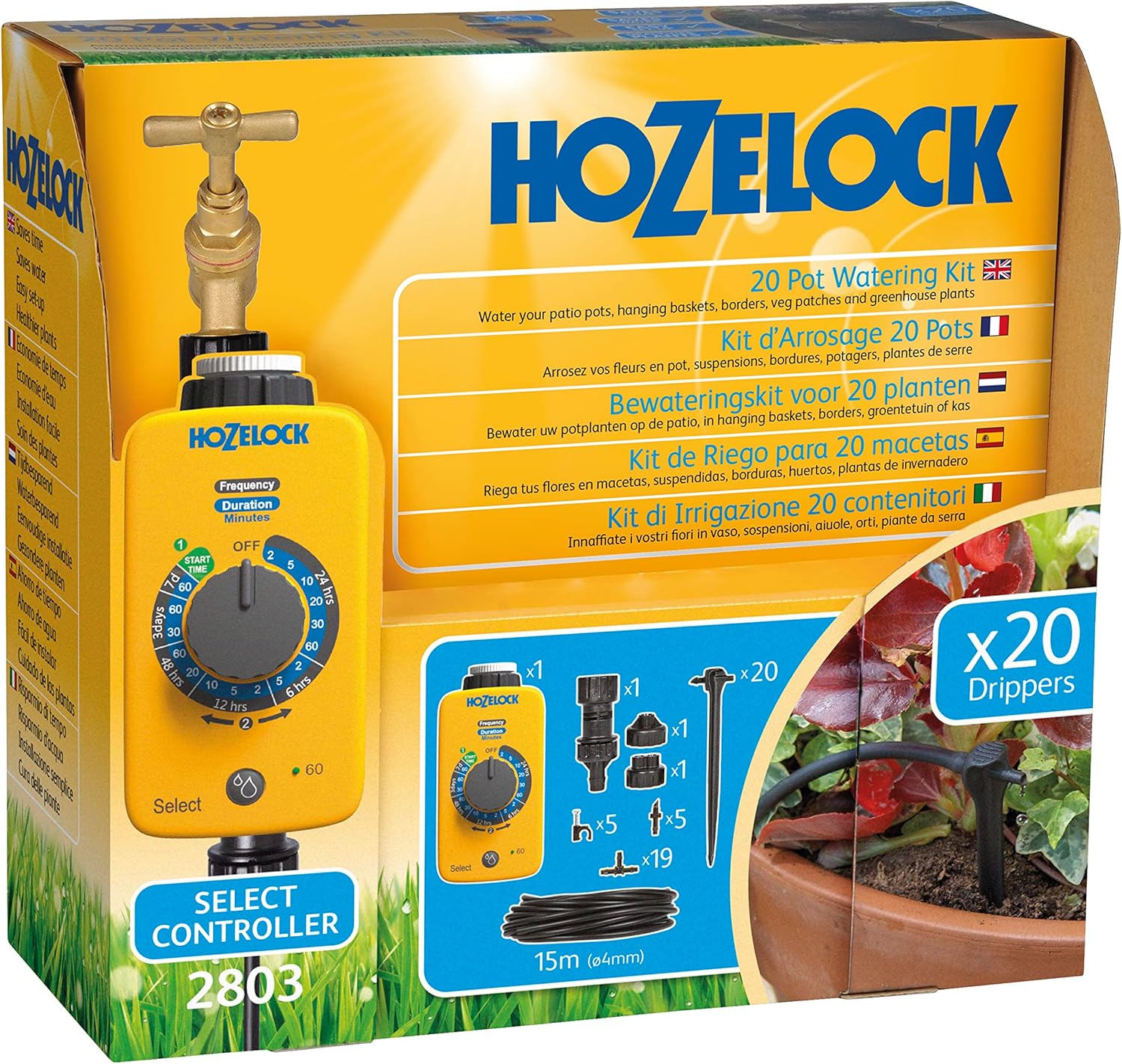
Hozelock 20-pot drip watering kit with Select Controller
Best for: timed watering for up to 20 pots
A complete mains-water drip kit for up to 20 containers, with a tap controller, supply pipe and individual drippers. The controller offers preset schedules while emitters place water close to roots.
What stands out
- Timer and distribution parts included
- Flexible cut-to-fit tubing
- Manual watering function
Keep in mind
- Requires a compatible pressurised tap supply
- Backflow protection and pressure must be checked
- up to 20 containers
- Select Controller
- 16 preset programmes
- root-zone drippers
Common questions
Frequently asked questions
When should I sow greenhouse tomatoes in the UK?
The RHS places greenhouse tomato sowing in late winter to mid-spring when a warm, bright start is available. Sow later if you cannot provide the light and frost-free growing-on space that early seedlings need.
When can tomato plants go into an unheated greenhouse?
Wait until overnight conditions are reliably suitable for tender tomatoes and frost risk has passed for the planned position. The RHS suggests planting into final greenhouse positions in early summer when temperatures are appropriate, rather than relying on a single national date.
How many tomatoes can go in a growbag?
Follow the bag and variety guidance. The RHS commonly gives two plants in a standard growbag or one plant in a 30–45cm container; more plants can increase competition for water and roots.
Do I remove side shoots from all tomatoes?
No. Tall cordon tomatoes are usually trained as a main stem with side shoots removed, while bush or determinate types are managed differently. Identify the growth habit on the variety label before pruning.
Why are the bottoms of my tomatoes turning black?
A dark sunken patch at the blossom end may be blossom-end rot, commonly linked to disrupted calcium uptake caused by irregular water supply. Improve watering consistency and confirm the diagnosis before changing feed.