
Air and moisture
Greenhouse humidity control
Learn why greenhouse humidity rises, how to interpret condensation and hygrometer readings, and how ventilation and watering choices reduce persistent damp.

Compare humidity readings at similar times and crop height.
Look for overnight condensation that persists well into the day.
Water compost early enough for foliage and floors to dry.
Provide fresh-air exchange as well as gentle internal movement.
Understand what the reading is telling you
Relative humidity changes as air warms and cools, even if no water is added. A high reading at a cold dawn and a lower reading in a warm afternoon are not directly comparable. Put a hygrometer among the plants, away from dripping glass and direct sun, and note the reading at roughly the same times over several days. Pair it with a temperature reading and a visual check of wet leaves or glazing.
Condensation itself is not a diagnosis. Drops appearing overnight on cold glass are normal; water that continues to drip onto leaves and benches through the day suggests excess moisture or inadequate air exchange. The RHS ventilation advice also emphasises maintaining airflow around greenhouse plants. Different crops and life stages prefer different conditions, so a rigid universal humidity target is less useful than observing the pattern.
Trace the sources of moisture
Watering is the largest controllable input in many small greenhouses. Check compost before watering, apply water near the root zone, and avoid routinely soaking foliage, benches and paths. Water early enough for splashes to dry before a cool night. Empty standing water from trays unless they form part of a deliberate, monitored capillary system. Find a more consistent plan in the drip-irrigation guide.
Dense leaves release moisture and block the air path. Give plants enough separation for their mature size, remove diseased material promptly, and keep the space under staging clean. If you are overwintering plants, group them for efficient protection without packing them so tightly that leaf surfaces stay wet. The greenhouse hygiene guide covers cleaning and plant-health routines.
Exchange damp air without chilling everything
On mild days, open a roof vent and lower inlet to replace humid internal air. Adjust for wind, rain and the needs of tender plants. An automatic roof or compatible louvre opener can help, but its temperature response is not a direct humidity controller. Check the hardware and actual airflow rather than assuming an opener cures condensation by itself.
A clip fan is useful where foliage is crowded or a corner remains stagnant. Aim for gentle movement across the canopy, not a constant blast at one pot. Circulation is not extraction: if every opening is shut, the fan recycles the same moisture-laden air. Any mains equipment in a wet growing space needs a suitable protected supply, installation and placement in accordance with the maker and electrical-safety guidance. The fan guide distinguishes the two jobs.
A practical week-long check
Record temperature, humidity, vent position and whether foliage is still wet mid-morning. Change one factor at a time: for example, water earlier and at the base for several days, then improve airflow if dampness persists. Clean or replace a defective hygrometer if its readings seem implausible. If the greenhouse is cold and closed for winter, balance ventilation against frost protection; the winter-temperature guide explains why an unheated structure should not be assumed frost-free.
Helpful products
Monitor and move air appropriately
The hygrometer helps you see the pattern; a compatible louvre opener aids fresh-air entry, while a clip fan only circulates air already inside.

Brannan max/min thermometer and hygrometer
Best for: temperature plus humidity at a glance
An analogue dial instrument combining current humidity with current, maximum and minimum temperature. It adds a quick humidity indication without requiring an app, account or wireless connection.
What stands out
- No app or pairing
- Shows humidity as well as temperature
- Easy to scan from the aisle
Keep in mind
- Humidity is current rather than logged
- Manual reset and reading required
- analogue display
- max/min temperature
- current humidity
- wall mountable
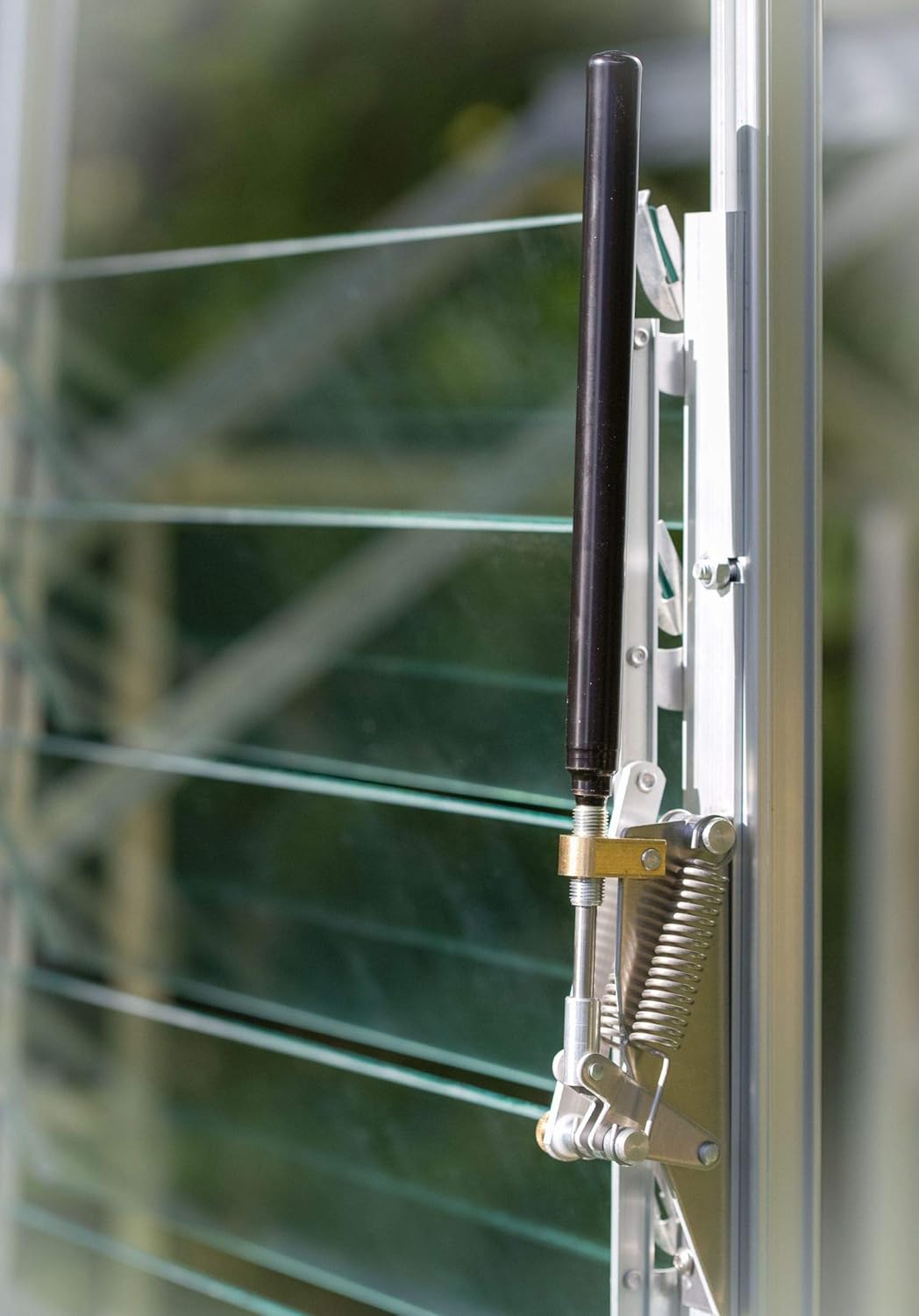
Gardening Naturally automatic louvre vent opener
Best for: automating a compatible louvre
A wax-cylinder opener made for many standard greenhouse louvre vents. It automates low-level air intake rather than lifting a roof window, so it can support a more complete high-and-low ventilation path.
What stands out
- Automates low-level inlet air
- No battery or mains supply
- Made for standard louvre mechanisms
Keep in mind
- Does not operate a roof vent
- Louvre compatibility must be confirmed
- louvre-vent format
- wax cylinder
- 17–25°C stated range
- no electricity

AC Infinity CLOUDRAY S6 15cm clip fan
Best for: internal air circulation
A six-inch clip-on circulation fan with ten speeds and an EC motor. It moves air within a growing space; it does not replace a roof vent, low inlet or extraction fan.
What stands out
- Adjustable internal airflow
- Compact clip mounting
- Ten speed settings
Keep in mind
- Does not exchange greenhouse air
- Electrical placement still needs a suitable protected supply
- 15cm fan
- 10 speeds
- clip mount
- IP54 listed by maker
Common questions
Frequently asked questions
Is condensation on greenhouse glass always a problem?
No. Brief morning condensation is common when moist air meets cold glazing. Persistent droplets, wet foliage and mouldy surfaces are stronger reasons to adjust ventilation and watering.
What humidity should a greenhouse be?
There is no single percentage for all crops and seasons. Use the reading alongside temperature, condensation duration and plant condition rather than chasing one generic target.
Does a fan lower greenhouse humidity?
A circulation fan can dry stagnant pockets and leaf surfaces, but it does not remove moisture from a closed greenhouse. Fresh-air exchange through vents or designed extraction is still needed.
Should I close vents to keep a greenhouse warm overnight?
Close or reduce them as conditions require, but do not leave the greenhouse sealed for long periods. On suitable mild days, brief ventilation helps clear accumulated moisture; protect tender plants from cold draughts.
Can overwatering cause high humidity?
Yes. Wet floors, saucers, saturated compost and frequent overhead watering all add moisture. Check the root zone and remove standing water rather than watering to a fixed schedule.