
Winter insulation
Insulating a greenhouse with bubble wrap
How to fit removable greenhouse bubble insulation, preserve vent movement and winter light, and manage condensation without assuming an unheated greenhouse is frost-free.
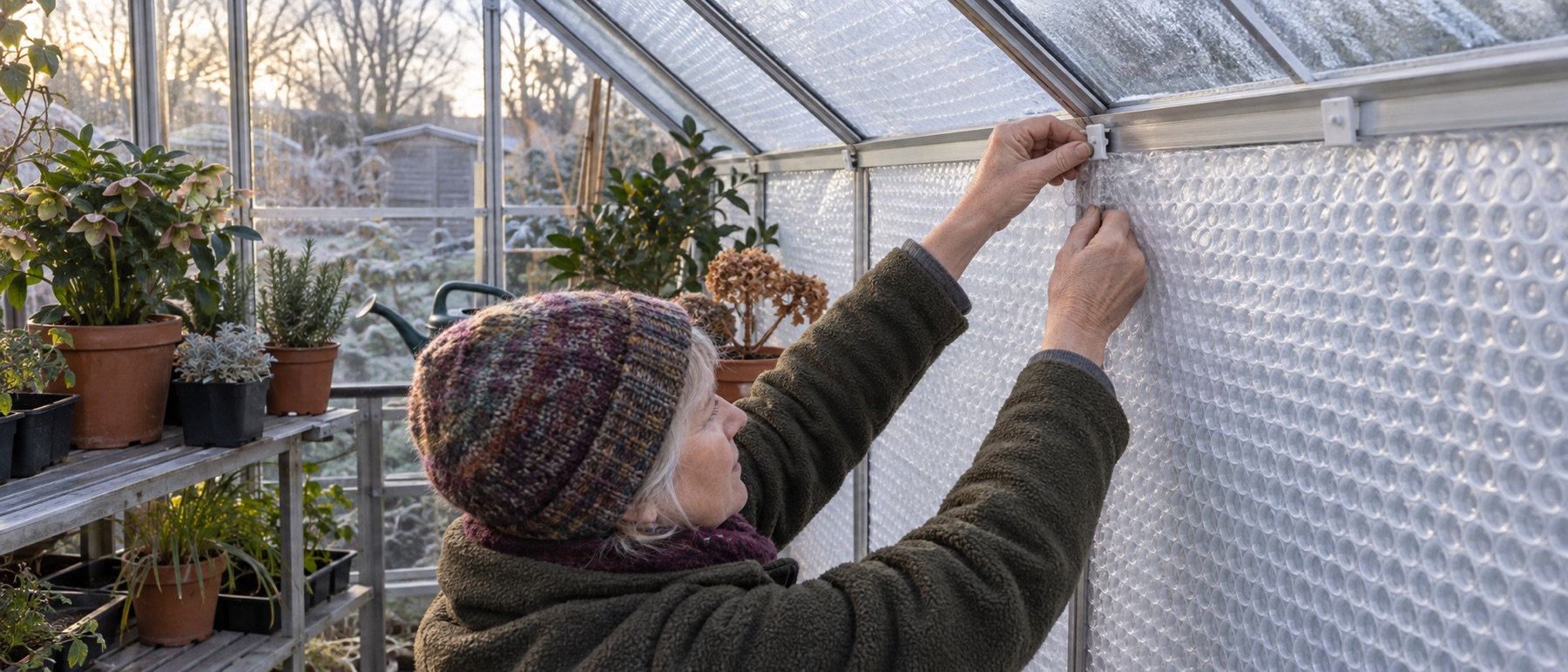
Choose UV-resistant horticultural film rather than thin packing wrap.
Measure bays and check compatible glazing-bar clips.
Keep doors, roof vents and louvres free to move.
Remove lining when winter light becomes more valuable.
Decide what you are trying to protect
Bubble lining is most useful when you want to slow heat loss from a small enclosure or a partitioned growing zone. It will not create warmth. Before buying a roll, identify which plants need frost-free conditions and which merely need shelter from wind and rain. Put a max/min thermometer at plant height for several nights; see how cold an unheated greenhouse gets for interpreting the results.
The RHS advice on heating greenhouses efficiently notes that bubble insulation reduces light as well as heat loss. Winter light is scarce in the UK, so a fully lined greenhouse can be a poor bargain for actively growing crops. Consider whether a small insulated area around tender plants would be more effective than covering every panel.
Measure and choose the film
Measure the interior bays, roof slopes and any area that needs to remain accessible. Allow for overlap at the edges without projecting into a door track, louvre blades or automatic roof opener. A greenhouse-grade, UV-resistant horticultural film is generally more suitable than thin packaging wrap for seasonal reuse. Check the roll width and length; a 1.5m-wide roll may still require joins on a larger roof slope.
Confirm the greenhouse manufacturer's approved clip or fixing type. A clip that works on one aluminium glazing bar may not fit timber or another bar profile. Do not puncture glazing, jam film into moving channels or use adhesive that can damage the frame. If a cover cannot be securely fitted without blocking a vent, revise the coverage rather than sacrificing ventilation.
Fit without sealing in moisture
Clean and dry reachable glazing first so you do not trap algae and dirt under the film. Cut manageable pieces, label them if you intend to reuse them, and work from a stable position—never lean on greenhouse roof panels. Keep the ventilation route clear and check the door can close normally. A small, removable partition may be easier to inspect and ventilate than a complex full lining.
Condensation between film and glazing is likely in cold weather. Inspect for persistent wetness, mould and water dripping onto plants. Ventilate briefly on suitable mild days and adjust watering to lower winter demand. The humidity guide provides a diagnostic routine; insulation should not mean a sealed, unvisited greenhouse.
Plan a smaller zone without creating a hazard
A partition only helps if you can still inspect, water and ventilate the plants inside it. Leave a simple opening and a place to read the thermometer; do not create a sealed pocket that is awkward to reach behind staging. Keep the film away from sharp brackets, moving vent arms and any routes needed to leave the greenhouse safely.
If heating is part of the plan, follow the heater's exact clearance and installation instructions. Do not wrap film around an appliance or assume that a small enclosed zone permits a smaller safety gap. Where the proposed film position cannot meet those requirements, change the layout or move the plants rather than improvising around the heater.
Check the benefit and remove promptly
Reset the max/min thermometer after fitting and compare several comparable nights. Do not expect a fixed temperature lift: wind, sky conditions, thermal mass, gaps and outside temperature all affect the result. Water containers alone provide only limited heat buffering and are not a substitute for frost protection. If the measured minimum is still unsafe for a crop, move it or use a properly specified heat source. As days brighten, remove or roll back the lining so the crop gets sufficient light. Dry and store sound film away from sharp clips for another winter.
Helpful products
A lining and a way to measure the result
Check roll size and compatible fixings against the exact greenhouse before ordering; monitor the overnight low after fitting.

Elixir Gardens greenhouse bubble insulation, 1.5 × 10m
Best for: winter inner lining
Clear horticultural bubble insulation listed as a 1.5m by 10m roll with 10mm bubbles, UV-resistant triple-laminated film. Measure the glazing bays and allow for safe vent and door movement before ordering.
What stands out
- Sized for greenhouse lining
- Can be removed when light becomes more valuable
- Clear film admits some winter light
Keep in mind
- Reduces available light
- Needs compatible clips and a condensation-management plan
- 1.5 × 10m listed roll
- 10mm bubbles
- UV-resistant listing
- triple-laminated film

Brannan Quickset digital max/min greenhouse thermometer
Best for: easy daily max/min checks
A wall-mounted digital thermometer with current, maximum and minimum readings and a one-button reset. The published measuring range is −20°C to 50°C with ±1°C stated accuracy.
What stands out
- Large separate readings
- One-button reset
- Wall-mounted greenhouse format
Keep in mind
- No humidity reading
- No remote alerts or history graph
- −20°C to 50°C range
- ±1°C stated accuracy
- max/min memory
- AAA battery included
Common questions
Frequently asked questions
Does bubble wrap make an unheated greenhouse frost-free?
No. It can reduce heat loss, but the greenhouse still has no reliable heat source. Measure the actual overnight minimum and move frost-sensitive plants or use suitable heat when necessary.
Can ordinary packing bubble wrap be used?
It is usually less durable and may not be UV resistant. Horticultural greenhouse film is a more appropriate removable lining; check the exact product and frame-fitting method.
Which side of a greenhouse should I line?
The answer depends on winter light, draughts and the crop. Full coverage is not automatically best; selective lining or an internal partition can preserve more light.
Should I cover vents with bubble insulation?
Do not obstruct the vent opening or mechanism. Plan separate pieces and clearances so roof vents, louvres and doors can still operate.
When should I take the lining down?
Remove it once its heat-saving benefit is outweighed by lost light and persistent condensation, and clean and dry it for reuse if the material is still sound.