
Winter growing
Winter greenhouse crops in the UK
Plan realistic winter harvests in an unheated UK greenhouse with autumn-established salads, cold-tolerant crops and careful light, water and frost management.
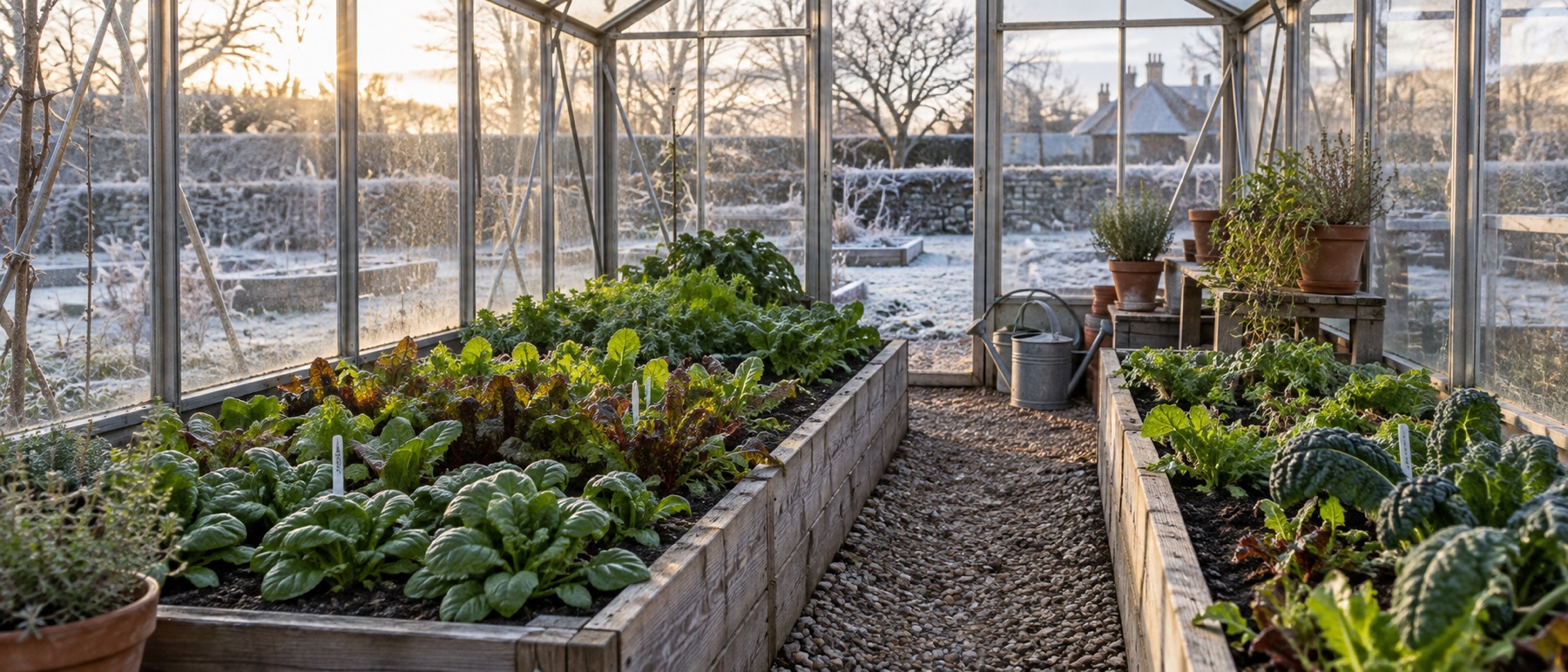
Choose cold-tolerant salad leaves rather than summer fruiting crops.
Sow or plant in late summer and autumn for winter picking.
Check overnight lows and protect crops when forecasts demand it.
Water sparingly according to the root zone and ventilate on mild days.
Plan for harvest, not rapid midwinter growth
The appeal of an unheated greenhouse in winter is an extension of the season, not a second summer. RHS winter-growing advice lists corn salad, land cress and oriental salad leaves among late-summer and autumn sowings. Its winter greenhouse inspiration describes rocket and mizuna as winter salad crops. Sow enough in time for plants to establish before day length and temperature sharply restrict growth. A tray sown in the darkest weeks may sit small for a long time even if it germinates.
Start with crops you will actually harvest. Cut-and-come-again mixes, rocket, mizuna, mustard leaves and corn salad offer different flavours and cold tolerance. Check each variety's packet for sowing and spacing. A few well-spaced rows are easier to ventilate, inspect and pick than a crowded carpet of seedlings. The UK growing calendar gives the annual sequence; use your region and actual weather to refine it.
Clear the summer crop and prepare the root zone
Remove spent tomatoes and cucumbers, old ties and diseased debris before planting winter crops. Inspect the border or container medium for drainage and pest problems. Healthy spent material can follow your usual composting practice, but do not spread suspect disease around the greenhouse. The hygiene guide covers cleaning tools and benches between crops.
If using a growbag as a shallow salad bed, the RHS greenhouse vegetable guide describes removing a long top panel to create planting space. Ensure there are drainage holes and do not assume old medium is suitable if it held a diseased crop. A border offers more root volume but requires ongoing soil management. The growbags and borders comparison helps choose the approach.
Manage cold, condensation and light
An unheated greenhouse can freeze. Put a max/min thermometer near the crop, reset it and watch the forecast. Bubble insulation and fleece may offer additional protection, but neither is a guarantee against severe or prolonged frost. Covering crops also reduces light and can trap moisture, so remove or ventilate protection when appropriate. The unheated greenhouse temperature guide explains why a mild afternoon is not a safe night-time assumption.
Keep glazing reasonably clean and avoid shading the low winter sun with redundant shelves or equipment. Ventilate on suitable mild days to reduce condensation, then close vents before conditions become too cold for the crop. Water the root zone only when needed, ideally early enough for foliage and surfaces to dry. Cold, saturated compost and still air can cause more trouble than a few dry-looking surface crumbs.
Harvest gently and plan the next changeover
Pick outer leaves rather than stripping a small plant bare. In low light, regrowth can be slow; do not expect summer salad yields. Check for slugs, aphids and decaying leaves during each visit. If a severe cold spell arrives, prioritise plants with an established root system and suitable cold tolerance, and accept that some crops may be lost without added heat. As days lengthen, clear exhausted winter rows and prepare a clean space for spring sowings. The what-to-grow guide helps map that rotation without crowding one season into the next.
Helpful products
Monitor an unheated winter house
A max/min thermometer tells you what happened overnight; bubble insulation may reduce heat loss when installed correctly but does not guarantee a frost-free crop.

Brannan Quickset digital max/min greenhouse thermometer
Best for: easy daily max/min checks
A wall-mounted digital thermometer with current, maximum and minimum readings and a one-button reset. The published measuring range is −20°C to 50°C with ±1°C stated accuracy.
What stands out
- Large separate readings
- One-button reset
- Wall-mounted greenhouse format
Keep in mind
- No humidity reading
- No remote alerts or history graph
- −20°C to 50°C range
- ±1°C stated accuracy
- max/min memory
- AAA battery included

Elixir Gardens greenhouse bubble insulation, 1.5 × 10m
Best for: winter inner lining
Clear horticultural bubble insulation listed as a 1.5m by 10m roll with 10mm bubbles, UV-resistant triple-laminated film. Measure the glazing bays and allow for safe vent and door movement before ordering.
What stands out
- Sized for greenhouse lining
- Can be removed when light becomes more valuable
- Clear film admits some winter light
Keep in mind
- Reduces available light
- Needs compatible clips and a condensation-management plan
- 1.5 × 10m listed roll
- 10mm bubbles
- UV-resistant listing
- triple-laminated film
Common questions
Frequently asked questions
What grows in an unheated greenhouse in winter?
Suitable established salads can include corn salad, rocket, mizuna, mustard leaves and some lettuces, depending on variety and local conditions. Growth is slow in midwinter.
Can I sow tomatoes in a winter greenhouse?
An unheated winter greenhouse does not provide the warmth and light tomatoes need for normal cropping. Plan tender crops for a suitable spring start instead.
Will an unheated greenhouse stay above freezing?
No. It may fall close to outdoor temperatures on cold nights. Use a max/min thermometer and protect or move vulnerable crops.
How often should winter salads be watered?
Check the growing medium rather than using a summer schedule. Cool, low-light conditions usually reduce water use, while wet roots can cause problems.
Does bubble insulation replace heating?
No. It can reduce heat loss if fitted without blocking essential light and airflow, but it cannot reliably hold a frost-free minimum in a prolonged cold spell.