
Glazing maintenance
Replacing greenhouse glazing seals
Diagnose failed greenhouse glazing gaskets, identify the exact profile and replace seals without compromising pane retention or drainage.
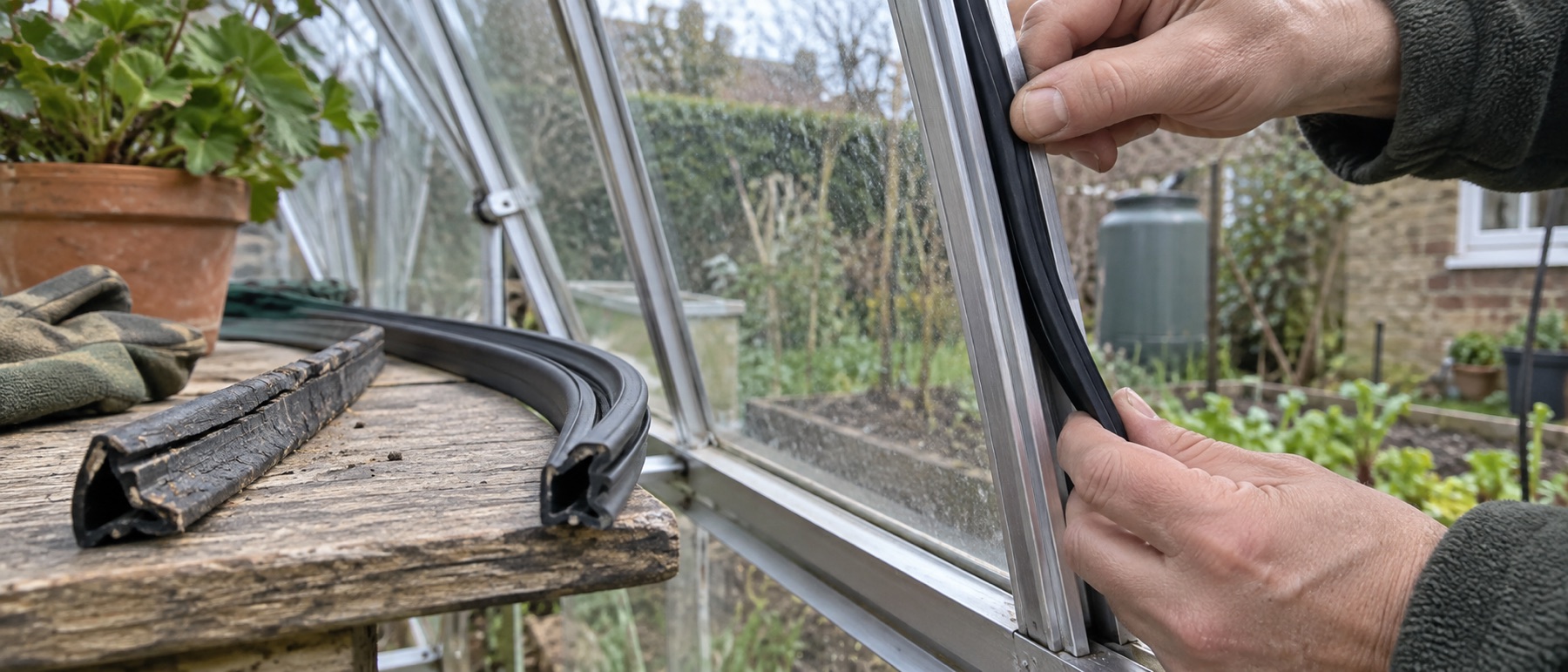
Photograph an intact seal and record where it sits in the glazing system.
Check whether the seal retains, cushions or weatherproofs the pane.
Order the manufacturer's exact profile and length with allowance for corners.
Keep designed drainage paths open and recheck pane retention afterwards.
Decide whether the seal is the real fault
Water at a pane edge does not automatically mean the rubber has failed. Condensation can run down an interior bar; an obstructed gutter can overflow; a roof vent may not seat; and a loose panel may move beyond an otherwise sound seal. Clean and dry the area, observe the path of water in ordinary rain, and inspect from safe ground level before buying parts.
Look for a seal that has become hard, cracked, shrunken, displaced or detached. Check the adjacent pane for movement and the glazing bar for distortion. If the frame has racked, deal with the structural cause first. Our replacement-glazing guide treats pane, gasket, retainer and frame as one system.
Identify the greenhouse and cross-section
Find the make, model, approximate age and assembly manual. Photograph an intact bay and take measurements only where safe. Note pane material and thickness, the slot or lip receiving the seal, and whether it is a push-in strip, glazing tape or a shaped gasket under a cap.
Similar-looking black strips are not interchangeable. Halls, for example, lists a traditional glazing strip and a distinct Cotswold gasket. Even within one brand, profile and application vary. Use a manufacturer part number or an exact cross-section match, not a nominal greenhouse size or a generic marketplace photograph.
Measure the run and plan the sequence
Measure every affected straight run and note corners, joints and changes in profile. Check whether the maker requires a continuous piece or separate lengths, and whether a roof and side bay use the same material. Do not stretch a gasket to make a short piece reach; it can shrink back and open a gap later.
Before removal, photograph how the old seal meets clips, caps and pane edges. If a gasket also contributes to retention, removing it can free the glass. Support the pane and follow the model's disassembly order. Work on high or overhead glazing is not a casual one-person job.
Clean without damaging the channel
Once the pane is safely supported or removed as specified, lift debris with a non-metallic tool and wipe the accessible channel with a clean soft cloth and water. Avoid digging into anodised or painted aluminium. Let the channel dry so you can spot cracks, corrosion, blocked drainage and a bent lip.
Do not seal over designed weep holes or the drainage end of twin-wall polycarbonate. A bead of household silicone can trap water and complicate the next repair. If the frame maker calls for a specific tape, lubricant or sealant, use that exact specification and installation order.
Fit and test the specified replacement
Seat the correct profile as shown in the manual without twisting or stretching it. Refit the pane, clips or cap in the specified order and check that all retainers are fully engaged. Check the vent and door still move freely. A gentle observation during the next rain is more useful than blasting an unverified seal with a powerful hose.
If the pane still rattles or water tracks in, revisit fit, frame alignment and gutters rather than layering on more sealant. For a broken pane, use the glass-replacement guide. For missing spring or overlap clips, see W and Z clips explained.
Helpful products
Clean the channel before fitting an exact seal
Soft cloths and a gentle hand brush can clear accessible channel dirt before installation; neither is a substitute gasket. Obtain the replacement seal from the greenhouse maker or an exact-profile specialist.

VALENGO 100% cotton cleaning cloths, seven pack
Best for: soft wiping and drying
Seven washable, low-lint jersey-cotton cloths listed at about 43 × 43cm each. A clean cloth is useful for wiping pots, staging and delicate panels where the manufacturer specifies soft cotton.
What stands out
- Suitable soft material for permitted delicate-surface cleaning
- Reusable and washable
- Separate cloths for clean and dirty jobs
Keep in mind
- A gritty cloth can still scratch a panel
- Not a substitute for rinsing loose dirt first
- seven cloths
- 100% cotton listed
- about 43 × 43cm each
- machine washable

Vikan 41942 soft hand washing brush
Best for: gentle hand washing of accessible surfaces
A 270mm short-handled brush with soft split bristles for wet cleaning accessible, delicate surfaces. Vikan names glass and Perspex; always check the greenhouse surface maker's instructions before use.
What stands out
- Soft fibres for delicate permitted surfaces
- Easy to rinse and dry
- Short handle gives close control
Keep in mind
- Not a long-reach roof tool
- Panel compatibility still needs checking
- 270mm length
- soft split bristles
- short handle
- washable design
Common questions
Frequently asked questions
Are greenhouse glazing seals universal?
No. Profiles, material, pane thickness and the channel they fit vary even within a manufacturer's range. Match the model and cross-section rather than ordering by length alone.
Can silicone sealant replace a rubber gasket?
Do not assume so. It may block drainage, prevent future pane removal or fail to provide the designed cushioning and retention. Follow the greenhouse maker's specified system.
Why is water appearing inside even after replacing a seal?
Check whether the frame is square, the pane is seated, the roof vent closes, gutters drain and condensation is being mistaken for a leak. A gasket cannot fix a displaced panel.
Should I replace all seals at once?
Inspect each length. If one area is brittle and other lengths are the same age and condition, a planned replacement may be efficient, but first confirm the correct part and safe access.
How do I know how much gasket to buy?
Use the model's parts list or measure the actual required runs, corners and joins. Check whether the supplier sells pre-cut lengths, continuous rolls or different profiles for roof and sides.