
Greenhouse cleaning guide
How to clean a greenhouse
Clean greenhouse glass, frames, gutters, staging and floors safely with warm water, reachable tools, careful drying and a structural inspection.
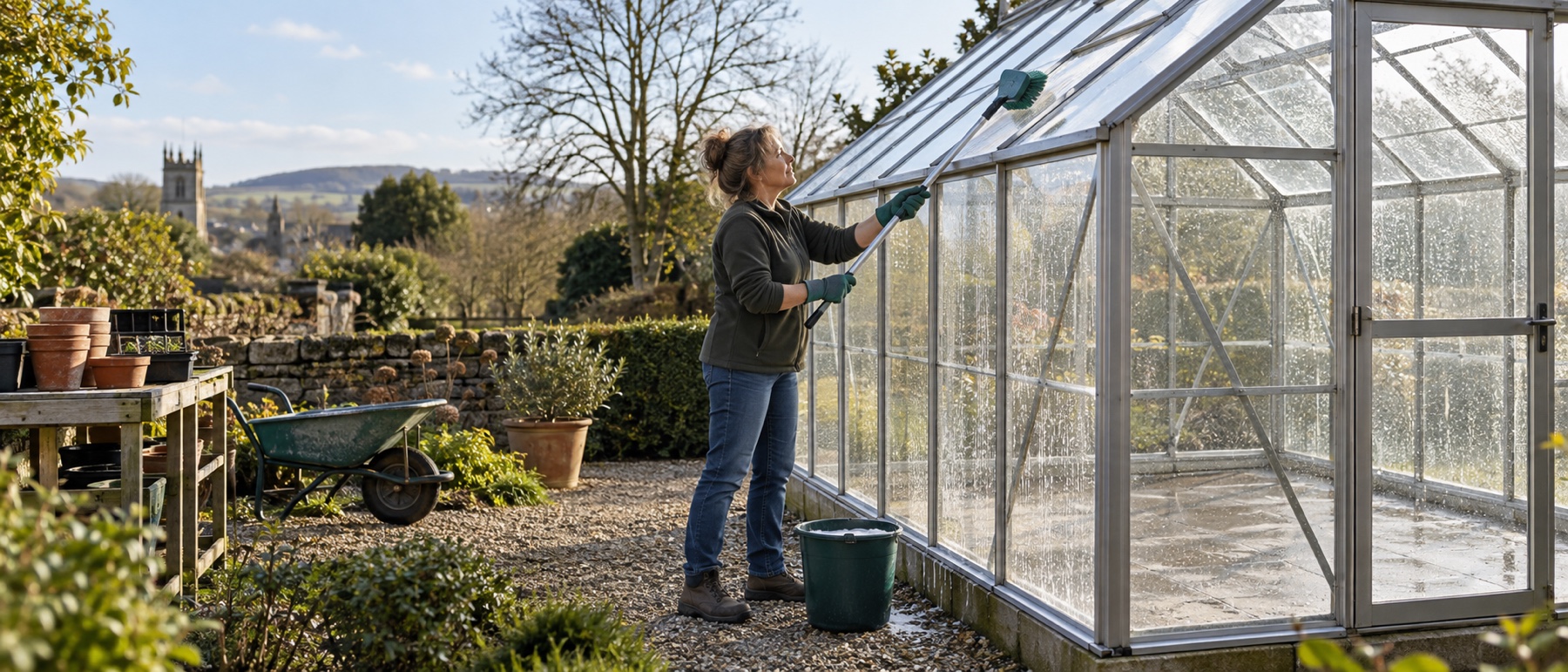
Warm water is sufficient for much routine greenhouse cleaning.
Check the greenhouse maker's instructions before using any detergent or disinfectant.
Wear gloves around glass and metal; isolate power before wet cleaning nearby.
Replace broken parts only when the correct component and a safe method are known.
Choose the right day
Plan the work for mild, dry, calm weather. Plants moved outside can be chilled or scorched, while wind makes long tools and loose glazing hazardous. Allow enough daylight for the greenhouse to dry with the door and vents open.
If any electrical equipment is present, switch it off and isolate the supply as directed before wet cleaning. Remove portable heaters, propagators and leads to a dry place. Do not spray water towards sockets, controllers or permanent connections.
Gather simple equipment
For routine cleaning, prepare gardening gloves, rubber gloves, buckets of warm water, soft cloths or sponges, a small stiff brush for frames and floors, a long-handled soft brush for reachable high glazing, a plastic plant label for trapped debris and a container for waste.
For higher panes that are still safely reachable from the ground, a soft-bristle head on a compatible handle can be useful. Check the connection and the combined reach before buying; the brush and handle shown later are separate items, and a longer tool does not make an inaccessible roof safe to clean.
Avoid metal scrapers, wire brushes and abrasive pads on glazing. Do not mix cleaning products. If the greenhouse manufacturer permits a detergent, test it in an inconspicuous area and rinse as instructed.
1. Move plants and equipment
Move healthy plants to a sheltered location appropriate for their temperature and light needs. Keep tender plants covered if conditions are cool. Quarantine anything with obvious pests or disease instead of placing it among clean plants.
Take out movable staging, trays, pots and irrigation lines. Photograph complex tube routes first. Heavy benches may need two people; do not drag them against glazing bars or across door tracks.
2. Dry-clean from top to bottom
Remove cobwebs, loose leaves and dry compost before adding water. Use a soft brush on the frame and a plastic label to ease moss or dirt from accessible overlaps. Do not pry against the edge of a glass pane or dig into seals.
Sweep the floor towards the door and dispose of diseased material appropriately rather than adding it automatically to home compost. Clearing first prevents muddy slurry and reveals cracked slabs, corrosion and pests.
3. Clear gutters and outlets
Wearing gloves, lift leaves and moss from gutters you can safely reach. Check the top of downpipes and flush gently into a bucket. Divert dirty water away from the greenhouse base.
Use a long-handled tool for higher sections. The RHS specifically advises cleaning only easy-to-reach glazing and gutters, never leaning on the roof or placing body weight against glazing. If a ladder or access platform is genuinely required, the task needs suitable equipment, conditions and competence; a professional may be the safer answer.
4. Wash the glazing
Start on the shaded side so water does not dry immediately. Wash one bay at a time with warm water and a soft cloth, sponge or brush. Work gently around clips, seals and overlaps. Rinse with controlled clean water where needed.
On glass, avoid scratching the surface or levering clips. On acrylic or polycarbonate, follow the material-specific manufacturer guidance because solvents, strong alkalis and abrasives can damage the panel. Our polycarbonate-cleaning guide covers twin-wall precautions.
5. Clean the frame
Wipe aluminium channels and timber members without flooding hollow sections. Use a small brush to remove debris around bolt heads, vent hinges and door tracks. Do not block designed drainage holes with sealant or compacted dirt.
Inspect as you work. Look for loose fixings, distorted bars, failed timber, perished seals and missing glazing clips. Record the greenhouse make, model and part before ordering replacements; similar-looking clips are not necessarily compatible.
6. Wash staging and equipment
Brush soil from staging, then wash the top, underside, joints and feet. Rinse and let it dry fully. Inspect coated metal for damage and timber for soft spots. Do not return an unstable bench simply because it looks cleaner.
Wash reusable pots and trays according to the needs of the crop and any known pest or disease issue. Keep clean equipment separate from dirty items during the process to avoid recontamination.
A rounded pot brush can remove stuck-on soil from empty pots of a suitable diameter before a warm-water wash. It is too broad for small module cells and too coarse for glazing. Rinse the brush itself and let it dry rather than storing it wet beside clean trays.
7. Clean the floor
Scrub concrete or paving with warm water and a stiff floor brush. Pay attention to algae in shaded corners and beneath benches because it can be slippery. Keep water moving towards a suitable drain without washing soil into surface-water systems contrary to local guidance.
For gravel, rake out leaves and spilled compost rather than saturating the whole base. Replace contaminated or heavily compacted surface material if necessary.
8. Dry and ventilate
Open the door and working vents in calm weather. Let glazing, frame channels, staging and equipment dry before restocking. Standing moisture undermines the hygiene work and makes it harder to spot an active leak.
Clean the door track and test every latch and vent while the greenhouse is empty. Lubricate only where the manufacturer specifies a compatible product; excess oil attracts grit.
9. Return only clean, sound items
Put staging back without blocking vents or touching glazing. Route irrigation neatly and pressure-test it. Return healthy plants in planned groups, leaving airflow around foliage. Discard broken labels, brittle pots and unnecessary packaging instead of recreating the clutter.
Deal with a specific pest or disease separately
Cleaning reduces hiding places and inoculum, but it is not a universal treatment. Identify the problem before choosing a chemical or biological control. Follow current product authorisation, label rates, re-entry periods and disposal requirements. Never assume that a stronger concentration will clean better.
Make the annual job smaller
Sweep spills promptly, remove dead leaves weekly, keep gutters filtered and wipe algae before it becomes established. Move one shelving unit at a time during the season to clean hidden areas. A short maintenance rhythm makes the full spring or autumn clean faster and exposes faults before severe weather.
Sources and related guides
The RHS greenhouse-cleaning guide provides the core warm-water, tool and safety guidance. The RHS algae and moss guide explains why growths reduce light and make floors slippery. The HSE work-at-height hub covers planning and safe access where ground-level tools are not enough.
Use polycarbonate-specific cleaning if your panels are plastic, and compare soft greenhouse-cleaning tools before applying a brush intended for pots or floors to glazing. Follow cleaning with the maintenance checklist so loose fittings are not hidden by a newly clean pane.
Helpful products
Brushes for glazing and reusable pots
The Gardena brush head is sold separately from its compatible Cleansystem handle. Use the pair gently from stable ground where the surface maker permits it; the smaller Esschert brush is for empty flower pots, not glazing.

Gardena Cleansystem soft long-handled brush head
Best for: gentle cleaning of reachable glazing
A soft-bristle, swivelling brush head for gentle wet cleaning of larger outdoor surfaces. Gardena specifically names greenhouses among its intended delicate surfaces; a compatible Cleansystem handle is required and sold separately.
What stands out
- Maker specifically names greenhouses
- Gentle bristles for delicate surfaces
- Adjustable head angle
Keep in mind
- Handle is not included
- Not a licence to lean on fragile glazing or reach an unsafe roof
- soft bristles
- swivelling head
- Cleansystem handle required
- brush head only

Gardena Cleansystem Handle M, 150cm
Best for: ground-level reach with a matching head
A 150cm aluminium water-fed handle with adjustable flow for Gardena Cleansystem handle brushes. It is the compatible companion to the soft brush head above, not a cleaning brush by itself.
What stands out
- Designed for matching Cleansystem heads
- Water flow can be controlled at the handle
- Useful reach from stable ground
Keep in mind
- Brush head is sold separately
- Reach remains limited by safe access and greenhouse shape
- 150cm handle
- aluminium
- variable water flow
- Cleansystem brush compatible

Esschert Design flower-pot bristle brush
Best for: soil removal from larger pots
A rounded coconut-fibre brush made to remove old soil from flower pots. The maker specifies pots from about 12cm diameter, so it is for larger pots rather than narrow seed-module cells.
What stands out
- Shape suits round pot interiors
- Removes dry compost before wet washing
- Hanging loop for drying
Keep in mind
- Too broad for small module cells
- Not a soft glazing brush
- TG114
- for pots from about 12cm diameter
- beech-wood handle
- coconut-fibre bristles
Common questions
Frequently asked questions
What is the best thing to clean greenhouse glass with?
The RHS says warm water is generally sufficient. Use a soft cloth, sponge or suitable long-handled brush and avoid abrasive scourers or wire brushes that can scratch glazing.
When should I clean a greenhouse?
Early spring, late summer or autumn are practical times, depending on how the greenhouse is used. Choose a mild, dry, calm day when plants can be moved without chilling and the structure can dry quickly.
Can I pressure-wash a greenhouse?
A powerful jet can disturb glazing seals, force water into twin-wall channels and damage plants or electrics. Follow the greenhouse manufacturer's guidance; controlled hand washing is easier to direct and inspect.
Do I need to disinfect a greenhouse every year?
Not automatically. Physical removal of debris and warm-water cleaning are effective routine steps. If a specific pest or disease requires a product, choose one authorised for that use and follow its label and disposal instructions exactly.
How do I clean a greenhouse roof safely?
Clean only what is safely reachable with a long-handled tool from the ground. Never lean body weight on glazing or climb onto the roof. If safe access cannot be arranged, use a competent professional.