
Second-hand buying guide
Buying a used greenhouse
Inspect a second-hand greenhouse before buying: check frame alignment, glazing, fixings, vents, missing parts, dismantling, transport and the real cost of rebuilding it.
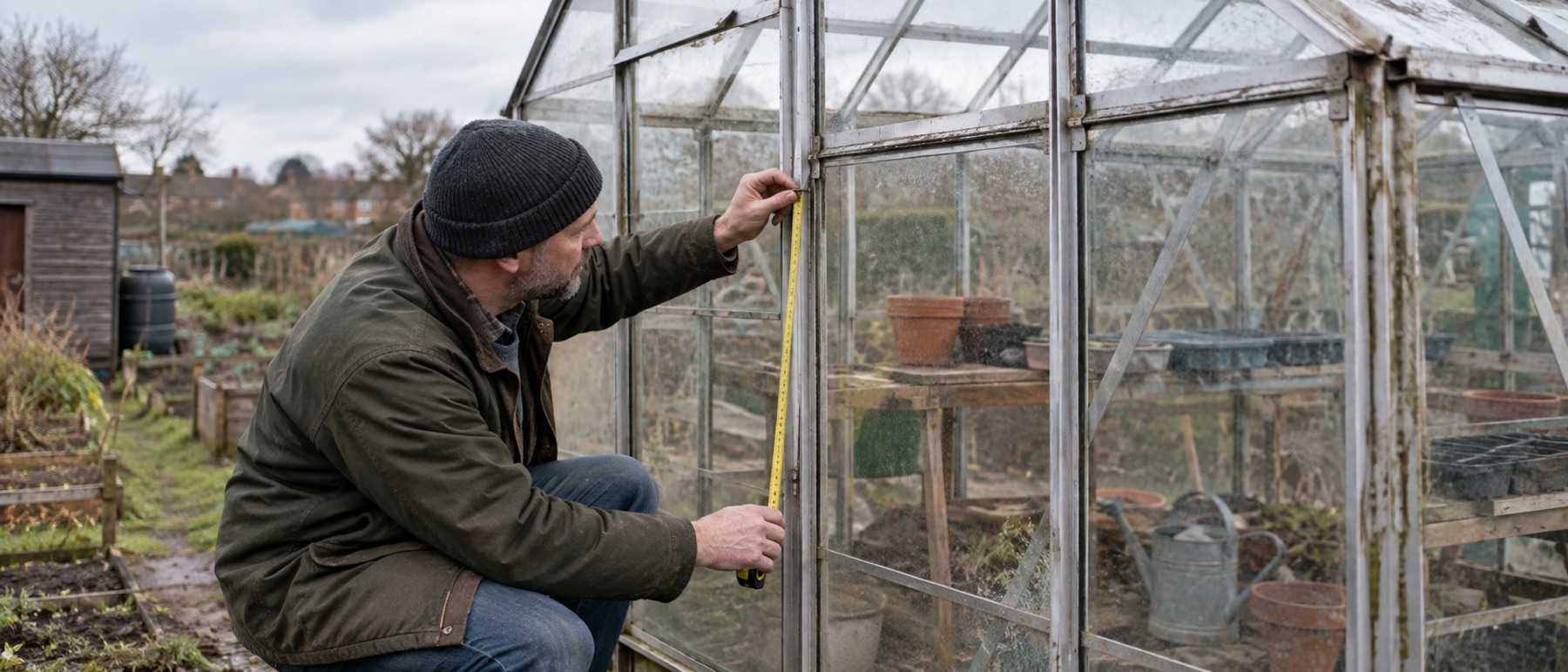
Get the make, model and assembly manual before dismantling.
Photograph every elevation and label frame members and pane positions.
Reject an unexplained twist, severe corrosion or a structurally unsound door opening.
Compare the full rebuild cost with a suitable new alternative.
Start with the assembled greenhouse
If possible, inspect a used greenhouse before it is taken apart. An assembled frame reveals distorted corners, leaking joints, doors that do not close squarely and panes that have been improvised to fit. Ask the seller for the manufacturer, model, original dimensions and assembly instructions. If those cannot be identified, replacing a specialist clip or curved panel may be harder than the low asking price suggests.
Take a tape measure and compare actual base length and width with the proposed site. Check overall height and door opening as well. A nominal “6 × 4” can vary from another manufacturer's 6 × 4 enough to miss an existing foundation.
Inspect the frame and connection points
Stand back and sight along the ridge, eaves and base. Look for sagging, bowed members, severe corrosion, rotted timber and a door opening that is no longer square. Small surface marks are less concerning than twisted structural members or missing diagonal bracing. Inspect bolt holes for tearing and look for snapped or seized fixings at the corners.
Aluminium frames are light, so a section that has been bent during a previous move can be difficult to align again. Timber should be probed carefully around the sill, end grain and glazing rebates where damp is trapped. If the seller has replaced parts, ask what changed and why.
Count every pane, vent and fitting
List the pane material and thickness, then count roof, side, end and door panels. Look for chipped glass edges, cracked polycarbonate, brittle seals and mismatched replacement panes. Missing glazing can be expensive or awkward if the shape is unusual. A present pane is not necessarily reusable if it has been drilled or forced into an incorrect opening.
Open and close every vent and the door. Check hinges, tracks, wheels, stays, handles and catches. Test whether an automatic opener can be removed or must be replaced. Confirm gutters and downpipes, if the design uses them. The replacement glazing guide explains how to identify a compatible panel system.
Make a complete parts inventory
Ask for all bolts, clips, brackets, capping strips and anchors, even if you intend to buy new consumable fixings. Photograph each wall and roof bay. Label matching frame members and bundle them by elevation before dismantling. Bag small parts by step or location; one anonymous box of bolts makes the rebuild slower and increases mistakes.
Keep a copy of the manual offline. If no manual exists, create a detailed photo sequence while the structure is still standing. Mark which panes came from which bay and protect edges for transport. Do not stack glass loosely in a car or ask one person to handle a large pane alone.
Price the move, not just the purchase
The true used-greenhouse budget includes dismantling time, safe packaging, vehicle hire, travel, replacement glazing and clips, ground preparation and reassembly. The old base may not fit the new site or survive the move. Before paying, check whether the final cost and work still beat a new kit with readily available parts.
Use a current new model as a benchmark rather than an assumed historical price. The Palram Hybrid 6 × 4 includes a perimeter base and polycarbonate glazing; the Halls Green Frame 6 × 4 offers toughened glass but an optional matching base. Their different component packages show why the comparison must be like for like. Our cost guide provides the full budget checklist.
Dismantle and rebuild safely
Plan a dry, calm day and at least one helper where glazing or long sections require it. Remove loose accessories, then glazing in a controlled sequence, followed by frame sections according to the manual. Use suitable gloves and eye protection, but do not rely on gloves to make unsupported glass safe. Keep children and pets away from the work area.
At the new site, prepare a level approved foundation first. Rebuild the frame square and plumb, anchor it using a suitable method, then install glazing and test doors and vents. Do not force panels into a misaligned frame. A used greenhouse can be an excellent value, but only when the finished structure is safe and pleasant to use.
Try the Halls instruction library if the identified frame is a Halls model, or obtain the corresponding manual from the actual maker. If the model cannot be identified, price that uncertainty into the decision rather than assuming replacement parts will fit.
Helpful products
New-model benchmarks for a used purchase
These are useful size and component benchmarks when checking whether a used kit still represents the right project.
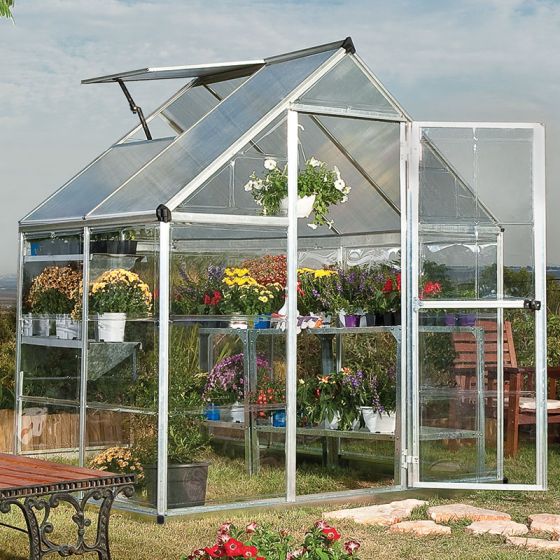
Palram Canopia Hybrid 6 × 4 greenhouse
Best for: a compact first walk-in greenhouse
A compact walk-in with a 1.85 × 1.25m base, diffusing twin-wall roof panels and clear polycarbonate sides. It is the most balanced fit here for a small garden that can still keep a central path.
What stands out
- Compact walk-in footprint
- Clear sides and diffusing roof
- Steel perimeter base included
Keep in mind
- Single 565mm door
- One roof vent means summer airflow needs planning
- 1.85 × 1.25m base
- aluminium
- polycarbonate
- one roof vent
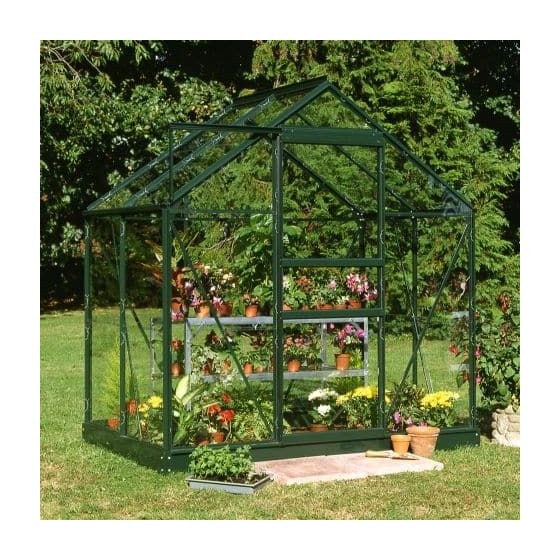
Halls Green Frame 6 × 4 greenhouse
Best for: toughened glass in a compact plot
A traditional-looking 6 × 4 with a green aluminium frame and large panes of toughened glass. It is the clearest fit if you want glass in a small footprint and accept a separate base.
What stands out
- Large-paned toughened glass
- Low-maintenance coated aluminium
- Roof vent and gutters included
Keep in mind
- Matching base costs extra
- Heavy panes need careful assembly
- 1.93 × 1.33m base
- green aluminium
- toughened glass
- optional base
Common questions
Frequently asked questions
Is a second-hand greenhouse worth buying?
It can be when the kit is substantially complete, the frame is sound and replacement parts are available. Include dismantling, transport, glazing, base and anchoring in the comparison with a new model.
Can I reuse an old greenhouse base?
Only if its dimensions, level, condition and anchoring method suit the greenhouse at the new site. A base should be assessed as part of a complete installation rather than assumed reusable.
What is the biggest risk when dismantling a used greenhouse?
Unlabelled or damaged components and broken glazing can turn a cheap kit into a difficult rebuild. Photograph, label and pack systematically; use suitable protective equipment and help for glass.
Can I replace missing greenhouse panes with any plastic sheet?
No. Match the frame's required material, thickness, dimensions and retention method. Incorrect panels can fit poorly or fail in wind; use model-specific advice where possible.
Do used greenhouses come with a warranty?
Do not assume a manufacturer's warranty transfers. Ask the seller for documentation and check the maker's terms; base your decision on the condition and completeness you can verify.