
Propagation under glass
Greenhouse propagation guide
Set up a reliable UK greenhouse propagation area for seed trays, softwood cuttings and growing-on plants, with the right warmth, humidity, light and hygiene.
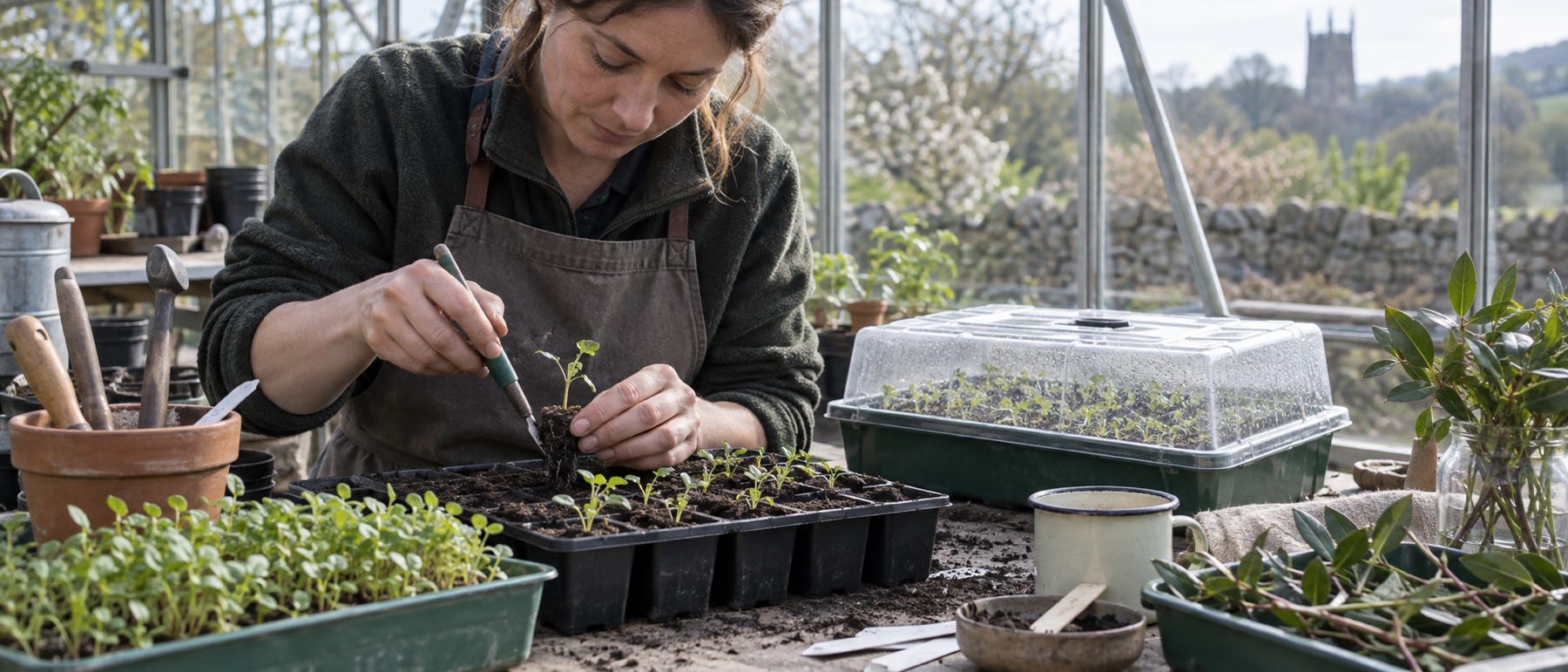
Use crop-specific instructions for germination and rooting temperatures.
Clean tools and trays between batches, especially after any disease problem.
Remove propagator covers gradually as roots or shoots develop.
Plan bench and final planting capacity before multiplying plants.
Propagation is a sequence of environments
In a greenhouse, propagation can mean sowing annuals and vegetables, rooting cuttings or raising bought plug plants. These activities overlap on the bench, but they are not one climate problem. Germinating seed may need warm compost; an unrooted cutting needs protection from losing water; a rooted seedling needs brighter light and more moving air.
The useful design is therefore a progression: clean preparation surface, covered warm or humid area, and an open growing-on area. Leave room to lift a lid, water without splashing electrics and move trays without brushing every neighbouring plant. In a small greenhouse, the zones can be on one bench at different times rather than permanent installations.
Start with a capacity plan
Count how many mature plants your garden and greenhouse can accommodate. A single tray of 40 tomato seedlings can look modest in March and be unmanageable by May. Note the final pot, border or outdoor destination for each batch, then reserve the growing-on bench space those plants will occupy between propagation and planting.
Our seed-starting guide covers the sowing method in detail. The UK growing calendar shows when a greenhouse bench tends to switch from nursery to summer-crop use. The dates remain flexible because UK regions and individual seasons differ.
Set up the seed zone
Use cleaned modules or pots, fresh peat-free compost and labels. Follow each seed packet for depth, temperature and light. A heated propagator can stabilise the root zone for a tender sowing, but it should sit on a level, dry surface with an appropriate electrical supply. Its cover is temporary: vent and remove it as shoots emerge.
Do not assume a greenhouse propagator makes the rest of the building safe. The RHS notes that cold weather can defeat a small unit and that new seedlings require a light, frost-free place to grow on. Measure the bench air overnight with a max/min thermometer before moving tender trays out from under their cover.
Set up the cutting zone
Softwood cuttings are taken from fresh growth at a species-appropriate stage. Choose healthy, pest-free stock plants and a clean sharp tool. Prepare the cutting promptly, avoid crushing stems and follow the plant's guidance for cut position, leaf reduction and rooting medium. Different plants root at very different rates; a universal timetable or powder is not a guarantee.
An enclosed propagator or clear cover can slow water loss while roots form. Keep it in bright but not scorching light, and ventilate enough to avoid persistent wet foliage and rotting material. Remove any failed cutting promptly. Once rooted, gradually increase ventilation rather than abruptly moving a tender cutting into hot sun or a cold draught.
The RHS softwood-cuttings guide gives the detailed technique and examples. It is the safer reference for plant-specific variations than treating all cuttings like tomato seed trays.
Make the growing-on zone the brightest useful space
When young plants are rooted, they need room for air between leaves and enough light to stay compact. Pot on before roots become badly congested. Keep the new compost appropriately moist while avoiding permanent saturation. A greenhouse shelf beneath another shelf may be too shaded for actively growing seedlings, even though it holds the pots neatly.
Temperature still matters. Hardy transplants may tolerate a cool greenhouse that would harm peppers or young cucumbers. Place a thermometer at plant height, not beside a heater, and compare minimum readings over several nights. The frost-protection guide helps with decisions when a late cold spell interrupts the plan.
Water, humidity and air are separate controls
In a covered tray, moisture loss is slower. Check compost with a finger or by lifting a module rather than watering on autopilot. Water gently enough not to wash seed away. Standing water below pots can exclude air from roots; empty surplus where the system requires it.
Humidity around unrooted cuttings can be useful, but a wet greenhouse floor and closed vents do not substitute for a clean propagation cover. Once plants have roots, progressively open the environment. Fungal disease risk grows when leaves are crowded, wet and still, particularly at night. Our ventilation guide explains roof and low-level airflow.
Keep a clean-to-dirty workflow
Prepare fresh compost and cuttings on a clean section of the bench. Inspect incoming plants for pests before placing them beside new trays. Finish with the least healthy plants, then wash tools and hands before handling clean material again. Remove spilled compost and dead leaves rather than allowing them to collect under trays.
Do not automatically sterilise everything with a chemical. Physical cleaning and warm water handle much routine work. If a diagnosed problem requires a product, check the current UK authorisation and precise label use. The greenhouse hygiene guide sets out the wider routine.
Recognise when a batch is failing
Seedlings that stretch need more light relative to warmth. Sudden stem collapse demands a review of hygiene, water and density. Cuttings that rot may have sat too wet, lacked airflow or come from unhealthy stock. A tray that dries at one end may be exposed to a vent or a heating hot spot.
Rather than buying another gadget immediately, record the location, temperature, watering and time to rooting or emergence. Run a small comparison batch. One controlled change gives useful evidence; changing heat, light, compost and irrigation together hides the cause.
Hardening off and final planting
Plants raised under cover need a staged transition to their final conditions. Outdoor-bound plants should be hardened off progressively when weather allows, with protection against late frost and harsh sun. Greenhouse-bound tender crops still need stable overnight conditions before planting into a final pot, growbag or border.
Clear the nursery bench as mature summer crops claim the same space. Reuse trays only after washing and drying them, and keep labels with plants through the move. For a crop-specific example, continue with growing greenhouse tomatoes in the UK.
Sources and related reading
The RHS greenhouse-vegetable guide, indoor seed-sowing guide and softwood-cuttings guide underpin the different stages described here.
Helpful products
Practical kit for a controlled propagation bench
A sizeable heated propagator can serve the warm zone; a max/min thermometer helps determine whether the adjacent growing-on bench is suitable overnight.
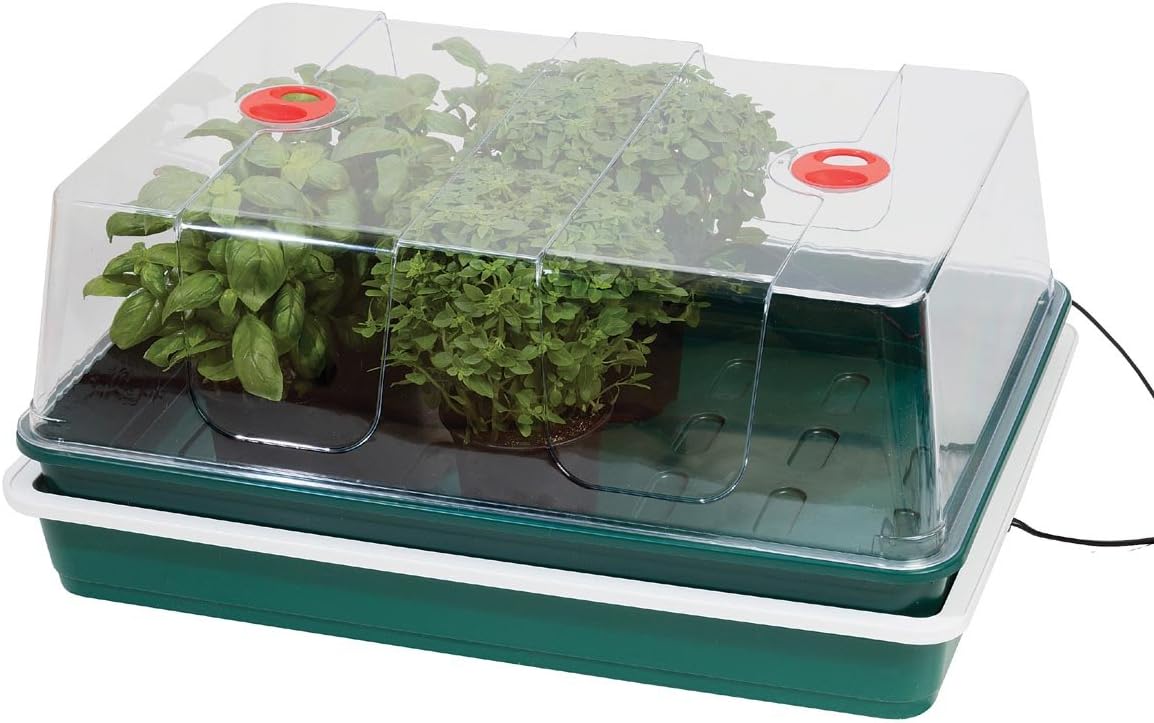
Garland 50W variable-temperature electric propagator
Best for: adjustable heat for several trays
A broad heated base with a tall clear dome and adjustable temperature control. Its listed 59 × 41cm footprint gives room for several seed trays, provided there is a safe supply and enough light.
What stands out
- Useful tray capacity
- Adjustable control
- Tall lid gives seedlings headroom
Keep in mind
- Wide bench footprint
- Warm base does not heat the whole greenhouse
- 59 × 41 × 27cm listed size
- 50W
- adjustable temperature control
- tall clear dome

Brannan Quickset digital max/min greenhouse thermometer
Best for: easy daily max/min checks
A wall-mounted digital thermometer with current, maximum and minimum readings and a one-button reset. The published measuring range is −20°C to 50°C with ±1°C stated accuracy.
What stands out
- Large separate readings
- One-button reset
- Wall-mounted greenhouse format
Keep in mind
- No humidity reading
- No remote alerts or history graph
- −20°C to 50°C range
- ±1°C stated accuracy
- max/min memory
- AAA battery included
Common questions
Frequently asked questions
Is a greenhouse enough to propagate tender plants in early spring?
Not necessarily. It may be bright by day but too cold overnight. Tender seeds and cuttings can need a warm propagator or indoor start, followed by a frost-free place to grow on.
What is the difference between propagation and growing on?
Propagation establishes a new plant from seed, cutting or division. Growing on is the next stage, when a rooted young plant needs more light, air and space and often less enclosed humidity.
Should cuttings be kept under a lid?
Many softwood cuttings benefit from a humid covered environment while roots form, but they still need suitable light and ventilation. Follow species-specific RHS guidance and remove covers gradually after rooting.
Can seed trays and cuttings share a heated propagator?
Only when their temperature, humidity, timing and hygiene needs are compatible. Separate small trays or lids make it easier to remove one batch promptly without disturbing another.
How do I know a cutting has rooted?
Look for new growth and gently check for resistance or visible roots at the pot drainage hole. Avoid repeatedly tugging delicate cuttings; timing varies greatly by plant.