
Pest identification
Greenhouse aphids: identification and control
Find aphids on greenhouse crops, distinguish their damage from other pests and manage colonies early with low-impact, crop-appropriate methods.
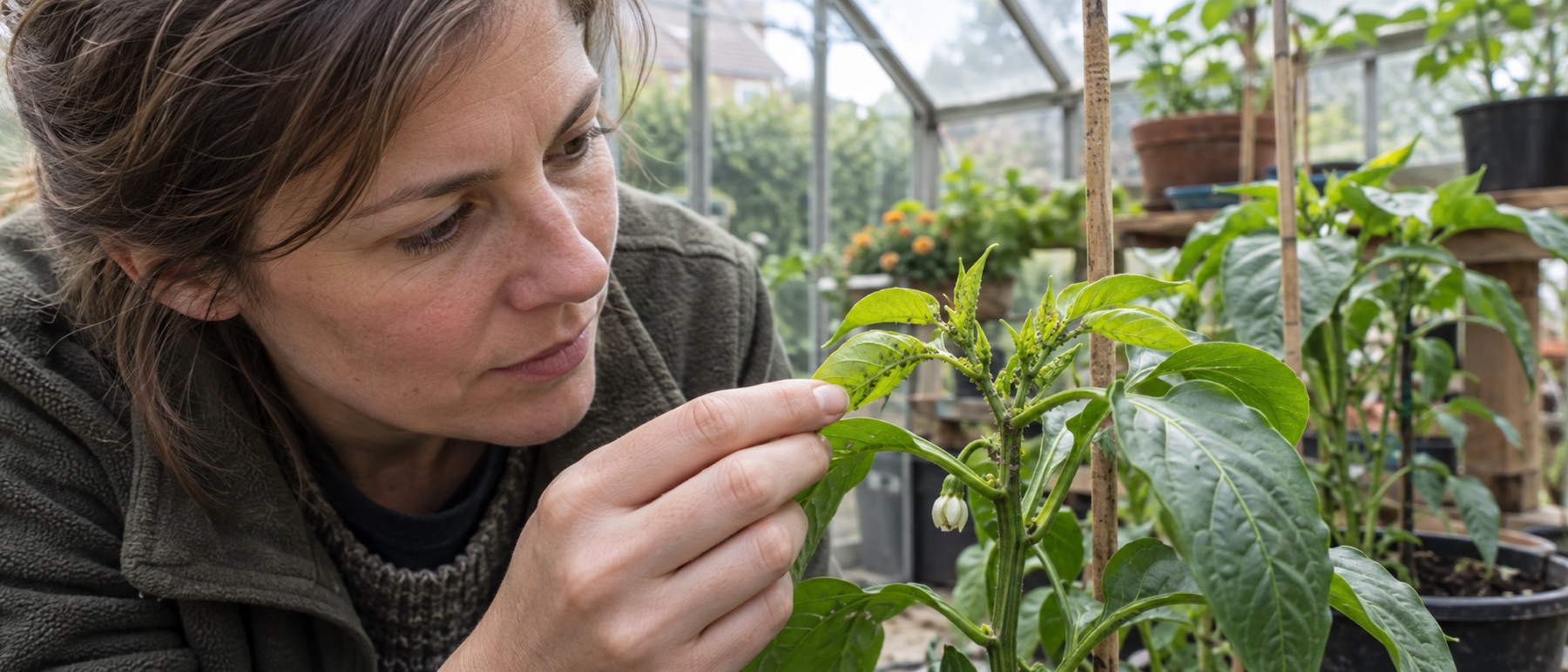
Check shoot tips, buds and leaf undersides twice weekly in active growth.
Look for living insects, cast skins, honeydew and distorted growth.
Deal with small colonies by hand before they multiply.
Preserve beneficial insects and avoid routine blanket sprays.
Identify the colony, not just the symptom
Aphids are small, soft-bodied insects that feed on plant sap. Green, black and other forms can occur under glass. Look first at new leaves, shoot tips, buds and the undersides of leaves. The RHS aphid guide describes curled or distorted growth, sticky honeydew and sometimes dark sooty mould growing on that residue. Whitefly can also leave honeydew, while mites cause a finer stippled pattern, so finding the actual insect matters.
Inspect several plants in the same crop and nearby weeds. A few insects on one shoot are not the same as colonies on every plant. Winged aphids may arrive from outdoors or develop when a colony becomes crowded. Recording where the first colony appeared helps you decide whether a new plant, an overwintered host or an open vent is part of the pattern.
Make a proportionate first response
For a small, accessible colony, the RHS recommends removing insects by hand. Pinch out a badly infested soft tip only where the crop tolerates it; do not remove the growing point from a plant that depends on it. Check again after a few days because eggs or missed individuals can restart a colony. Wipe honeydew from sound, reachable surfaces with water, but do not scrub delicate leaves.
Do not treat every aphid as a crisis. Aphids are food for ladybirds, hoverfly larvae, lacewing larvae and parasitoid wasps. The RHS guide to aphid predators notes that purchased biological controls can also be used under glass. A broad spray can harm those natural enemies and undermine a release. Our biological-controls guide explains when a targeted introduction is worth considering.
Follow the crop and colony through time
New pepper, cucumber and tomato growth deserves regular inspection, especially when plants are crowded and predators cannot easily reach colonies. Turn leaves gently, inspect around flowers and move nearby weeds or spent growth that shelter insects. Bring bought plants into a separate observation area if possible before placing them among established crops. The greenhouse hygiene guide covers how to keep problem material separate.
Healthy plants may tolerate some feeding, but heavy colonies can distort growing points and contaminate fruit with honeydew. Aphids can also transmit plant viruses. If a plant has unusual persistent mosaic or severe distorted growth, identify the plant problem rather than assuming killing aphids will cure already infected tissue.
Be careful with products marketed as control
Do not choose a pesticide solely because it is sold for garden pests. UK authorisation is product- and use-specific. The HSE garden-pesticide guidance says to check the authorised-product database and read the exact label, including crop and harvest restrictions. A product described as “natural” is not automatically selective or permitted for a food crop. Start with identification, removal and inspection; use a current authorised product only if truly needed and if its precise label covers the situation.
If the insects are white and fly when disturbed, use the whitefly guide instead. If fine webbing and pale stippling dominate, check the red spider mite guide. Distinguishing these problems saves unnecessary treatment and helps preserve useful wildlife under glass.
Helpful products
Inspect colonies and clean affected surfaces
A hand lens helps confirm small insects on shoots and leaf undersides. Soft cloths are for wiping honeydew from sound, reachable staging or tools—not for scrubbing tender plants or treating an infestation.

Carson SG-10 SureGrip hand magnifier
Best for: closer pest identification
A 2× glass hand lens with a small higher-power spot for examining insects on leaves and checking whether apparent specks are living pests. It helps observation, not control.
What stands out
- Makes small insects easier to distinguish
- No batteries or app
- Useful across several pest guides
Keep in mind
- Does not identify every species
- Must be focused close to the subject
- SG-10 model
- 2× main glass lens
- higher-power spot lens
- hand-held soft-grip format

VALENGO 100% cotton cleaning cloths, seven pack
Best for: soft wiping and drying
Seven washable, low-lint jersey-cotton cloths listed at about 43 × 43cm each. A clean cloth is useful for wiping pots, staging and delicate panels where the manufacturer specifies soft cotton.
What stands out
- Suitable soft material for permitted delicate-surface cleaning
- Reusable and washable
- Separate cloths for clean and dirty jobs
Keep in mind
- A gritty cloth can still scratch a panel
- Not a substitute for rinsing loose dirt first
- seven cloths
- 100% cotton listed
- about 43 × 43cm each
- machine washable
Common questions
Frequently asked questions
What do greenhouse aphids look like?
They are small, soft-bodied sap feeders often clustered on tender shoots or leaf undersides. They may be green, black or another colour; some develop wings.
Is sticky residue on leaves always aphids?
No. Aphids produce honeydew, but whitefly and other sap feeders can too. Inspect the plant to identify the insect before acting.
Do a few aphids need treatment?
Usually not automatically. The RHS recommends tolerating some aphids and watching for natural enemies; intervene where colonies threaten vulnerable growth.
Can I use biological controls for aphids in a greenhouse?
Yes, species-specific predators or parasitoids are available, but success depends on identification, timing and supplier release conditions. Follow the supplier's instructions.
Can I spray aphids on edible crops?
Do not assume a product is allowed. Check the HSE amateur-product database and exact label for the crop, greenhouse situation and harvest instructions before considering any pesticide.