
Removable summer shade
Greenhouse shade-netting guide
Compare shade-netting coverage, external versus internal fitting, secure fixings and the signs that it is time to remove greenhouse shade.
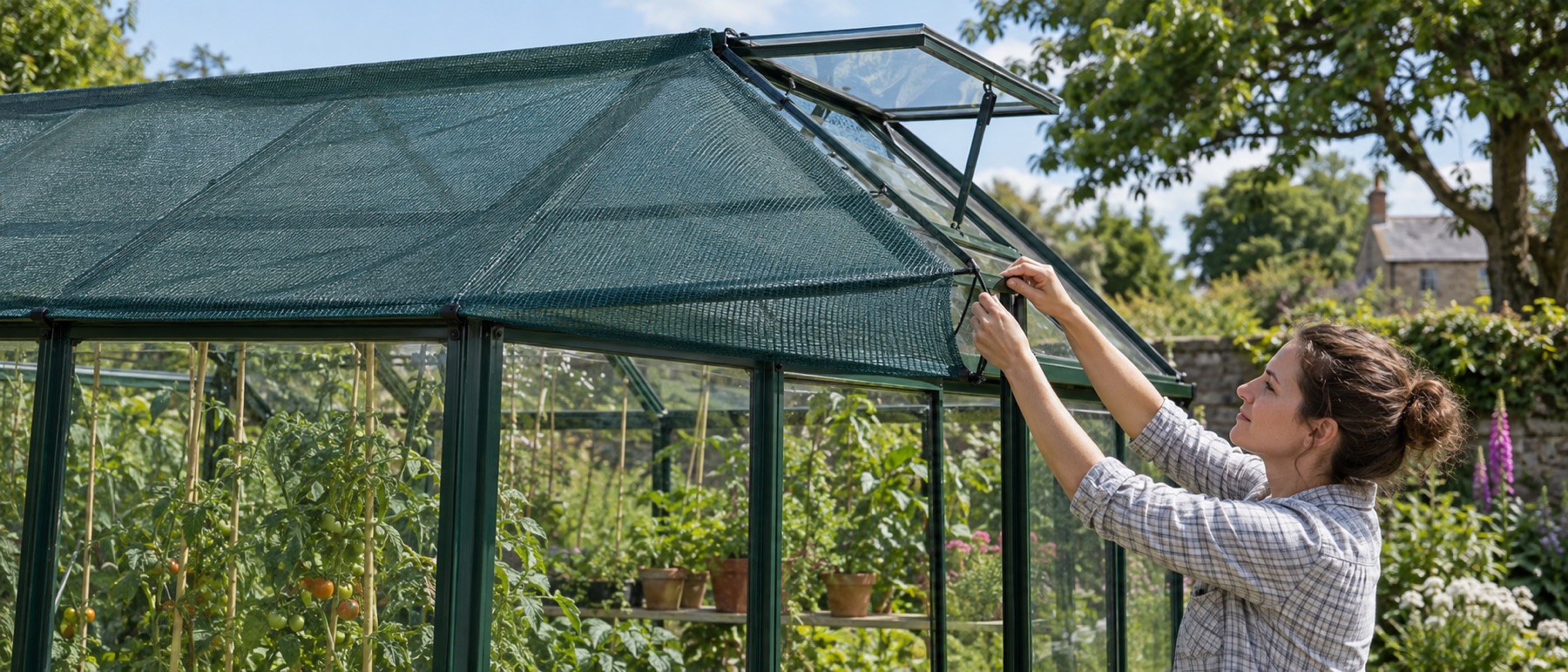
Measure the roof or wall area, including fixing allowance.
Begin with the sunniest section rather than covering all glazing.
Keep mesh, cords and clips clear of opening vents.
Recheck temperature and plant growth, then remove shade as light wanes.
Decide whether the greenhouse needs netting
The aim is not to keep a greenhouse dark all summer. Netting is useful when a measured temperature peak or leaf scorch persists despite working ventilation. A sunny roof panel and the side facing the strongest afternoon sun may need different treatment. The RHS ventilation and shading guidance recommends shading as a supplement to adequate air exchange, not a substitute for it.
Use a shaded max/min thermometer at plant height for a baseline. Note which plants suffer first, the time of day and whether door and roof vents were open. If a crop is healthy and temperatures are manageable, extra mesh may simply take away useful light. The broader overheating action guide sets out the order of fixes.
Understand percentage and placement
A product labelled “30% shade” does not promise that the greenhouse will be 30% cooler. Mesh specifications generally concern light exclusion; actual temperature depends on outside weather, air movement, glazing, roof height and how much area you cover. Avoid selecting by percentage alone. Measure the section to cover, allow for the fixing method and consider a trial on one elevation before wrapping the whole structure.
External mesh can intercept sunlight before it crosses the glazing. Internal netting is often easier to reach and remove but lets more solar energy into the enclosure before it is shaded. Neither should hang against a hot plant canopy or touch moving vent parts. If the greenhouse maker prohibits attaching items to glazing bars, use an approved freestanding or adjacent support rather than improvised fixings.
Fit for wind, access and airflow
Lay out the mesh so it can be tensioned without distorting the frame. Check eyelet spacing, suitable clips or cords and an accessible way to release the cover. Do not drill a greenhouse frame or tie netting to a delicate vent arm unless the manufacturer permits it. Leave the door and roof vents their entire travel. A netted roof can catch wind; check it after gusty weather and remove it if the fixings cannot remain secure.
Do not work from unsupported glass or polycarbonate, and do not lean on roof panels. If the roof cannot be safely reached, a ground-level fitting plan or professional installer may be the better choice. Keep the path to emergency access and the door clear of trailing ties.
Make the trial easy to review
+Record which elevation is covered, how much mesh is fitted, the vent positions and the maximum at crop height. Compare broadly similar sunny days rather than a hot day before fitting with an overcast day afterwards. Keep an eye on the plants behind the most shaded section: a cooler thermometer is not a success if the crop loses too much light.
If heat remains excessive, recheck the air path and whether an automatic vent actually opens fully. If the crop becomes weak or slow during dull weather, reduce coverage before adding more equipment. A removable arrangement gives you a useful seasonal adjustment; a permanently wrapped greenhouse makes it harder to respond to changing conditions.
Reassess through the season
After fitting, reset the thermometer and compare conditions on similar sunny days. Observe flowering and growth as well as heat relief. More shade is not automatically better: plants may become soft or slow under excessive cover, especially during dull UK spells. Roll the netting back when conditions change, clean it before storing, and inspect the greenhouse ventilation route. If you are also using fans, remember that a circulation fan cannot make up for blocked fresh-air openings.
Helpful products
Mesh and monitoring for a trial fit
Start with a modest removable coverage and check the actual change inside the greenhouse before extending it.
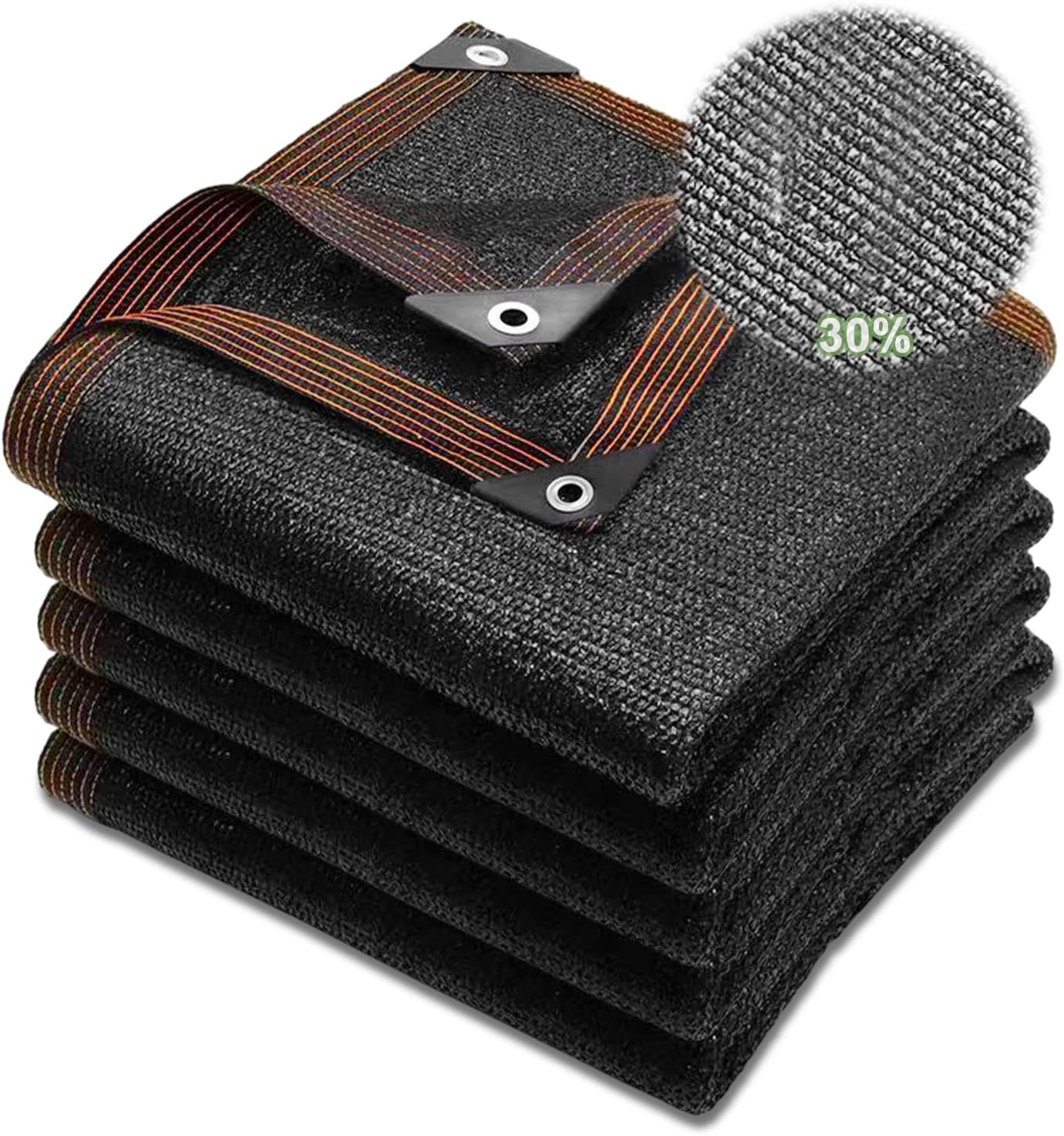
30% greenhouse shade cloth with eyelets
Best for: reducing harsh summer solar gain
A 3 × 4m green shade net with eyelets. Thirty-percent shading is a lighter intervention than opaque covers, but the right density and fixing depend on crop, aspect, glazing and wind exposure.
What stands out
- Allows light through
- Removable outside the hot season
- Eyelets simplify tidy fixing
Keep in mind
- Must be secured for wind
- Measure the exact roof and sides first
- 3 × 4m
- 30% shade
- eyeleted edge
- removable mesh

Digital max/min greenhouse thermometer
Best for: tracking overnight lows and daytime peaks
A simple wall-mountable display that records the highest and lowest temperature since the last reset. Those extremes are more useful than one midday reading when deciding on shade or frost protection.
What stands out
- Makes temperature swings visible
- Easy to read and reset
- No app or account required
Keep in mind
- Place away from direct sun
- Manual readings do not provide remote alerts
- digital display
- maximum and minimum memory
- °C and °F
- wall mountable
Common questions
Frequently asked questions
What does 30% shade netting mean?
It describes the mesh's approximate light-blocking specification, not a guaranteed 30% fall in greenhouse temperature. The effect varies with glazing, sun angle, airflow and placement.
Is external shade better than internal shade?
External mesh intercepts sunlight before it passes through the glazing and can reduce heat gain more effectively, but it needs weatherproof, wind-safe fixing and must not obstruct vents.
Can I put netting over a roof vent?
Do not bind or block the vent. Leave enough clearance for the full opening movement and any automatic mechanism, following the greenhouse maker's fixing guidance.
When should I remove greenhouse shade netting?
Remove or roll it back when bright-day heat is no longer a problem or growth suffers from reduced light. This may be well before autumn in a dull spell.
Will shade netting replace ventilation?
No. Shade reduces solar load but cannot clear trapped hot, humid air. Check roof and lower openings first.