
Glazing comparison
Glass vs polycarbonate greenhouses
Compare greenhouse glass and polycarbonate for light, safety, heat retention, cleaning, wind, installation and long-term use in UK gardens.
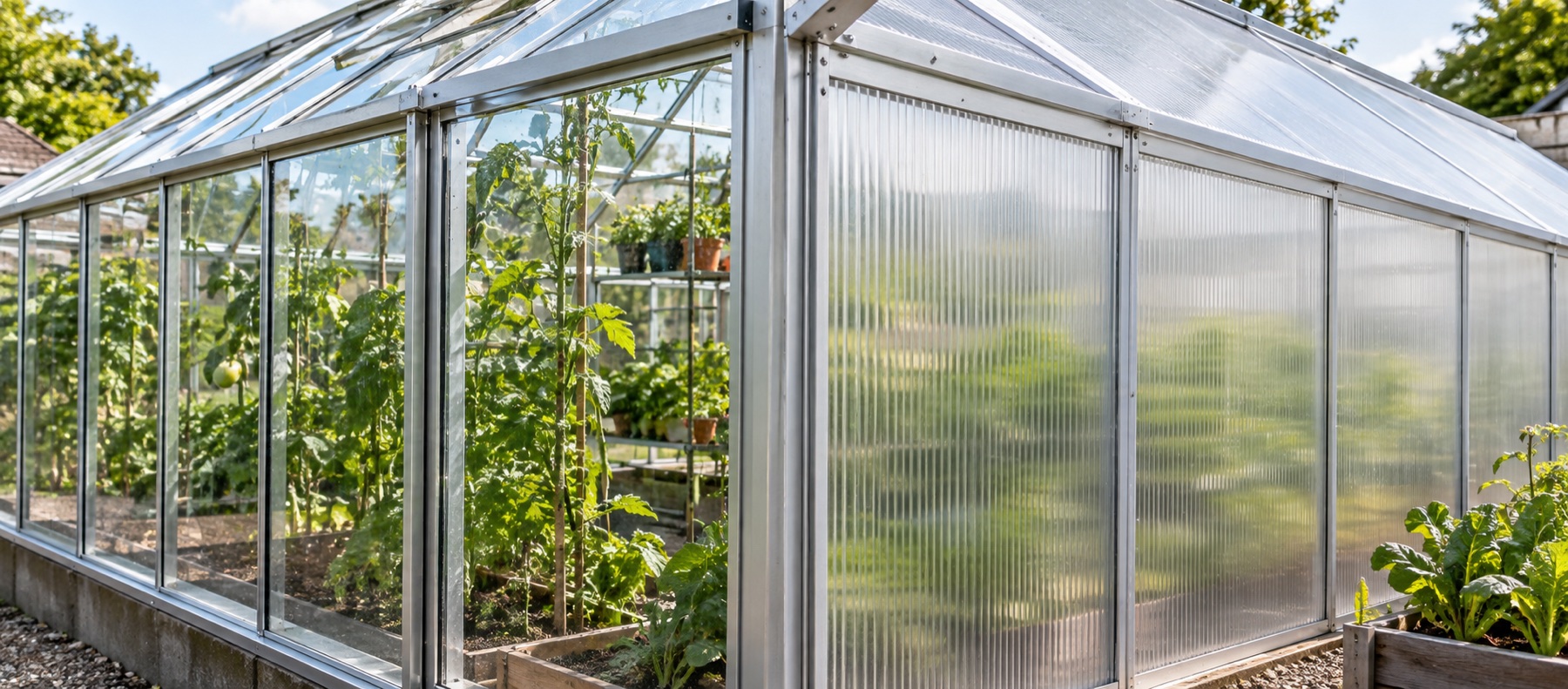
Our recommendations
Real glazing combinations to compare
These Shedstore examples show toughened-glass and polycarbonate options in equivalent 6 × 4 and 6 × 8 formats.
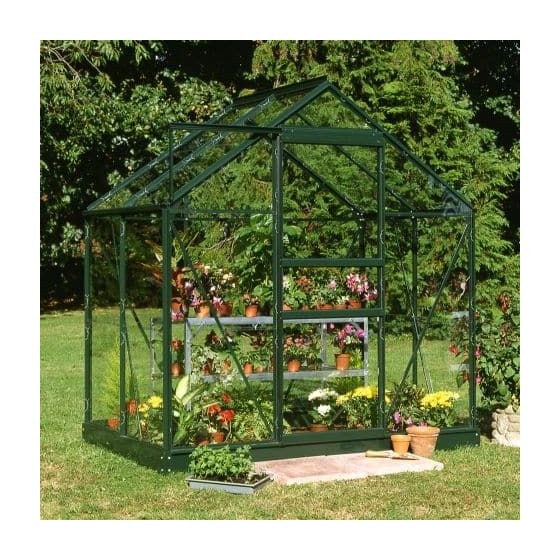
Halls Green Frame 6 × 4 greenhouse
Best for: toughened glass in a compact plot
A traditional-looking 6 × 4 with a green aluminium frame and large panes of toughened glass. It is the clearest fit if you want glass in a small footprint and accept a separate base.
What stands out
- Large-paned toughened glass
- Low-maintenance coated aluminium
- Roof vent and gutters included
Keep in mind
- Matching base costs extra
- Heavy panes need careful assembly
- 1.93 × 1.33m base
- green aluminium
- toughened glass
- optional base
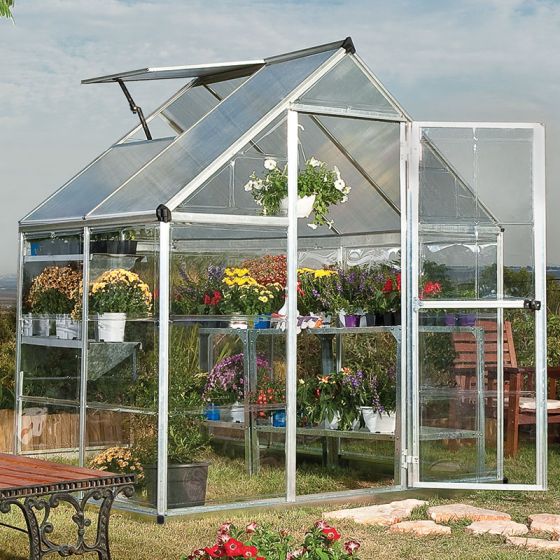
Palram Canopia Hybrid 6 × 4 greenhouse
Best for: a compact first walk-in greenhouse
A compact walk-in with a 1.85 × 1.25m base, diffusing twin-wall roof panels and clear polycarbonate sides. It is the most balanced fit here for a small garden that can still keep a central path.
What stands out
- Compact walk-in footprint
- Clear sides and diffusing roof
- Steel perimeter base included
Keep in mind
- Single 565mm door
- One roof vent means summer airflow needs planning
- 1.85 × 1.25m base
- aluminium
- polycarbonate
- one roof vent

Halls Green Frame 6 × 8 greenhouse
Best for: a traditional 6 × 8 glass greenhouse
A 1.93 × 2.57m aluminium greenhouse with large-paned toughened glass, a 600mm sliding door, roof vent and integral gutters. It brings a traditional glass finish to the more useful 6 × 8 format.
What stands out
- Large panes of toughened glass
- 600mm sliding door
- Roof vent and integral gutters
Keep in mind
- Matching base costs extra
- Large glass panes require careful handling
- 1.93 × 2.57m base
- green aluminium
- toughened glass
- optional base
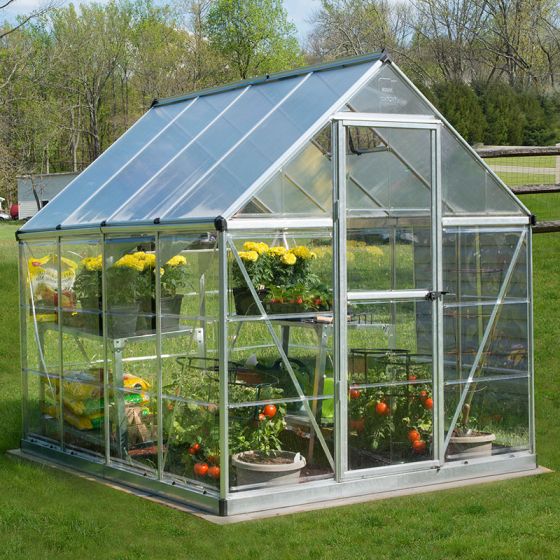
Palram Canopia Hybrid 6 × 8 greenhouse
Best for: more useful growing length
The same 1.85m width extended to 2.46m at the base. The extra length makes a more workable layout for staging plus floor crops if the site can spare the footprint and access around it.
What stands out
- Length for staging and tall crops
- Clear walls and diffusing roof
- Perimeter base included
Keep in mind
- Needs much more prepared base
- Door remains 565mm wide
- 1.85 × 2.46m base
- aluminium
- polycarbonate
- integrated gutters
| Factor | Toughened glass | Twin-wall polycarbonate |
|---|---|---|
| View and appearance | Clear and traditional | Translucent or diffused depending on panel |
| Panel weight | Heavy; careful handling needed | Light; easier to carry |
| Breakage behaviour | Designed to fragment into smaller pieces | Shatter-resistant rather than brittle |
| Light | High clarity and direct transmission | Lower transmission but useful diffusion |
| Heat retention | Single pane has limited insulation | Air channels improve insulation relative to single glazing |
| Cleaning | Smooth and resistant to scratching | Use gentle methods; keep panel channels sealed |
The glazing changes light, weight and daily care
Greenhouse glazing is not simply a transparent skin. It controls how light enters, how quickly heat escapes, how the structure reacts to impacts and how difficult assembly will be. That is why an identical-looking frame can behave quite differently with toughened glass or twin-wall polycarbonate.
For most home gardeners the useful comparison is between large-pane toughened glass and UV-protected polycarbonate. Traditional horticultural glass remains available in some ranges, but its breakage pattern makes toughened glazing the more relevant glass option for busy gardens.
Light transmission and diffusion
Clear glass transmits a high proportion of available light and preserves an unobstructed view. That is valuable for seedlings and winter growing, when UK light is limited. It also creates sharper shadows and stronger local heating where direct sun strikes leaves and surfaces.
Twin-wall polycarbonate transmits less light, but its surface and internal channels diffuse it. Light reaches plants from a wider range of angles, which can reduce harsh shadows and scorching risk. Diffusion is not the same as shade: ventilation and summer shading may still be necessary.
Keep either material clean. Algae, mineral deposits and grime can remove more useful light than the difference between two clean glazing products.
Heat retention and condensation
Single-pane glass has little insulating value. It warms quickly in sun and loses heat quickly after sunset. Twin-wall polycarbonate traps air inside the panel, slowing heat transfer. That can reduce overnight heat loss, although the whole greenhouse still has numerous joints, vents and thin sections.
Condensation occurs on both materials. On clear glass it is easy to see and wipe; inside polycarbonate channels it is harder to address and often indicates failed or incorrect end sealing. Install breathable or solid tapes exactly where the manufacturer specifies so channels can drain without admitting dirt and insects.
Do not choose glazing as a substitute for ventilation. Damp, still air encourages plant problems even when the greenhouse retains heat efficiently.
Safety and breakage
Toughened glass is heat-treated to increase strength and change the way it breaks. It is particularly sensible for doors, low panes and places where people may fall. It is heavy, however, and a large pane can be awkward to carry through a house or narrow side passage.
Polycarbonate is light and shatter-resistant, making it attractive near play areas or where delivery and assembly access are difficult. Its low weight increases the importance of secure panel retention. A lifted panel can damage the greenhouse and neighbouring property even if it does not shatter.
Wind, snow and frame compatibility
Glazing cannot be judged separately from its frame. Clips, capping bars, channels, gaskets and braces form a model-specific system. The frame must be square before glazing is fitted; do not force a pane into position or treat the glass as a way to correct a misaligned frame. Loose or badly sized panels need investigation against the maker's instructions.
In exposed gardens, check the maker's wind and snow guidance, close doors and vents before storms and inspect retainers afterwards. Never drill or improvise fasteners through a panel unless the manufacturer permits it. Holes can concentrate stress or allow water into multiwall channels.
Cleaning and scratch resistance
Glass tolerates careful cleaning well and retains clarity for a long time. Use non-abrasive tools and inspect clips and seals while washing it. Large panes show dirt but are straightforward to squeegee.
Polycarbonate scratches more easily. Rinse grit away before wiping, use a soft cloth or sponge and follow the maker's approved cleaner list. Solvents and some household products can attack the plastic or its UV layer. Avoid pressure washers on either glazing system because they can force water into joints and dislodge seals.
Appearance and privacy
Glass gives a greenhouse the crisp transparency many gardeners expect. It lets the garden remain visible through the structure and makes plants part of the view. It also exposes stored tools, empty pots and untidy staging.
Translucent polycarbonate softens the greenhouse visually and gives a degree of privacy. Hybrid products use diffusing roof sheets with clearer side panels, combining overhead diffusion with more open outward views.
Installation and replacement
Glass requires safe storage, gloves and enough people to handle panes without twisting them. The foundation must be level so the frame does not rack and stress the glazing. Toughened glass cannot normally be cut after manufacture, so replacements must be ordered to the correct size.
Polycarbonate panels are easier to carry and some can be trimmed as instructed. Their UV face, channel direction and end tapes must be installed the right way around. Before buying, confirm that replacement panels and model-specific retainers are available.
Which glazing should you choose?
Choose toughened glass when clarity, winter light, a traditional appearance and long-term scratch resistance are priorities, and when the delivery route and base can handle heavy panes.
Choose polycarbonate when lower panel weight, shatter resistance, diffused light and improved insulation are more useful, especially for self-assembly or an active family garden.
Then compare the exact door, vents, base and retention system. A well-designed polycarbonate greenhouse is a better purchase than poorly fitted glass, and a square, securely anchored glasshouse will outperform a lightweight structure installed without regard to its site.
For general material context, see the RHS greenhouse-glazing guidance. Continue with toughened-glass greenhouses or the polycarbonate buying guide for model-level checks, then use the appropriate cleaning guidance for ongoing care.
Common questions
Frequently asked questions
Is glass or polycarbonate better for growing plants?
Both can grow excellent plants. Glass maximises clear light, while diffusing polycarbonate spreads light and reduces sharp shadows. Crop choice, winter use, ventilation, cleanliness and orientation usually matter more than declaring one material universally best.
Does a polycarbonate greenhouse stay warmer than glass?
Multiwall polycarbonate traps air within its channels and generally insulates better than a single sheet of greenhouse glass. Real temperatures still depend on gaps, vents, wind, thermal mass and whether supplementary heat is used.
Does polycarbonate turn yellow?
Quality panels normally include a UV-protected face, but ageing varies by material quality, exposure and installation. Fit the UV side outward as instructed, keep panel ends correctly sealed and use compatible cleaning products.
Is toughened glass safe for a family garden?
Toughened glass is stronger than horticultural glass and is designed to break into smaller granular pieces rather than long shards. It is still glass, so good siting, a stable frame and careful handling remain important.
Which glazing is better for a windy garden?
Panel retention and anchoring are more decisive than material alone. Lightweight polycarbonate can be vulnerable if panels are poorly secured, while large glass panes impose weight and stress on an unsquared frame. Follow the exact model's exposure and anchoring guidance.