
Mites under glass
Greenhouse red spider mite guide
Recognise two-spotted red spider mite on UK greenhouse plants and respond with inspection, climate management, hygiene and correctly timed biological control.
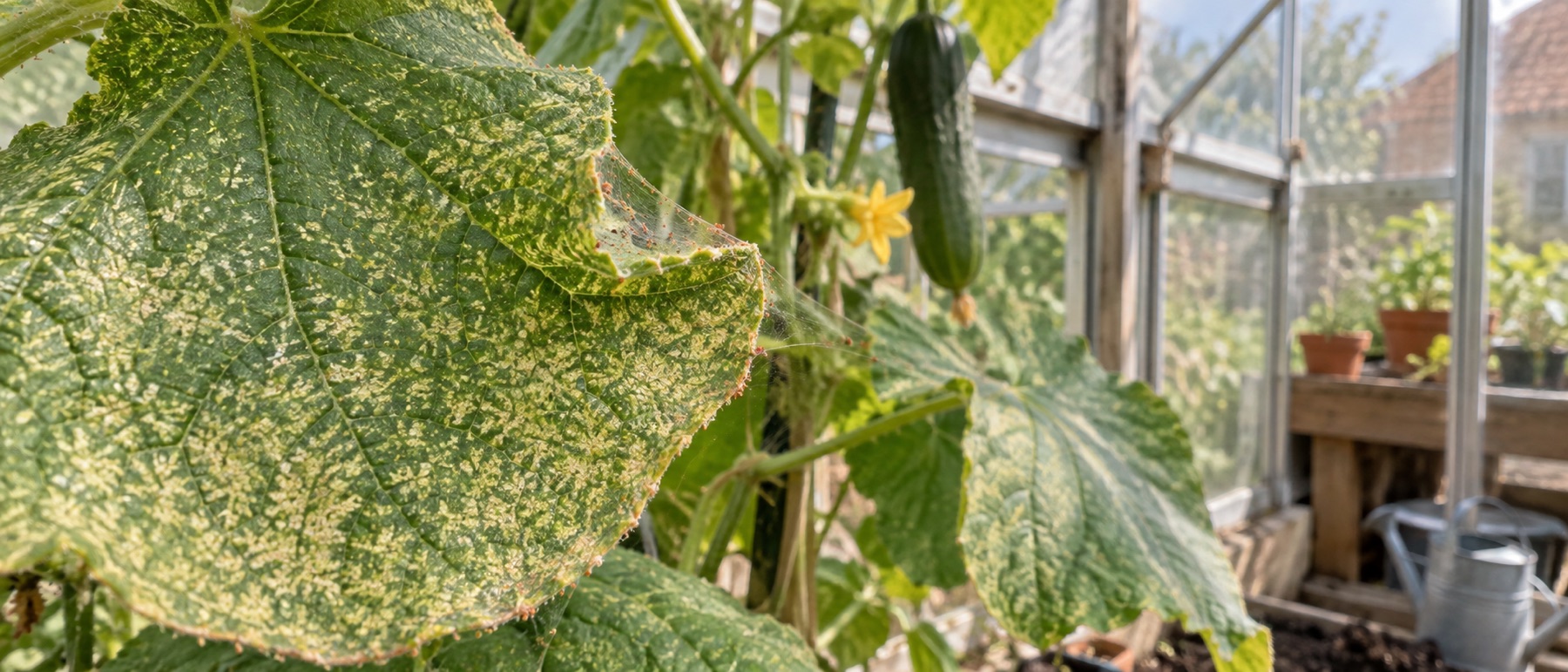
Use a hand lens or close inspection under damaged leaves.
Reduce hot, dry, overcrowded conditions without soaking vulnerable crops indiscriminately.
Remove severely affected plant material and old supports carefully.
Consider predator releases only with the correct pest and supplier conditions.
Recognise the actual mite
The name is misleading: RHS glasshouse red spider mite guidance says the mites are often yellowish-green with two darker patches while active. They are less than a millimetre long. The upper leaf surface develops fine pale mottling as mites feed beneath it. Turn an affected leaf over and inspect with a hand lens if available; look for moving mites, cast skins and eggs. Fine silk webbing is more typical of a heavier infestation, when damage may already be substantial.
The pest can attack cucumbers, tomatoes, peppers, ornamentals and many other hosts. Pale patches caused by nutrient stress, spray damage or other pests are possible, so do not diagnose from one leaf photograph alone. Compare affected and healthy leaves on the same plant and check the underside. Our greenhouse pests guide provides the broader identification path.
Why outbreaks accelerate
Warm, dry conditions and crowded, overheated glasshouses favour glasshouse red spider mite. Ventilation and shading can reduce excess heat, but do not turn the greenhouse into a persistently wet, stagnant enclosure; crops also need air movement and suitable leaf-drying time. A hygrometer records the immediate humidity, while a max/min display reveals temperature extremes. Neither reading alone predicts an outbreak.
Inspect plants regularly from spring into autumn. The RHS says activity is usually most noticeable March to October, although a heated house can support damage at other times. New plants are an important entry route; examine leaf undersides before bringing them beside a clean crop. Space vines so leaves can be reached, and remove weeds that might act as hosts.
Respond before a heavy web appears
Mark affected plants and inspect neighbours. Remove badly affected leaves only if doing so leaves the plant viable; bag material before carrying it through the greenhouse. If a plant is heavily infested, removal may be more effective than preserving a source that continually reinfests others. Clear old canes, ties and plant debris at crop changeover. The greenhouse-cleaning guide covers accessible frame corners where overwintering mites can shelter.
Predatory mites are an option after correct identification. The RHS lists Phytoseiulus persimilis as the commonly used control for an active outbreak and Amblyseius species for some preventive situations. They are living organisms: release timing, temperature, humidity, pesticide history and shipping condition matter. Follow the supplier's current directions and our biological-controls guide. Do not scatter an unidentified “beneficial bug mix” and assume it targets these mites.
Prepare for a biological-control enquiry
Before ordering predators, tell the supplier which crop is affected, where the mites were seen and whether the infestation is local or widespread. Useful evidence includes clear photographs of leaf undersides and damage, daytime and overnight temperatures, and any sprays or cleaning treatments recently used nearby. If identification remains uncertain, resolve it before buying a living control that targets the wrong pest.
After a release, follow the supplier's inspection interval and look for the direction of change: new damage spreading, fresh leaves remaining healthy and mites still present on inspected plants. Old stippled leaves will not become undamaged, so judging only their appearance can make a successful intervention look ineffective. Keep notes for the supplier if progress stalls.
Avoid an unverified spray recommendation
We do not list a pesticide for this page. If one is considered after non-chemical measures, check the HSE amateur-product database and the exact product label for the pest, crop, greenhouse use and harvest interval. A marketplace listing cannot establish that authorisation. Also check compatibility with any predator release; a broad spray can kill the very mites introduced to solve the problem.
Helpful products
Measure conditions and inspect leaves
A temperature-and-humidity instrument can reveal hot, dry periods, while a hand lens helps inspect fine webbing and leaf undersides. Neither identifies a pest on its own or replaces a careful plant check.

Brannan max/min thermometer and hygrometer
Best for: temperature plus humidity at a glance
An analogue dial instrument combining current humidity with current, maximum and minimum temperature. It adds a quick humidity indication without requiring an app, account or wireless connection.
What stands out
- No app or pairing
- Shows humidity as well as temperature
- Easy to scan from the aisle
Keep in mind
- Humidity is current rather than logged
- Manual reset and reading required
- analogue display
- max/min temperature
- current humidity
- wall mountable

Carson SG-10 SureGrip hand magnifier
Best for: closer pest identification
A 2× glass hand lens with a small higher-power spot for examining insects on leaves and checking whether apparent specks are living pests. It helps observation, not control.
What stands out
- Makes small insects easier to distinguish
- No batteries or app
- Useful across several pest guides
Keep in mind
- Does not identify every species
- Must be focused close to the subject
- SG-10 model
- 2× main glass lens
- higher-power spot lens
- hand-held soft-grip format
Common questions
Frequently asked questions
Are greenhouse red spider mites actually red?
Often not in spring and summer. The RHS describes yellowish-green mites with two dark patches; overwintering females can appear orange-red.
What is the first visible symptom?
Fine pale mottling or stippling on the upper leaf surface is common. Turn the leaf over for tiny mites, cast skins and eggs.
Does misting cure an infestation?
No. Less dry conditions may reduce risk, but water alone will not reliably control an established population and can create other crop problems.
Which biological control is used?
The RHS identifies Phytoseiulus persimilis as a common predator of glasshouse red spider mite; its effectiveness depends on correct identification and release conditions.
Can mites survive winter in an empty greenhouse?
Overwintering females can shelter in frame crevices, stakes and debris. A thorough seasonal clean and removal of old supports can reduce carryover.