
Planting-out transitions
Hardening off plants from a greenhouse
Move greenhouse-grown plants outdoors gradually with a practical UK hardening-off routine that accounts for cold nights, sun, wind and crop tenderness.
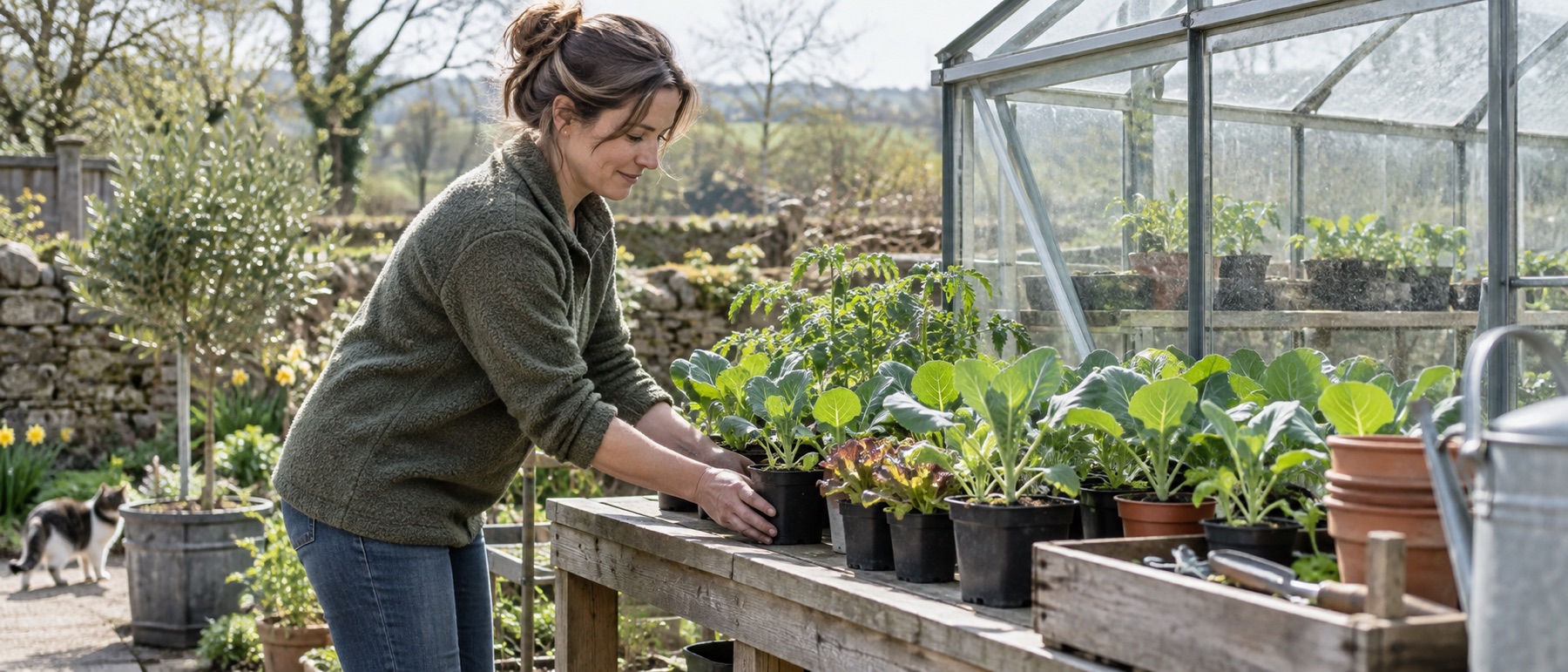
Begin in a sheltered, bright spot with short daytime exposure.
Extend the time outside over roughly two to three weeks for tender plants.
Shelter or bring plants in when a cold or windy spell interrupts the plan.
Plant out only when the crop and local forecast are suitable.
What hardening off actually changes
Plants raised behind glass or indoors have experienced filtered light, comparatively still air and a narrower temperature range. Transplanting them straight into an exposed bed can scorch leaves, dry compost rapidly or stop growth. RHS hardening-off guidance recommends gradually acclimatising tender plants to lower humidity, air movement and cooler conditions over about two to three weeks. It also makes an important distinction: this process does not make a frost-sensitive plant hardy.
The exact pace depends on the crop and how warm its previous conditions were. Hardy brassicas raised in a cool greenhouse need less adjustment than peppers moved from a heated propagator. The moving seedlings into a greenhouse guide covers an earlier, related transition; going from greenhouse to open ground adds wind and direct outdoor exposure.
A practical staged routine
On the first mild days, place rooted, healthy plants outside in a sheltered position for a short period, away from midday glare and strong wind. Return them to protection before conditions deteriorate. Increase exposure gradually over subsequent days, including brighter light and more air movement. Then trial longer days and, only where appropriate for the crop and forecast, suitable nights. A coldframe can serve as an intermediate step if its lid is opened progressively.
Keep labels with trays and group plants by tenderness. Water pots before they dry out, but do not water simply because the surface looks pale; test the compost. Wind may remove moisture much faster than a sheltered greenhouse. Avoid placing trays directly on cold, wet ground if that chills roots or blocks drainage. Do not expose seedlings to a sudden midday sun just because the air temperature feels gentle.
Let weather interrupt the schedule
Hardening off is not a countdown that must continue regardless of weather. If a frost, cold rain or gale is forecast, pause or move plants back to a suitable protected position. A setback after several successful days is better than losing a crop. Compare the predicted outdoor low with the crop's requirements; check the greenhouse's own night minimum too. The RHS frost-avoidance guide notes that last-frost timing varies across the UK and between sites.
Tender greenhouse cucumbers, peppers and tomatoes should not be planted outdoors just because hardy salad seedlings are ready. Follow the relevant crop guide and the actual weather. If plants are intended to stay under glass for the summer, they do not need a full outdoor hardening-off process, although a gradual move from heated indoor conditions to an unheated greenhouse is still sensible.
Plant out and check the first week
Choose a calm, suitable day; water the root ball, handle it gently and plant at the depth appropriate for that crop. Add supports at planting so later work does not damage roots. Check for wilting, scorch and cold injury over the next few days. Continue to water based on root-zone moisture, not a fixed daily amount. If a late cold night threatens, use crop-appropriate temporary protection or delay planting rather than assuming hardened plants cannot be damaged. The greenhouse growing calendar helps position this transition in the wider season.
Helpful products
Watch night lows and ease plants into sun
A max/min thermometer makes cold nights visible. Light shade cloth can help on a securely supported, supervised outdoor hardening-off area, but it does not protect plants from frost and should be removed as exposure increases.

Brannan Quickset digital max/min greenhouse thermometer
Best for: easy daily max/min checks
A wall-mounted digital thermometer with current, maximum and minimum readings and a one-button reset. The published measuring range is −20°C to 50°C with ±1°C stated accuracy.
What stands out
- Large separate readings
- One-button reset
- Wall-mounted greenhouse format
Keep in mind
- No humidity reading
- No remote alerts or history graph
- −20°C to 50°C range
- ±1°C stated accuracy
- max/min memory
- AAA battery included
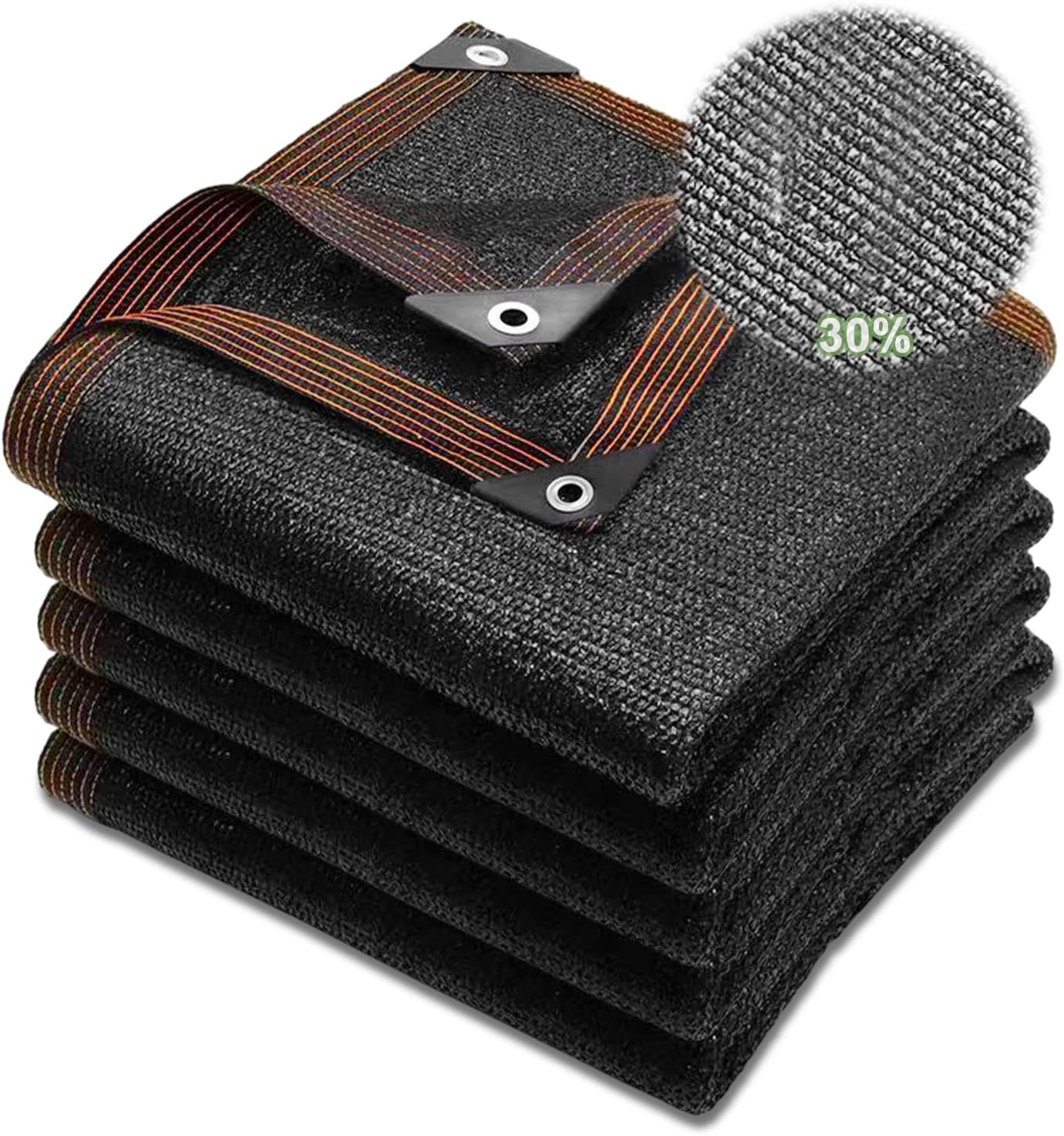
30% greenhouse shade cloth with eyelets
Best for: reducing harsh summer solar gain
A 3 × 4m green shade net with eyelets. Thirty-percent shading is a lighter intervention than opaque covers, but the right density and fixing depend on crop, aspect, glazing and wind exposure.
What stands out
- Allows light through
- Removable outside the hot season
- Eyelets simplify tidy fixing
Keep in mind
- Must be secured for wind
- Measure the exact roof and sides first
- 3 × 4m
- 30% shade
- eyeleted edge
- removable mesh
Common questions
Frequently asked questions
How long does hardening off take?
The RHS suggests about two to three weeks for tender plants, depending on their starting conditions and the weather. Hardy plants can acclimatise faster.
Can plants stay out overnight immediately?
Not if they have been raised in warm protected conditions. Increase exposure gradually and bring tender plants in whenever the forecast is too cold for them.
Does a cold greenhouse count as hardening off?
It can be a useful intermediate stage, but plants still need gradual exposure to outdoor wind and light before final planting.
Does hardening off make tomatoes frost hardy?
No. It reduces shock from the change in conditions, but tomatoes and other tender crops still need frost-free planting conditions.
What if plants get sun-scorched?
Move them to gentler light, maintain appropriate moisture and lengthen exposure more slowly. Damaged leaves may not recover, but new growth can be sound if the plant is otherwise healthy.