
Winter greenhouse care
Greenhouse frost protection
Protect greenhouse plants from frost with crop triage, monitoring, insulation, fleece, zoned heating, ventilation and a cold-weather routine.
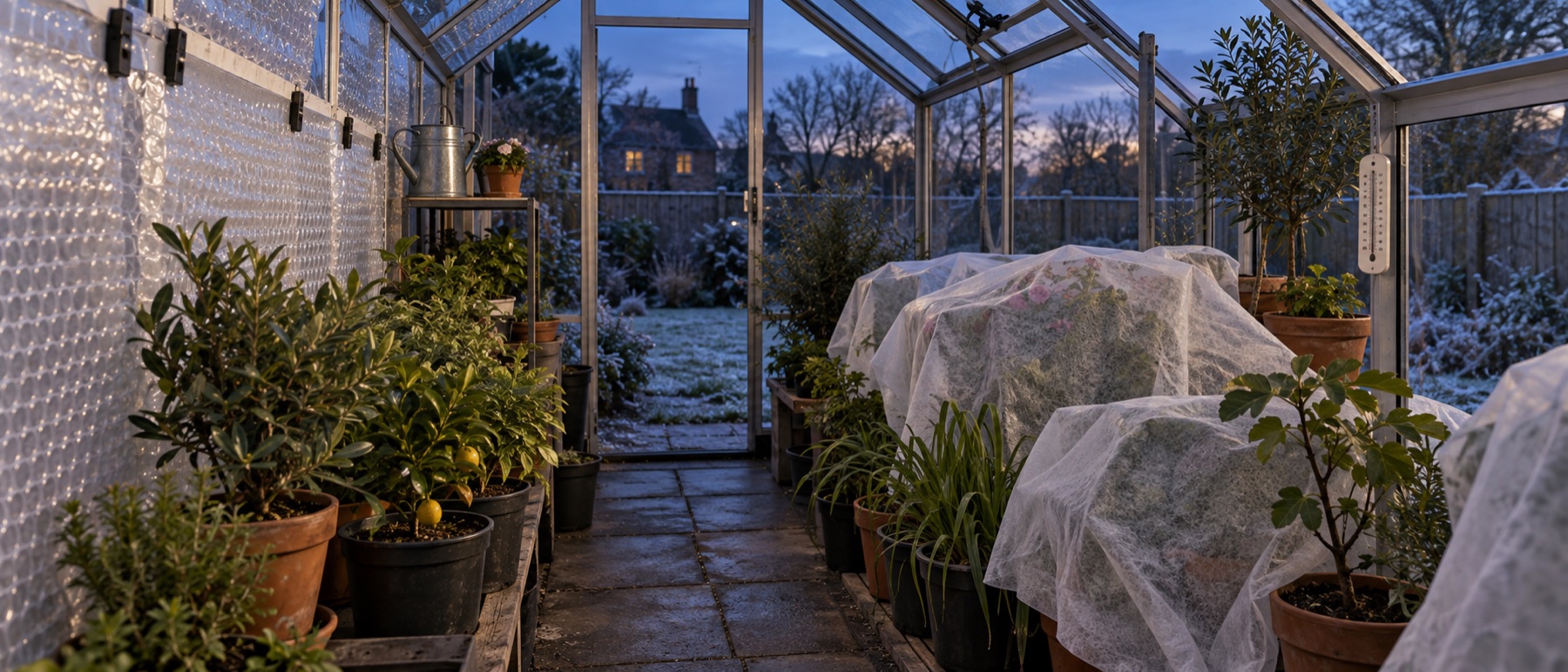
Sort plants by required minimum temperature before insulating the whole greenhouse.
Keep pots away from cold glazing and raise vulnerable roots off a very cold floor.
Use a thermostat and separate max/min thermometer to verify any heated zone.
Ventilate on mild days to control damp, then close securely before temperatures fall.
Begin with the plants, not the heater
Greenhouse frost protection becomes expensive when hardy and tender plants share one target temperature. List every overwintering plant and its minimum requirement. Group genuinely tender specimens together; keep hardier salads, dormant bulbs or alpines in the brightest unheated area where appropriate.
If a plant cannot tolerate the likely minimum even with modest protection, move it to a more suitable location. Heating a large leaky greenhouse for two pots is rarely the best use of energy.
Find the real overnight minimum
Put a max/min thermometer at the height of the most vulnerable foliage, shaded from direct sun and away from the door, heater and glazing. Reset it at a consistent time and compare the overnight minimum with a nearby outdoor reading.
One cold night is useful evidence; a week across still, windy and cloudy conditions is better. Cold air settles, so check low shelves and floor-level pots if they are important. A tall greenhouse can hold noticeably different temperatures from floor to ridge.
Repair the envelope
Replace broken panes and missing polycarbonate caps, refit door seals and make sure vents close evenly. Seal only gaps that are not intended drainage or ventilation paths. A dry still structure retains heat better, but it must remain possible to ventilate.
Clear gutters and keep external drains working so winter rain does not saturate the threshold. Waterlogged paths and compost raise humidity and can freeze around containers.
Use reusable clear insulation carefully
Large-bubble horticultural insulation creates an additional still-air layer. Fit it to the frame with purpose-suitable clips rather than wedging it against heaters or taping over moving parts. Leave doors, louvres and selected vents operable.
Insulation reduces light. The RHS notes an approximate ten-percent light loss for a layer of plastic and advises avoiding it when hardy plants would benefit more from winter light. Reuse clean material over several seasons and remove it when spring conditions make it unnecessary.
Make a smaller protected zone
Screen off one end of a large greenhouse with clear insulation fixed to battens or a suitable frame. Cluster tender plants on stable staging inside that zone, leaving air circulation and safe heater clearance. Protect the opening so the screen does not billow onto equipment.
A smaller volume has less exposed surface and can be monitored independently. It also lets hardy crops remain outside the heated zone instead of being kept too warm and soft.
Protect roots and leaves
Move pots away from touching glass and group them without crowding foliage. Stand very vulnerable containers on an insulating board or staging rather than directly on a freezing floor, provided the surface is stable and drains safely.
Horticultural fleece adds short-term protection during cold snaps. Heavier grades can provide a small temperature buffer; they do not guarantee frost-free conditions. Drape fleece loosely over supports, keep it away from heaters and remove it when temperatures recover so plants receive light and airflow.
Add thermostatic heat only where required
A tube heater provides gentle background warmth for a small insulated area. A purpose-made greenhouse fan heater circulates air and can meet a higher calculated load. In both cases, size the output for the greenhouse construction, exposed area, outside design temperature and target internal temperature.
Set the thermostat sensor among the protected plants, then use a separate thermometer to verify the coldest point. Do not raise the setting in response to one exposed sensor beside a draught until the placement is corrected.
Electrical connections in a greenhouse should be professionally installed. Use equipment suitable for damp conditions, RCD protection, dry clear placement and the manufacturer’s required clearances. Never cover a heater or run a domestic extension reel as a permanent supply.
Water less, but do not let roots desiccate
Winter plants use water slowly. Water in the morning when necessary so surfaces can dry before night, and empty saucers that leave roots saturated. Cold wet compost is a common cause of loss even when air temperature remains above freezing.
Keep hosepipes and irrigation components protected from freezing and disconnect them as required. A split fitting may not become obvious until it thaws.
Ventilate against damp
On mild, still days, open vents or the door briefly to replace humid air. Remove dead leaves and space pots so air can move. Close everything securely before temperatures fall and verify that automatic openers are following their winter instructions.
Condensation on cold glazing is expected, but water dripping continuously onto crowns and leaves signals that ventilation, watering or spacing needs attention.
Make a frost-night routine
Check the forecast, close and latch vents before dusk, confirm insulation and fleece are secure, verify the heater and RCD, and place the thermometer where it represents the plants. Avoid last-minute wetting of floors. In the morning, read the minimum before sun warms the greenhouse, inspect the coldest plants and look for power interruption.
Have a backup plan for equipment failure: a safer indoor location, a smaller insulated propagation area or an additional suitable heater already checked for the circuit. Improvised flames, candles and hot containers introduce fire, moisture and fume risks.
If plants are frost damaged
Do not prune every affected part immediately. Move pots out of direct early sun so frozen tissue thaws gradually, protect them from another frost and wait until the extent of damage is clear. Avoid saturating cold roots. The RHS notes that rapid thawing in morning sun can worsen damage for some plants.
Sources and related guidance
The RHS guide to heating greenhouses efficiently covers frost-free temperatures, heater types, insulation, screening and winter ventilation. Its frost-damage guide covers fleece and recovery. For a heater comparison and electrical precautions, see best greenhouse heaters.
For plants staying under cover through winter, use overwintering in an unheated greenhouse to check the plant-specific limits. If active cropping is the aim, the winter-crop guide is a different decision. Neither task can rely on a fixed temperature advantage over outdoors.
Helpful products
Monitoring and controlled background heat
Measure the overnight low first. A tube heater can protect a small insulated zone; a fan heater suits a larger calculated load.

Brannan Quickset digital max/min greenhouse thermometer
Best for: easy daily max/min checks
A wall-mounted digital thermometer with current, maximum and minimum readings and a one-button reset. The published measuring range is −20°C to 50°C with ±1°C stated accuracy.
What stands out
- Large separate readings
- One-button reset
- Wall-mounted greenhouse format
Keep in mind
- No humidity reading
- No remote alerts or history graph
- −20°C to 50°C range
- ±1°C stated accuracy
- max/min memory
- AAA battery included

Hylite Ecoheater 1000mm tube heater
Best for: long background frost protection
A 120W tubular heater with thermostat, 2m cable and IP44-rated housing. Its long, low-output format is designed for steady background warmth rather than quickly raising the temperature of an entire greenhouse.
What stands out
- Low, even background heat
- Thermostatic control
- Wall or floor mounting options
Keep in mind
- Not intended for rapid warm-up
- Capacity depends heavily on greenhouse heat loss
- 1000mm length
- 120W output
- built-in thermostat
- IP44 stated rating
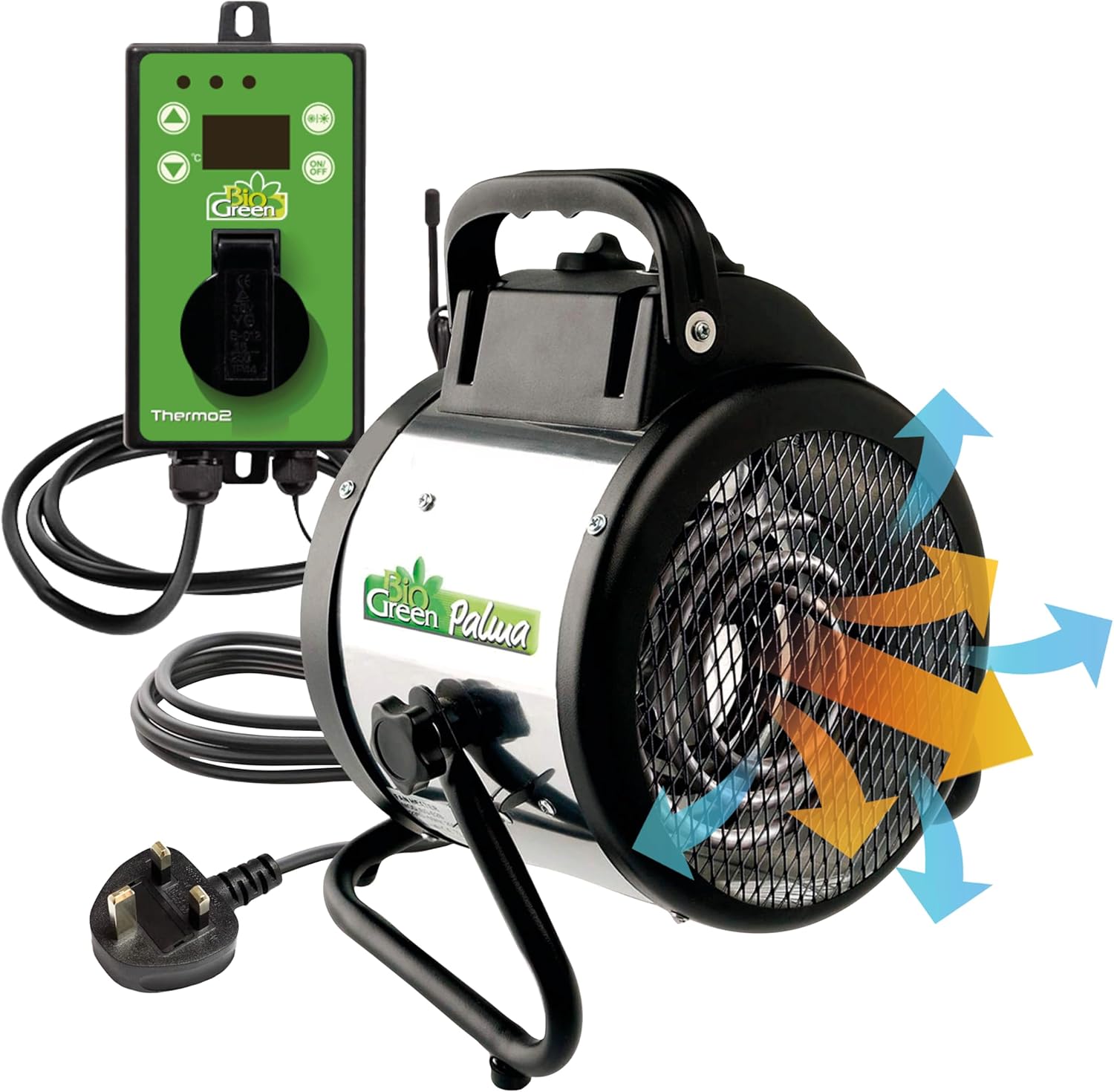
Bio Green Palma 2kW greenhouse heater with digital thermostat
Best for: controlled whole-greenhouse heat
A purpose-sold greenhouse fan heater with a separate digital thermostat, 2kW output and IPX4-rated housing. Fan circulation makes it the most capable option here for distributing thermostatically controlled heat through a small domestic greenhouse.
What stands out
- Thermostatic control
- Fan helps reduce cold corners
- Designed for greenhouse conditions
Keep in mind
- Requires a safe permanent power plan
- Higher output means higher running cost when active
- 2kW output
- digital thermostat
- fan circulation
- IPX4 stated rating
Common questions
Frequently asked questions
Will an unheated greenhouse protect plants from frost?
It shelters plants from wind and rain and may stay slightly warmer than outside, but it can still freeze during prolonged cold. The actual minimum depends on glazing, leaks, thermal mass, exposure and weather, so measure it.
What temperature should a frost-free greenhouse be?
The RHS uses about 4°C as a frost-free reference for an average domestic greenhouse, but plant requirements vary. Choose the target for the most tender plants in the protected zone.
Does bubble wrap stop a greenhouse freezing?
It reduces heat loss but does not create heat. During a long cold spell, an insulated unheated greenhouse can still approach the outdoor temperature. Keep a thermometer inside and add suitable controlled heat if the crop requires it.
Can I put fleece directly over greenhouse plants?
Yes, horticultural fleece can provide short-term extra protection, although supports prevent wet fabric weighing on delicate foliage. Remove or loosen it during mild bright periods so plants receive light and air.
Should greenhouse vents stay closed all winter?
No. On suitable mild days, ventilation reduces condensation, mould and rot. Close vents securely before cold or windy weather and avoid directing an icy draught onto tender plants.