
Winter plant care
Overwintering plants in an unheated greenhouse
Decide which potted plants can spend winter under unheated glass, monitor frost risk and manage dry crowns, ventilation and suitable backup protection.
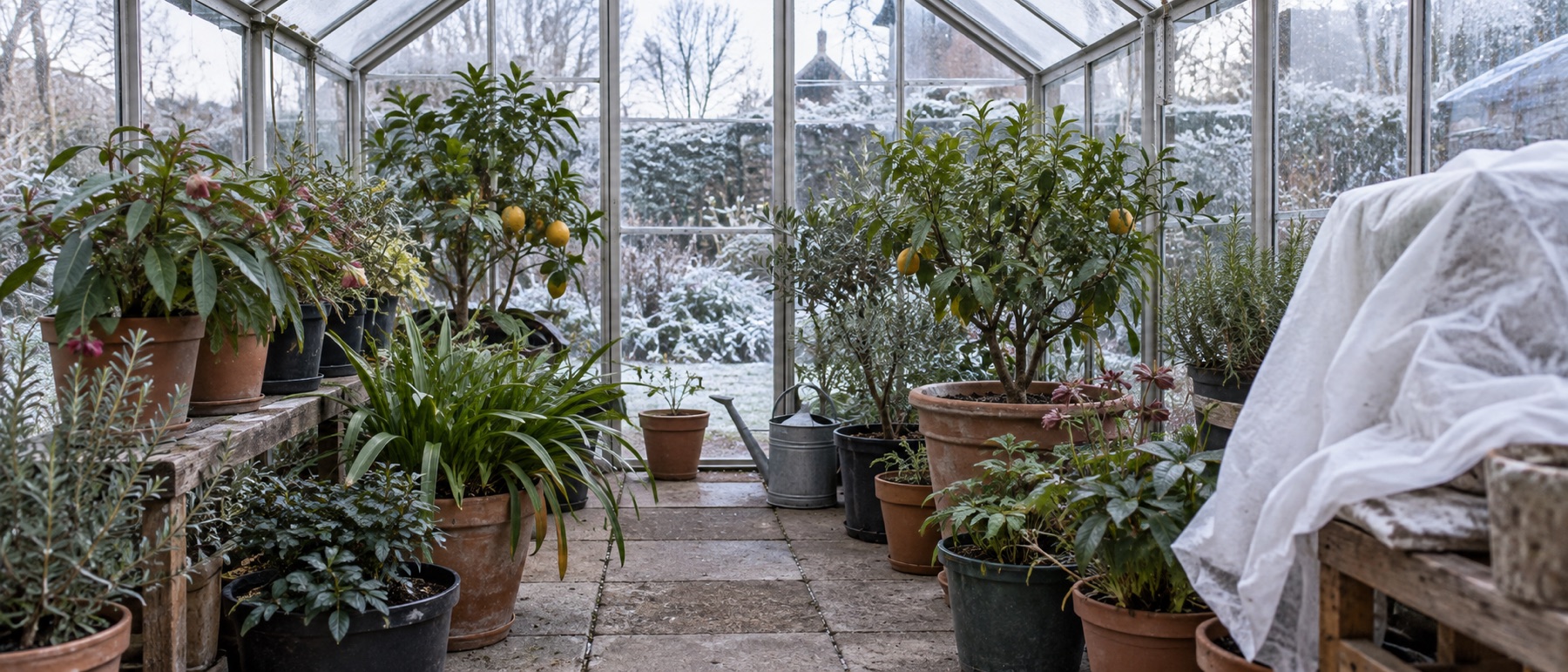
Check each plant's own winter temperature and moisture needs.
Measure greenhouse night minima through cold weather.
Keep pots draining and foliage uncrowded.
Have a move-or-heat plan before a hard frost.
Decide what the greenhouse can really protect
Winter storage is not one category of plants. Some hardy potted species mainly benefit from shelter from wet, while others are tender and need a dependable minimum above freezing. RHS guidance for cool conservatory and greenhouse plants describes plants requiring a minimum winter night temperature of about 5°C. An ordinary unheated greenhouse cannot promise that. Check the actual plant's hardiness and care guidance instead of assuming anything sold as a “greenhouse plant” can stay under unheated glass.
The unheated greenhouse temperature guide explains how quickly a clear structure can cool after sunset. Measure your own night minimum with a thermometer and compare it with the plant's requirement. Keep records through at least one cold spell before making the greenhouse the only winter home of a valued tender specimen.
Prepare plants before bringing them in
Inspect pots, foliage and stems for pests and disease; clean off dead leaves and damaged growth. Do not crowd an infected plant among healthy ones. Check drainage holes and pot stability, then group plants so you can reach every pot. Raise vulnerable containers off a constantly wet floor if appropriate, without blocking their drainage or making them unstable. The greenhouse hygiene guide provides a practical cleaning sequence.
Arrange plants by light and temperature need. A dry, light-loving plant behind a tall evergreen may struggle even if it avoids frost. Keep foliage away from cold glazing where possible. Bubble insulation can reduce heat loss when installed with an air gap and enough light and ventilation, but it may increase condensation if fitted carelessly. Read the bubble-insulation guide before covering every pane.
Water less, but keep checking
Many overwintered plants slow their growth as light falls. A summer watering routine can saturate cold compost and damage roots. Test moisture deeper in the pot and follow species-specific guidance. Some should be kept barely moist; others are actively growing and need more. Remove standing water from saucers where it is harmful. Water early on suitable days so surfaces can dry, and avoid splashing foliage repeatedly in a closed house.
Ventilate on mild days to manage condensation and stale air. Avoid leaving vents open through a cold night for a plant that needs warmth. Check leaf undersides for pests even in winter; an enclosed house can shelter them too. The watering-frequency guide explains how to use the root zone rather than a fixed weekly rule.
Make a cold-snap plan now
If the forecast approaches the plant's minimum, move it to a suitable frost-free location or provide correctly specified, safely installed heat. Fleece may offer limited additional protection but is not a substitute for a known minimum temperature. RHS winter greenhouse guidance describes using an unheated house for some winter crops and plants, while more tender species need extra care. The right plan differs between a mild coastal garden and an exposed inland site.
In spring, increase light and watering as active growth resumes, inspect roots before repotting and harden plants off gradually if they will go outside. Do not rush outdoor placement because one warm greenhouse afternoon arrived; nights can remain cold much later.
Helpful products
Check and reduce winter exposure
These options help measure and limit heat loss, but an unheated house remains unheated. Follow the plant's temperature requirement before deciding it can stay.

Brannan Quickset digital max/min greenhouse thermometer
Best for: easy daily max/min checks
A wall-mounted digital thermometer with current, maximum and minimum readings and a one-button reset. The published measuring range is −20°C to 50°C with ±1°C stated accuracy.
What stands out
- Large separate readings
- One-button reset
- Wall-mounted greenhouse format
Keep in mind
- No humidity reading
- No remote alerts or history graph
- −20°C to 50°C range
- ±1°C stated accuracy
- max/min memory
- AAA battery included

Elixir Gardens greenhouse bubble insulation, 1.5 × 10m
Best for: winter inner lining
Clear horticultural bubble insulation listed as a 1.5m by 10m roll with 10mm bubbles, UV-resistant triple-laminated film. Measure the glazing bays and allow for safe vent and door movement before ordering.
What stands out
- Sized for greenhouse lining
- Can be removed when light becomes more valuable
- Clear film admits some winter light
Keep in mind
- Reduces available light
- Needs compatible clips and a condensation-management plan
- 1.5 × 10m listed roll
- 10mm bubbles
- UV-resistant listing
- triple-laminated film
Common questions
Frequently asked questions
Is an unheated greenhouse frost free?
No. Its temperature may approach the outdoor low. Measure night minima and do not leave frost-sensitive plants there without suitable backup protection.
Can citrus overwinter in an unheated greenhouse?
Many citrus need cool but frost-free conditions, so an unheated greenhouse is only suitable where a safe minimum can actually be maintained. Check the species and cultivar requirements.
Should I water overwintering pots every week?
Not automatically. Check each root ball and the plant's needs; many plants use much less water in cool, short days and can rot if kept wet.
Does fleece make tender plants frost proof?
No. Fleece provides limited temporary protection and may be insufficient in a hard or prolonged freeze.
When should I ventilate in winter?
Open vents or doors on suitable mild days to reduce condensation and stale air, then close them before temperatures fall too far for the plants.