
Watering decisions
How often to water greenhouse plants
Replace a fixed greenhouse watering schedule with root-zone checks for seedlings, pots, growbags and borders across changing UK seasons.
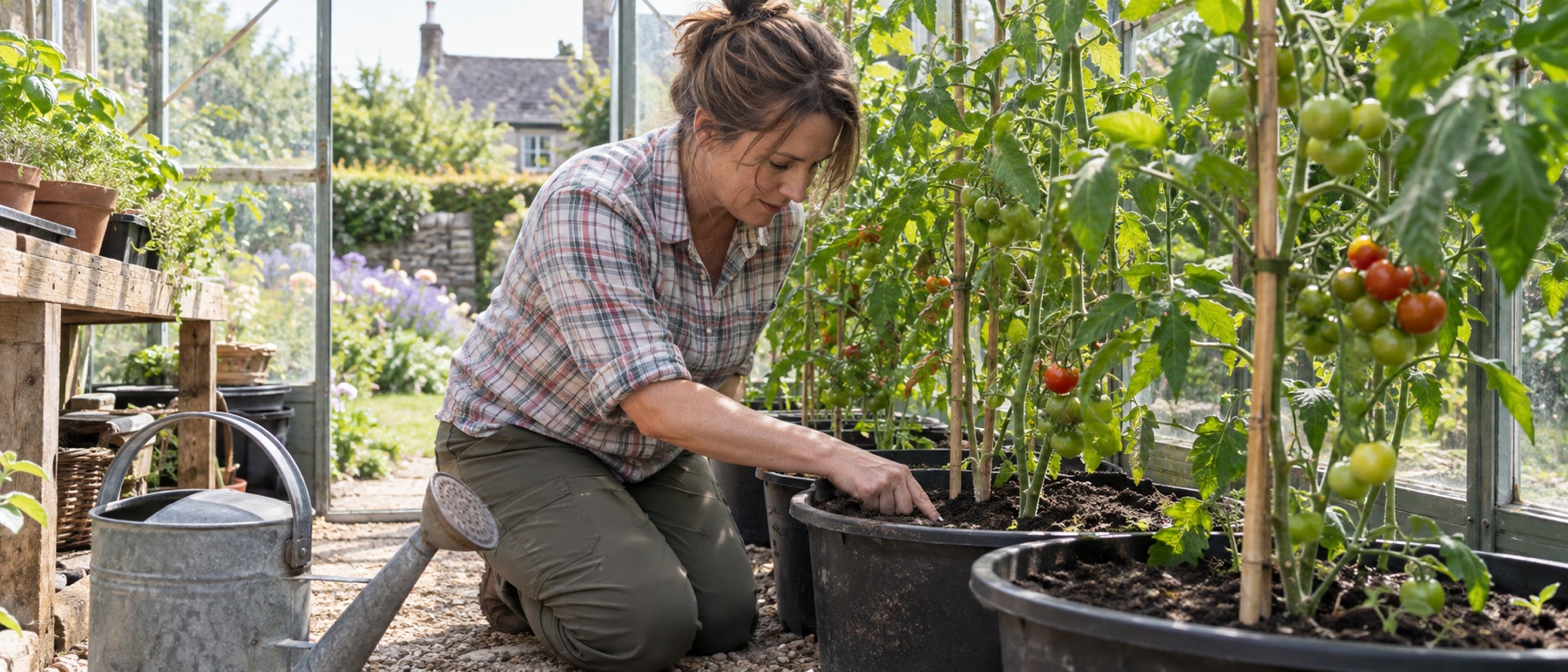
Feel below the surface and check pot weight where practical.
Water thoroughly at the root zone, then let excess drain.
Increase checks during hot, bright weather and fruiting.
Reduce input in cool, low-light periods without letting roots dry completely.
Replace the calendar rule with a daily observation
“Water once a day” is easy to remember but often wrong. A small tomato growbag in July may dry rapidly, while a deep border in April can remain moist for days. The RHS guide to watering wisely recommends targeting water where roots can use it and checking conditions rather than treating all plants alike. The RHS greenhouse vegetable advice suggests checking summer watering daily or using irrigation, because uneven water can damage crops such as tomatoes. Checking daily and watering daily are different instructions.
Put a finger below the surface of a pot or inspect the medium at the root depth appropriate for the plant. Lift smaller pots to learn the difference between wet and dry weights. Look at leaves and stems, but do not rely on wilting alone: heat can cause temporary midday droop even when the root zone is moist, while saturated roots can also leave plants looking stressed. Check drainage and feel the compost before responding.
Water by growing system
Seed trays hold little medium and need frequent inspection, but constant wetness favours damping off. Water gently and let excess drain. Mature crops in pots and growbags have larger leaves and fruits drawing water through a relatively small root volume; they often need closer attention during hot weather. In-ground borders can store more water but need an occasional thorough soaking rather than only surface sprinkles. The growbags-versus-borders guide explains why the same plant behaves differently in each.
The crop matters as well. Fruiting cucumbers need even moisture; pepper flower buds can be lost if plants become too dry. Winter salad crops use much less water in short, cool days. Group plants with similar needs so a watering can or irrigation zone does not treat a new seed tray like a mature cucumber. If possible, water at the base, avoid repeatedly wetting foliage and leave time for surfaces to dry.
How to water when a plant needs it
Apply water slowly enough to soak into the root zone rather than running off a dry or compacted surface. With containers, check that excess can escape; a closed cachepot may hide standing water. For a very dry peat-free mix, an initial light moistening followed by a second pass may help water penetrate. Do not turn a dry spell into a flood that sits around stems. Mulch suitable borders to moderate evaporation, leaving a gap around sensitive stems where the crop guidance advises it.
Morning is often practical because plants enter the warm day with available water and foliage or paths have time to dry. But a plant that is genuinely dry later should not be left in distress to obey a clock. On hot days, ventilation and shade can lower stress alongside watering; more water cannot fix an overheated greenhouse on its own. See the overheating guide.
Make irrigation accountable
Drip irrigation can help deliver measured water to established pots and beds, especially during absences. Run the full system, collect output from near and far emitters and test compost moisture after a normal cycle. Check for leaks, blocked emitters and a depleted water source. The drip guide and watering-timer guide explain the equipment choices. Even with automation, inspect plants routinely; a timer repeats a setting, not a judgement about today's weather.
Helpful products
Make delivery more consistent
A pot kit or drip line can deliver water to established plants, but each outlet needs a real-world flow and moisture test. Do not put seedlings and mature fruiting crops on one unexamined schedule.
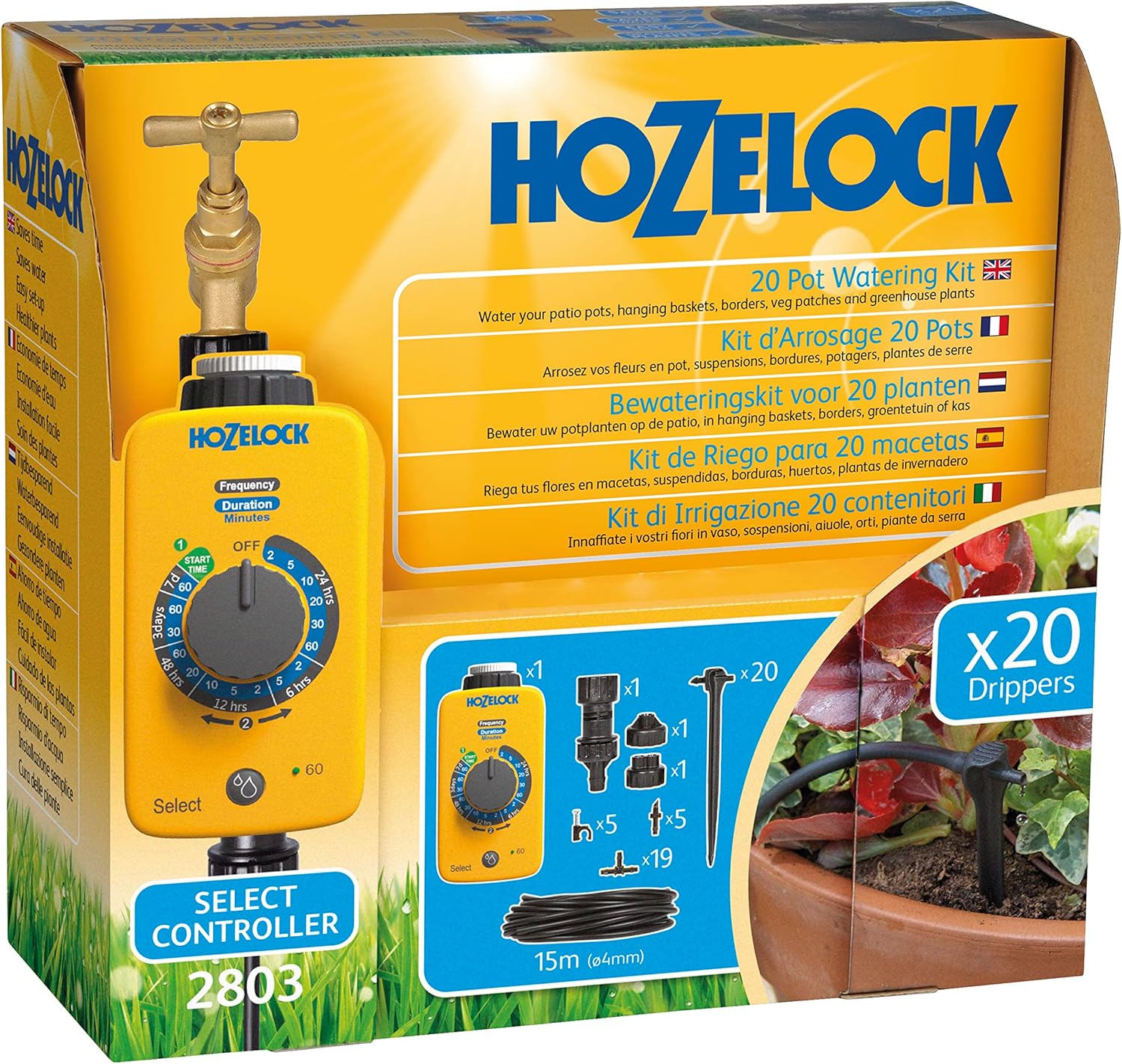
Hozelock 20-pot drip watering kit with Select Controller
Best for: timed watering for up to 20 pots
A complete mains-water drip kit for up to 20 containers, with a tap controller, supply pipe and individual drippers. The controller offers preset schedules while emitters place water close to roots.
What stands out
- Timer and distribution parts included
- Flexible cut-to-fit tubing
- Manual watering function
Keep in mind
- Requires a compatible pressurised tap supply
- Backflow protection and pressure must be checked
- up to 20 containers
- Select Controller
- 16 preset programmes
- root-zone drippers

MIXC 15m drip-irrigation kit
Best for: small pot-watering zones
A compact micro-irrigation kit for distributing water between pots or short greenhouse rows. It is most useful after the crop layout and water source are decided.
What stands out
- Flexible layout around pots
- Compact length limits excess tubing
- Emitters can be checked individually
Keep in mind
- Needs pressure and compatibility checks
- Lines and emitters need flushing
- 15m tubing
- adjustable emitters
- DIY layout
- small greenhouse scale
Common questions
Frequently asked questions
Should I water a greenhouse every day in summer?
Check it every day. Some containers may need daily water in a hot spell, while deep borders or smaller plants may not. Test the root zone.
Is morning the best time to water?
Morning watering gives plants water before the hottest period and allows wet surfaces to dry. Still water promptly if a plant genuinely needs it later.
How do I know a pot needs water?
Feel the growing medium below its surface, assess pot weight if manageable and look for plant stress. A dry top layer alone is not conclusive.
Can too much water harm greenhouse plants?
Yes. Saturated compost limits root air and can favour disease. Make sure containers drain and adjust water to growth and conditions.
Does drip irrigation mean I can stop checking plants?
No. Emitters can block or move, and weather changes demand. Inspect the wetting pattern and plants regularly.