
Growing systems
Growbags vs greenhouse borders
Compare growbags and in-ground greenhouse borders for root room, watering, soil management, crop rotation and installation in UK gardens.
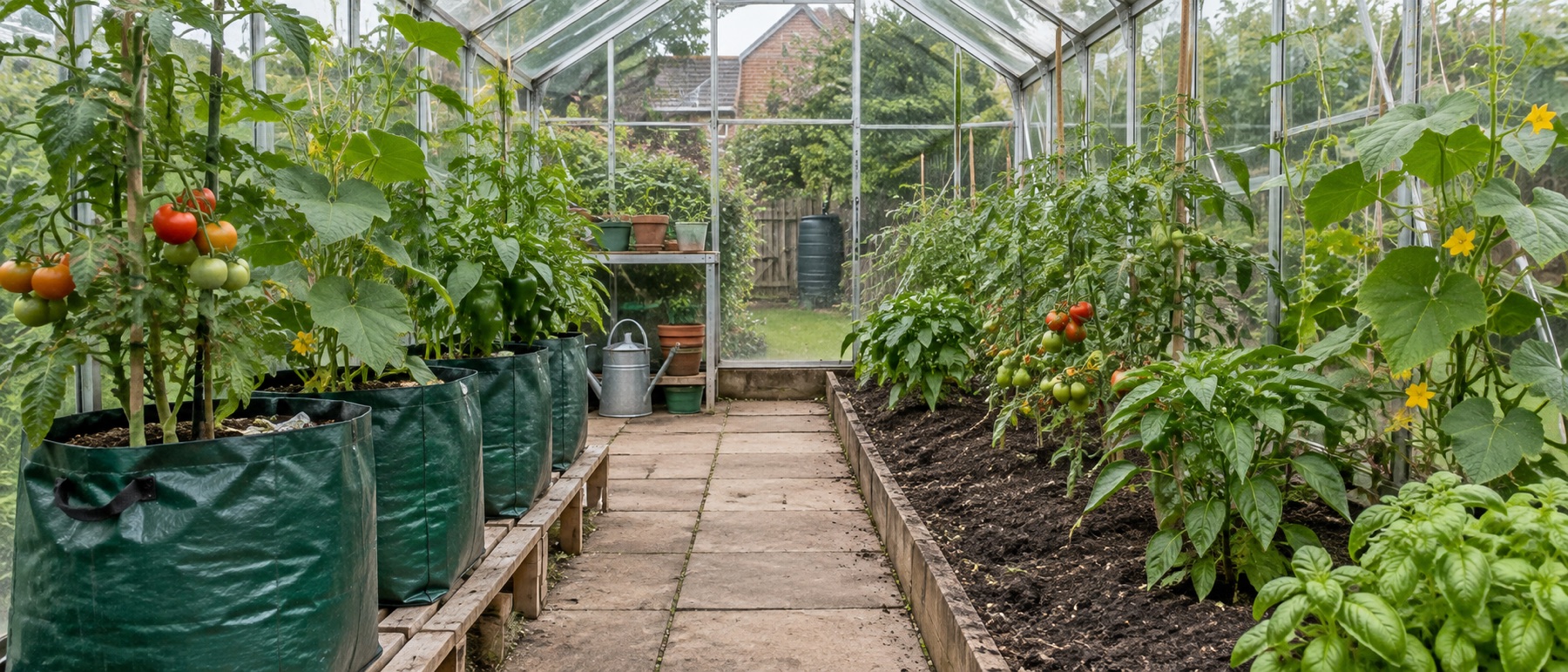
Check the greenhouse floor and whether an in-ground bed is possible.
Compare root volume and the time you can give to watering.
Keep drainage and crop support independent of the growing medium.
Plan how the soil or bag medium will be maintained between crops.
The main difference is the root zone
Both systems can grow productive greenhouse crops. The RHS greenhouse vegetable guide lists borders, containers and growing bags as planting choices. A border connects roots to a larger body of soil; a bag offers a contained volume of growing medium, often on paving. That difference affects watering, feeding, drainage and how you deal with soil problems. It is not a universal contest with one winner.
Choose the system before deciding how many tomatoes or cucumbers to fit. Crowding several vigorous plants into a small bag can create a thirsty, nutrient-limited root zone. A large border gives space, but only if its soil drains and is in good condition. Measure access too: a row of bags can narrow the central path, while a raised edge can make a border harder to step around. The greenhouse layouts guide helps keep the planting plan usable.
When growbags are a sensible choice
A paved or concrete greenhouse floor may leave no natural soil. Bags also separate plants from suspect border soil, which the RHS notes can be useful when soil-borne disease has become a problem. You can change the medium more easily between crops. The trade-off is a smaller reserve of moisture and nutrients, especially in a hot greenhouse. Check bag size and the number of plants the manufacturer recommends; make adequate drainage openings and position the bag so runoff does not collect under the frame or on a walking surface.
Water the medium evenly rather than pouring everything into one planting hole. A drip line with emitters at each plant can help, but test the actual wetting pattern; water can travel differently through different bag mixes. If a bag dries severely, water may run along a channel without moistening the root ball. The greenhouse watering guide provides a root-zone check rather than a fixed timer setting.
When a border is worth the work
An in-ground border is appealing for tall, hungry crops because a healthy soil volume buffers changes. Prepare its fertility and drainage before planting, and add supports without damaging the greenhouse base or services. Water deeply enough to reach roots instead of wetting only the top centimetre. A suitable mulch may help conserve moisture, while regular inspection reveals compaction or persistent damp.
Continuous greenhouse cropping can build soil-borne disease and nutrient imbalance. The RHS advises replacing border soil every three to five years to reduce disease buildup, or considering alternatives if problems appear. That is a maintenance principle, not a command to remove healthy soil on an arbitrary date. Keep a record of what grew where, remove diseased debris and avoid moving contaminated soil into clean seed trays. The greenhouse hygiene guide covers the changeover.
A decision for the whole season
For a first greenhouse on paving, a few correctly sized bags or large containers can simplify setup. For an established structure with a sound border, the extra root space may make summer watering less frantic. A mixed plan is possible: tomatoes in the border, peppers in pots and autumn salad in a reused healthy bag, with each zone watered separately. The RHS notes growbags can be opened into shallow beds for autumn salads, subject to the medium being suitable. Whatever you choose, pair it with access, ventilation, crop support and a realistic watering routine; the growing medium alone cannot deliver the harvest.
Helpful products
Watering aids for limited root volume
A correctly set up drip kit can make growbag or container watering more consistent. It does not correct poor drainage, inadequate root volume or a diseased border.

MIXC 15m drip-irrigation kit
Best for: small pot-watering zones
A compact micro-irrigation kit for distributing water between pots or short greenhouse rows. It is most useful after the crop layout and water source are decided.
What stands out
- Flexible layout around pots
- Compact length limits excess tubing
- Emitters can be checked individually
Keep in mind
- Needs pressure and compatibility checks
- Lines and emitters need flushing
- 15m tubing
- adjustable emitters
- DIY layout
- small greenhouse scale
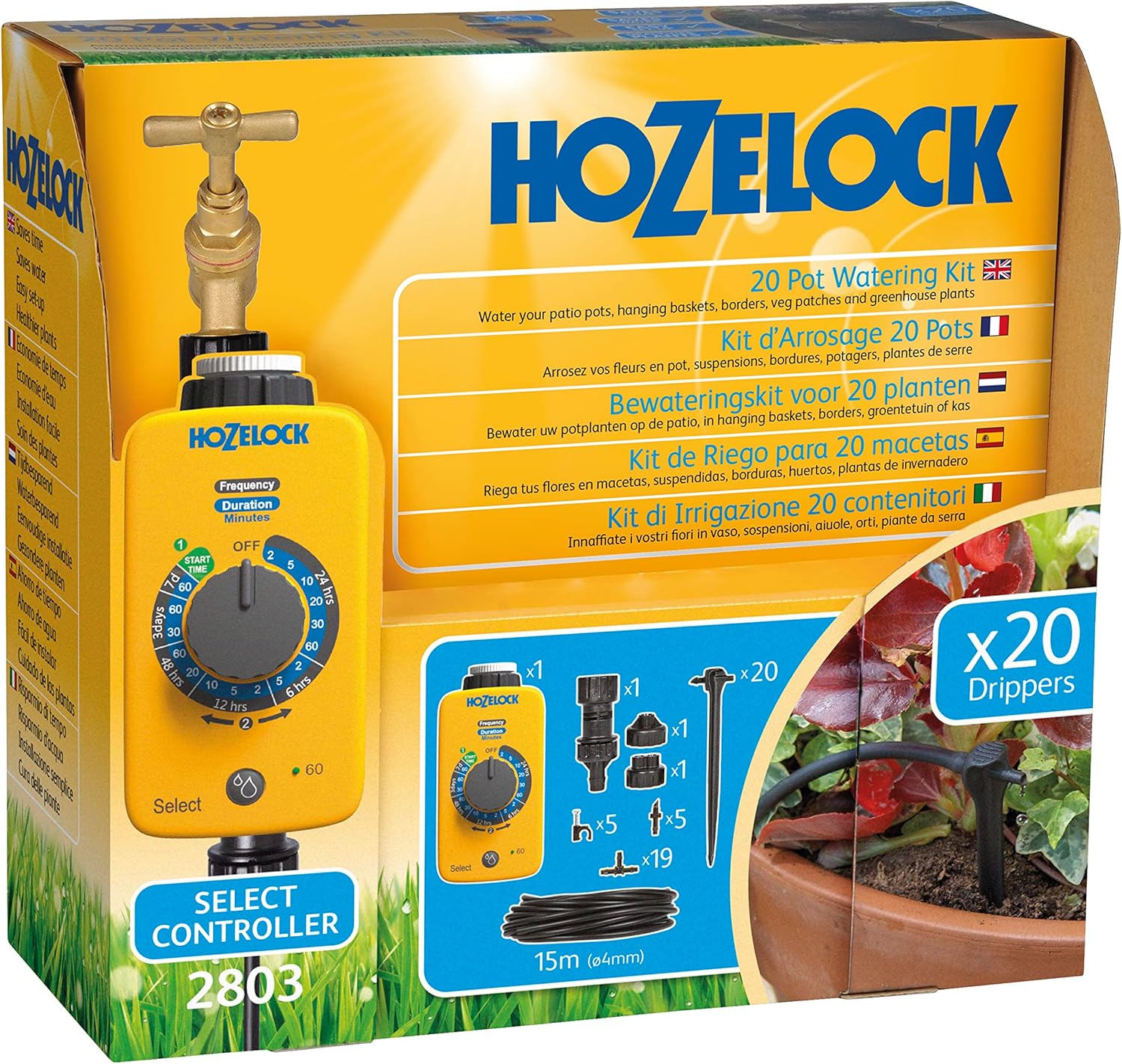
Hozelock 20-pot drip watering kit with Select Controller
Best for: timed watering for up to 20 pots
A complete mains-water drip kit for up to 20 containers, with a tap controller, supply pipe and individual drippers. The controller offers preset schedules while emitters place water close to roots.
What stands out
- Timer and distribution parts included
- Flexible cut-to-fit tubing
- Manual watering function
Keep in mind
- Requires a compatible pressurised tap supply
- Backflow protection and pressure must be checked
- up to 20 containers
- Select Controller
- 16 preset programmes
- root-zone drippers
Common questions
Frequently asked questions
Are growbags better than a greenhouse border for tomatoes?
Neither is always better. Bags are useful where border soil is suspect or the floor is paved; a healthy deep border offers more root room and may need less frequent watering.
Can cucumbers grow in a growbag?
They can grow in suitable bags or large containers, provided there is enough root volume, drainage, support and steady watering. Follow the crop and bag guidance.
Do greenhouse borders need their soil replaced?
Repeated cropping can build soil-borne problems. The RHS advises periodic replacement of border soil or other management where disease builds up; assess your own soil and crop history.
Can I reuse a growbag next year?
Media may sometimes be reused for a different crop if it was healthy, but nutrients and structure change. Do not reuse material from a diseased crop for sensitive seedlings.
Do growbags need drainage holes?
Yes. Follow the bag instructions and make sure excess water can escape without creating a slip hazard or pooling against the greenhouse base.