
Summer climate control
Greenhouse overheating: what to do
A practical order of action when a greenhouse gets too hot: measure the peak, open a real airflow route, add shade and protect stressed plants.
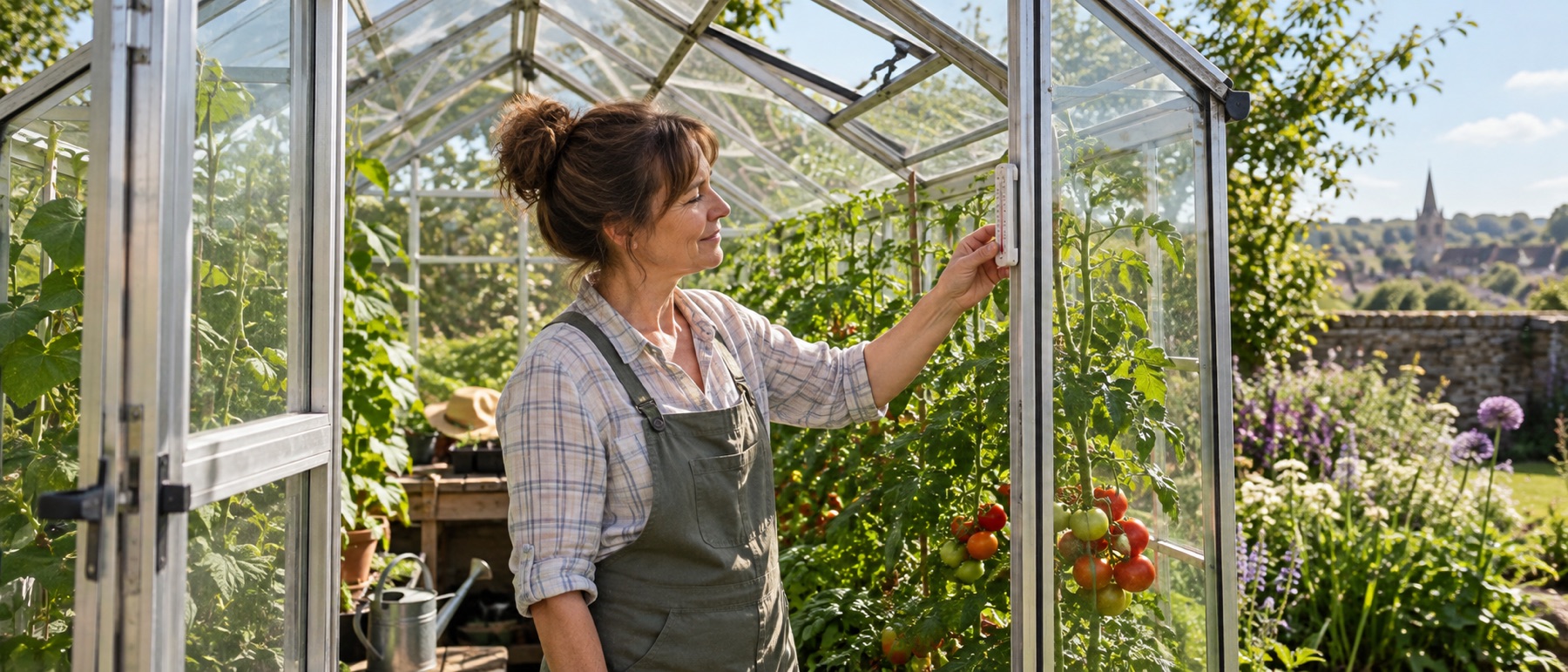
Open roof vents and a safe low-level inlet or door early.
Check a max/min thermometer at plant height, away from direct sun.
Water the root zone as needed; do not treat water as a cooling substitute.
Add removable shade without obstructing the vents.
Diagnose the overheating, not just the weather forecast
An enclosed greenhouse can heat rapidly on a bright spring day, even when the garden air feels comfortable. The RHS guidance on ventilation and shading recommends ventilation as the first defence, with shading when airflow is insufficient. The question is what happens inside your structure, at the height of the leaves, not just what the forecast says outside.
Put a max/min thermometer in a shaded position among the crop canopy. Read its daytime maximum over several sunny days and compare it with how plants look in the afternoon. A sensor against sunlit glass or directly under a roof panel can exaggerate the temperature experienced by the plants. Different crops tolerate heat differently, so avoid treating a single number as a universal safe limit.
A same-day rescue order
Open roof vents fully and provide a lower inlet—often the door, a side vent or a louvre. Check that every vent actually moves freely and that netting, bubble lining or tall tomatoes are not obstructing it. If the weather is windy, secure doors and vents as the maker instructs rather than leaving them to slam. Move especially vulnerable trays out of intense direct sun where possible.
Check the compost below the surface. A wilted plant may be dry, but watering already wet compost can make root problems worse. Water the root zone if it needs it, preferably in the cooler part of the day. Ventilation and water management solve different problems: the former removes hot air; the latter replaces moisture used by the crop. See the greenhouse watering systems guide if keeping pots evenly supplied is the repeated failure point.
If the greenhouse is still overheating with its vents working, add removable shade to the sunniest elevation or roof. External shade intercepts solar energy before it passes through the glazing, but it must be secured against wind and kept clear of opening vents. Start with moderate coverage and reassess plant growth and thermometer readings. The shade-netting guide explains percentage, fitting and removal.
Fix the recurring cause
An automatic roof opener helps with mornings when no one is available to open the vent, but it is not a complete cooling system. It has to fit the exact vent and frame, and its wax mechanism opens progressively rather than instantly. A small greenhouse with one roof vent may still need a dependable low inlet. Read the ventilation guide before buying more hardware.
Plant density also matters. A wall of mature tomatoes can cut off airflow to seedlings behind it; crowded shelving creates hot, still pockets. Thin out old leaves where horticulturally appropriate, leave a path around the crop and avoid placing a fan where it merely blows hot air against one group of plants. A circulation fan moves air inside; only an open vent or designed extractor exchanges it with outside air. See circulation versus extraction.
Check that your changes worked
After each change, reset the max/min instrument and compare a few similar sunny days. Record the roof and door position, shade coverage and which crop first showed stress. This is more useful than buying several gadgets at once. On dull days or as autumn approaches, remove or roll back shade so plants regain useful light. Keep a hot-day routine in the greenhouse: open, measure, water based on the root zone and recheck in the afternoon.
Helpful products
Tools for heat control
A thermometer shows whether the changes worked; a compatible automatic opener and removable shade help on days when you cannot be there.

Digital max/min greenhouse thermometer
Best for: tracking overnight lows and daytime peaks
A simple wall-mountable display that records the highest and lowest temperature since the last reset. Those extremes are more useful than one midday reading when deciding on shade or frost protection.
What stands out
- Makes temperature swings visible
- Easy to read and reset
- No app or account required
Keep in mind
- Place away from direct sun
- Manual readings do not provide remote alerts
- digital display
- maximum and minimum memory
- °C and °F
- wall mountable

Gardening Naturally automatic vent opener
Best for: automatic daytime ventilation
A heat-responsive vent opener that works without electricity and begins opening as the greenhouse warms. Confirm its brackets, lifting force and range suit the exact vent before ordering.
What stands out
- Responds while you are away
- No mains supply or battery
- Fits many common roof vents
Keep in mind
- Compatibility must be checked
- Does not replace door and low-level airflow
- heat responsive
- no electricity
- up to 7kg opening force
- adjustable response
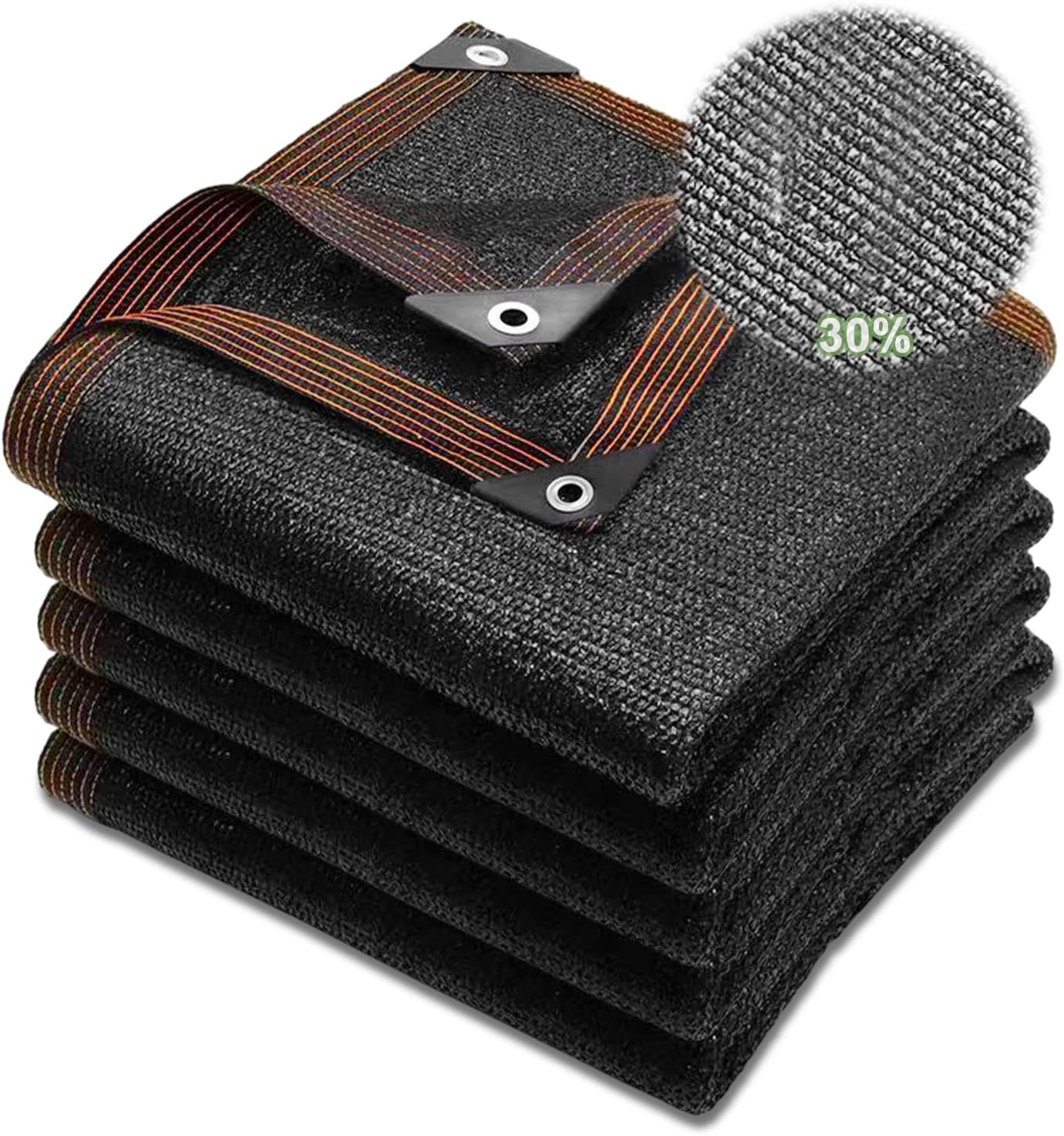
30% greenhouse shade cloth with eyelets
Best for: reducing harsh summer solar gain
A 3 × 4m green shade net with eyelets. Thirty-percent shading is a lighter intervention than opaque covers, but the right density and fixing depend on crop, aspect, glazing and wind exposure.
What stands out
- Allows light through
- Removable outside the hot season
- Eyelets simplify tidy fixing
Keep in mind
- Must be secured for wind
- Measure the exact roof and sides first
- 3 × 4m
- 30% shade
- eyeleted edge
- removable mesh
Common questions
Frequently asked questions
What should I do first if my greenhouse is very hot?
Open the roof vents and a lower inlet or door to let hot air escape. Check that shade, staging or tall plants are not blocking the route, then water plants according to the compost rather than spraying the air indiscriminately.
Will opening the door alone cool a greenhouse?
It helps, but a roof outlet and low inlet usually create a more effective path. An open door without an upper exit can leave heat trapped around the roof and tall crops.
Can I cool a greenhouse by wetting the floor?
Dampening a floor can create short-lived evaporative cooling in suitable conditions, but it adds humidity and does not replace ventilation or shade. Avoid leaving water where it creates a slip hazard.
Should I shade every greenhouse in summer?
No. Watch the temperature and plants first. Shade is helpful when good ventilation cannot prevent damaging heat or leaf scorch, but excessive shade can reduce growth on dull days.
Is an automatic roof opener enough while I am away?
It opens only a compatible vent and responds gradually. You still need a lower air inlet, adequate total vent area, secure installation and a tested plan for hot weather.