
Greenhouse irrigation comparison
Best greenhouse watering systems
Compare greenhouse watering systems for mixed pots, timed container watering and orderly crop rows, with pressure, filtration and backflow advice.
Our recommendations
Watering kits for pots, compact zones and rows
First confirm the source, pressure, backflow protection and real crop layout; then choose emitters and control.
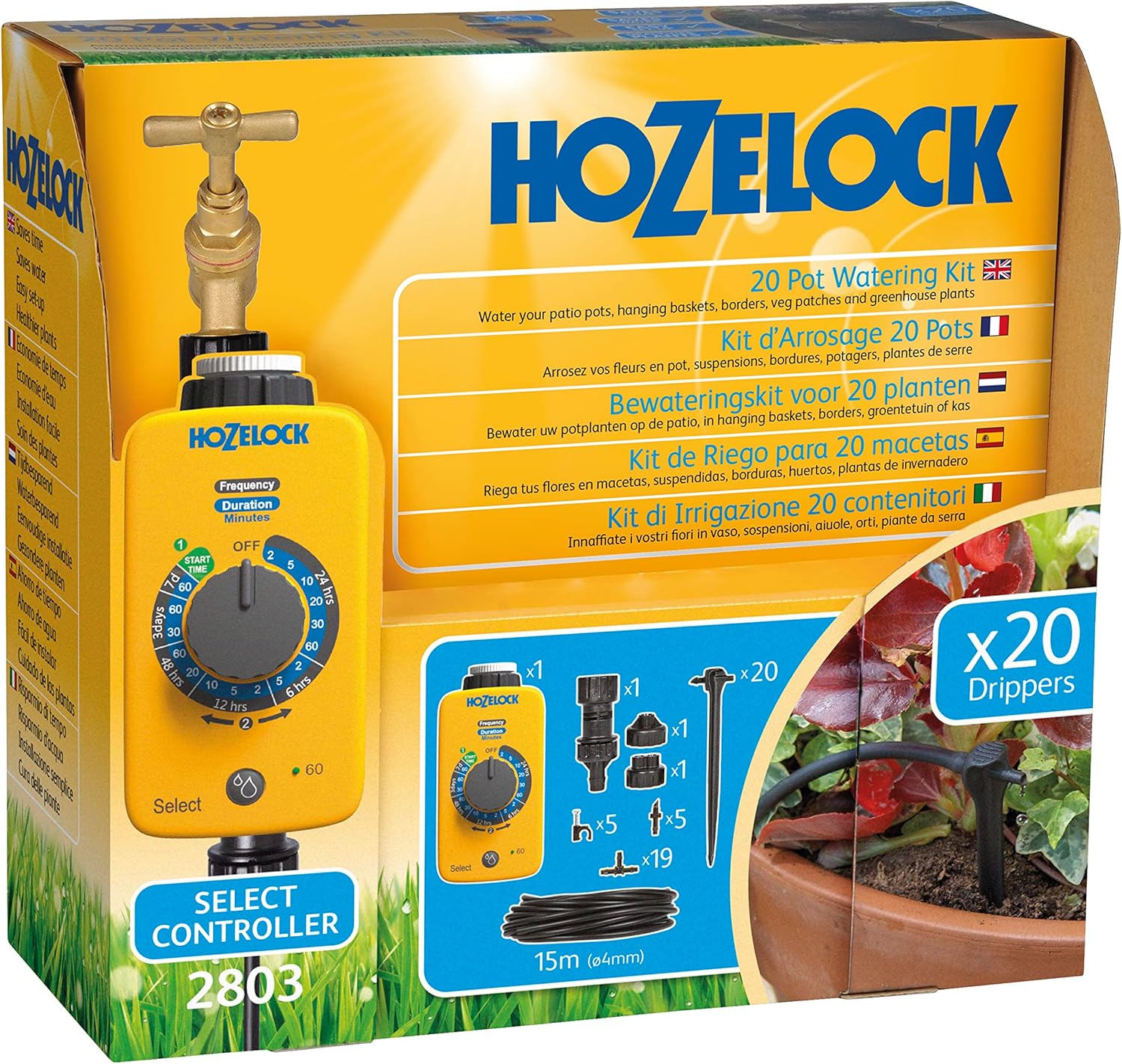
Hozelock 20-pot drip watering kit with Select Controller
Best for: timed watering for up to 20 pots
A complete mains-water drip kit for up to 20 containers, with a tap controller, supply pipe and individual drippers. The controller offers preset schedules while emitters place water close to roots.
What stands out
- Timer and distribution parts included
- Flexible cut-to-fit tubing
- Manual watering function
Keep in mind
- Requires a compatible pressurised tap supply
- Backflow protection and pressure must be checked
- up to 20 containers
- Select Controller
- 16 preset programmes
- root-zone drippers

MIXC 15m drip-irrigation kit
Best for: small pot-watering zones
A compact micro-irrigation kit for distributing water between pots or short greenhouse rows. It is most useful after the crop layout and water source are decided.
What stands out
- Flexible layout around pots
- Compact length limits excess tubing
- Emitters can be checked individually
Keep in mind
- Needs pressure and compatibility checks
- Lines and emitters need flushing
- 15m tubing
- adjustable emitters
- DIY layout
- small greenhouse scale

Gardena Micro-Drip rows-of-plants starter set
Best for: a greenhouse bed or planting row
A starter system designed to drip along short rows of kitchen-garden or ornamental plants. Its stated 1.6 litre-per-hour drip points suit a planned row better than a mixed collection of containers with very different demands.
What stands out
- Purposeful row layout
- Slow root-zone delivery
- Expandable system family
Keep in mind
- Less adaptable for scattered pots
- Supply pressure and filtration still matter
- row-watering starter set
- 1.6L/h stated flow
- Micro-Drip format
- self-cleaning labyrinth design
| Recommendation | Layout | Control | Published scale | Main check |
|---|---|---|---|---|
| Hozelock 20-pot kit | Containers | Select tap controller | Up to 20 pots | Tap, pressure and backflow protection |
| MIXC 15m kit | Small mixed pot zone | Add suitable timer if required | 15m tubing | Emitter balance and source compatibility |
| Gardena row starter | Beds or close rows | Add compatible control if required | 1.6L/h stated drip flow | Run length, filtration and row demand |
How we chose these systems
We compared three current Amazon UK products by the layout they serve: up to 20 containers with a tap timer, a small flexible pot zone and a planted row. We prioritised a defined kit scale, root-zone drip delivery and a clear use case rather than the largest bag of fittings.
Irrigation performance depends on pressure, elevation, tube length, filter condition, emitter type and maintenance, so every installation needs a measured catch-cup test.
Best complete tap-fed kit: Hozelock 20-pot kit
The Hozelock combines distribution pipe, drippers and a Select Controller for up to 20 containers. Its controller includes 16 preset schedules and a manual watering function, so it addresses both delivery and timing in one package.
It is the most complete choice here for a greenhouse with a suitable pressurised tap. The drippers place water at root level, and cut-to-fit tubing allows a tidy route around the staging. Use blanking plugs and proper connectors rather than folding a tube to stop flow.
The tap connection is also its main planning issue. Confirm water pressure, connector size, filter requirements and compliant backflow protection. A controller closing the flow does not itself protect the drinking-water supply from backflow.
Best compact flexible kit: MIXC 15m
The MIXC kit uses 15m of small tubing with adjustable emitters. It suits a compact greenhouse where pots can be arranged into one short zone and the gardener wants flexibility over emitter position.
Adjustable heads are useful for balancing different containers, but they also introduce many settings that can be knocked or blocked. Start with emitters nearly uniform, collect their output for the same timed interval, then make small adjustments. Keep the main line as short and level as practical.
The kit does not remove the need for suitable source control. Add only a compatible pressure regulator, filter and timer, and avoid mixing components whose bore or thread merely looks similar.
Best for a planted row: Gardena Micro-Drip starter set
The Gardena rows-of-plants starter set is designed for a continuous planting row and lists a 1.6L/h drip flow. It is more coherent for tomatoes or closely spaced crops in a greenhouse bed than running separate adjustable spikes into every plant.
The stated labyrinth design helps resist clogging, but no small passage is maintenance-free in real greenhouse water. Filter the source, flush the line at commissioning and inspect the last emitters regularly. A row with large fruiting plants may need different scheduling from a new salad row even when the hardware is the same.
Map zones before buying
Draw the greenhouse and mark pots, growbags, beds and seed trays. Group plants with similar water demand and root volume. Seedlings needing frequent small applications should not share one fixed schedule with established tomatoes in large containers.
Count outlets only after the layout is stable. Include the route from source to greenhouse, elevation changes and a flush point at the end of each line. Keep tube out of the central path and protect it where it crosses a threshold.
Mains tap, rainwater or reservoir?
A mains tap usually provides consistent pressure, but the connection must comply with water regulations. Water Regs UK explains that hose-connected watering systems can present category 3 or 5 backflow risks depending on design, environment and chemical use, with the local water undertaker making the site-specific determination.
Rainwater reduces use of treated water and may suit plants, but a water butt does not automatically provide enough pressure. Height creates only modest gravity head. Select a gravity-rated system or a compatible pump with dry-run protection, filtration and a safe electrical installation.
A separate reservoir-and-pump system can serve remote greenhouses, but capacity has to cover the full absence period plus a margin. Secure the lid against debris, wildlife and children, and prevent a pump from siphoning or emptying the tank after a fault.
Timer choice
A timer should make watering consistent, not unattended forever. Look for easy manual override, a clear battery warning, suitable pressure range and weather resistance. Keep it accessible for testing and isolate it before freezing weather.
Start with a conservative schedule and inspect moisture below the compost surface. A timer cannot detect a split tube, empty butt, blocked filter or uprooted emitter unless extra sensing and shut-off equipment is installed.
Test output before trusting the system
Place equal cups under outlets at the beginning, middle and end of the zone. Run the system for a measured time and compare volumes. Large differences indicate pressure loss, blockage or excessive adjustment.
Repeat with the greenhouse fully planted because height and routing may have changed. Mark the expected output and check again after cleaning the filter. The last plant in a run is an early indicator of deterioration.
Water the root zone, not the air
Position emitters where active roots can reach moisture and secure them so they cannot spray leaves or the heater. In large pots, two lower-flow emitters on opposite sides may wet the root ball more evenly than one high-flow point.
Inspect drainage. Automatic watering can quietly create saturated compost or nutrient loss when containers sit in saucers. Conversely, a wet surface does not prove the full root ball is hydrated.
Maintenance and winter shutdown
Clean filters, flush line ends and inspect emitters for salt or algae. Replace brittle tube and secure any connector that weeps under pressure. Before frost, drain exposed parts and store controllers as directed by the manufacturer.
At the start of the next season, pressure-test the empty system before placing plants. Rodent damage and displaced plugs often appear only when water is restored.
Sources and related guides
Water Regs UK’s hose-union-tap guidance explains backflow risk, garden-hose controls and notification for irrigation systems. For layout, flow testing and scheduling, continue with our greenhouse drip-irrigation guide. Product details come from the linked Amazon UK listings.
For stored rainwater, compare water-butt irrigation before choosing a tap-fed kit. On a seedling bench, capillary matting may be a more suitable format. Use watering while away to test the complete system and plan a human backup.
Common questions
Frequently asked questions
What is the best automatic watering system for a greenhouse?
A tap-fed timer-and-drip kit is dependable where a suitable pressurised supply and backflow protection exist. For beds, a row system is neater; for mixed pots, individual emitters provide more control. The best system matches the source and zones.
Can a drip-irrigation kit run from a water butt?
Only if the kit or an added pump is designed for the available pressure. Many tap-fed emitters perform unevenly under low gravity pressure. Use a gravity-rated system or compatible pump and filter rather than assuming every micro kit will work.
How long should greenhouse drip irrigation run?
There is no universal duration. Measure the output of representative emitters, check root-zone moisture and adjust for pot size, crop stage, weather and growing medium. Timer minutes are meaningful only when flow is known.
Do I need a filter on greenhouse irrigation?
Usually yes, particularly with rainwater. Fine passages in drippers clog with sediment, algae and debris. Use a filter suited to the system and clean it on a schedule.
Can I add fertiliser through a greenhouse watering system?
Fertigation changes compatibility and backflow risk. Use only equipment designed for dosing, follow fertiliser and irrigation instructions, and check requirements with the local water undertaker before connecting any dosing system to mains water.