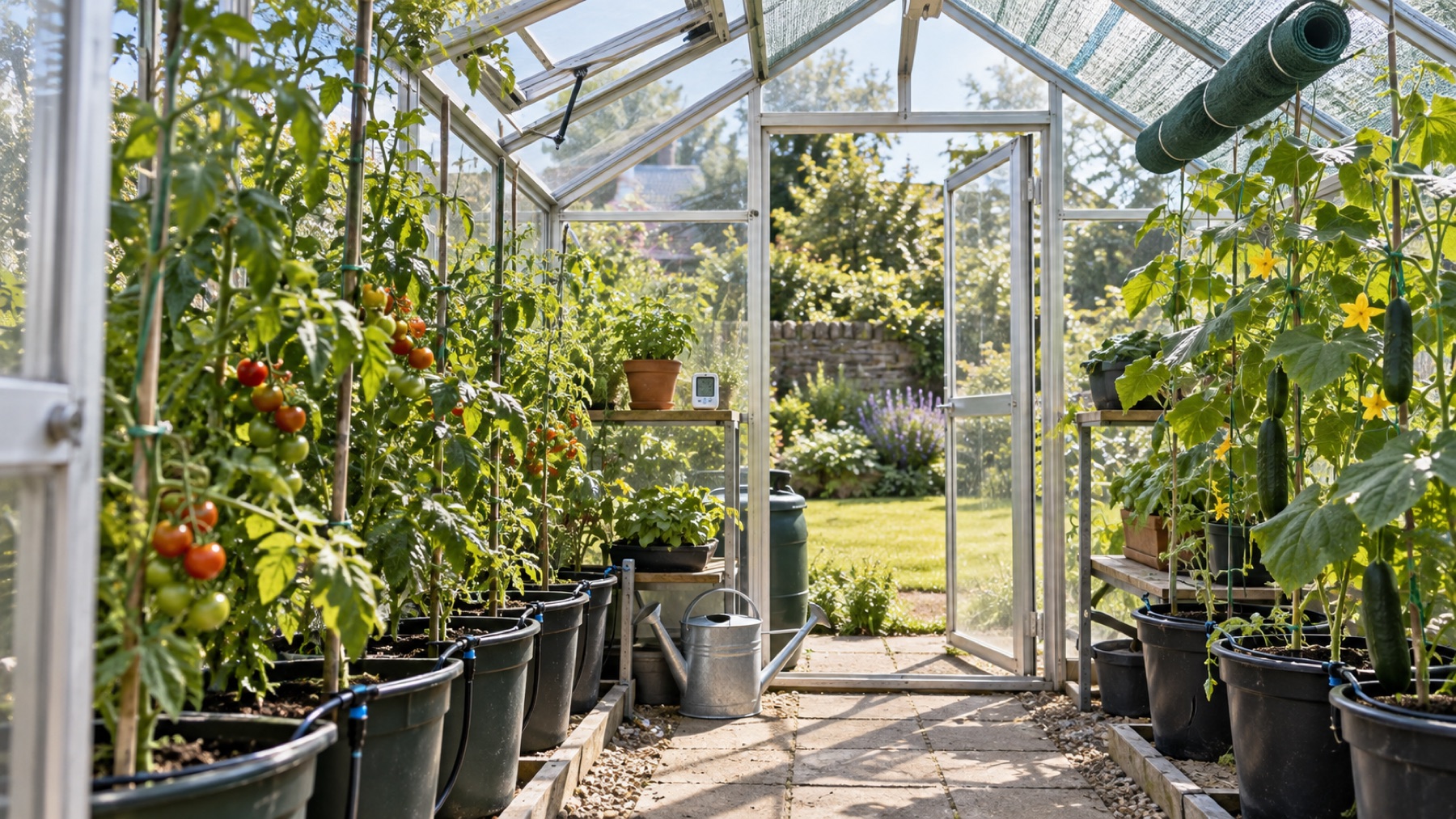
Ventilation comes first. Shade, watering and heating cannot compensate for a greenhouse that traps excessive heat and humid, still air. Check the number and position of vents on the exact structure, then decide whether an automatic opener helps when nobody is present to react to a bright morning.
Heat only the space and plants that need it
The RHS notes that an unheated greenhouse can still shelter many plants and extend the season. If frost protection is needed, improve the enclosure and group tender plants before trying to heat every cubic metre. Any electrical heater or supply must follow the manufacturer's instructions and be installed with proper outdoor electrical protection; combustion heaters also introduce ventilation and moisture considerations.
Design watering around the source
A water butt can work well with a gravity-compatible system, while mains-fed automatic irrigation raises backflow and local restriction questions. Check current water-company rules during hosepipe restrictions. Drip irrigation, capillary matting and hand watering suit different containers and crops, so divide the greenhouse into practical watering zones rather than expecting one setting to suit everything.
The thermometer above helps reveal the daytime peak and overnight low between visits. If the peak is the problem, confirm that an automatic opener fits the exact vent before buying; add removable shade only after the available door and roof ventilation are being used. If water is the constraint, draw the pot layout first and test every dripper rather than assuming equal flow.
For plants wilting on a sunny afternoon, use the overheating checklist before buying a fan or darker mesh. Check root moisture, usable openings and the temperature at plant height. The RHS ventilation and shading guide explains why these controls need to work together.
For persistent condensation or damp foliage, start with humidity control. A circulation fan moves air inside; it does not create the outside-air exchange of an extractor. A louvre vent is a low-level inlet, while a roof vent provides a high outlet. Match the missing part of the airflow path rather than adding equipment at random.
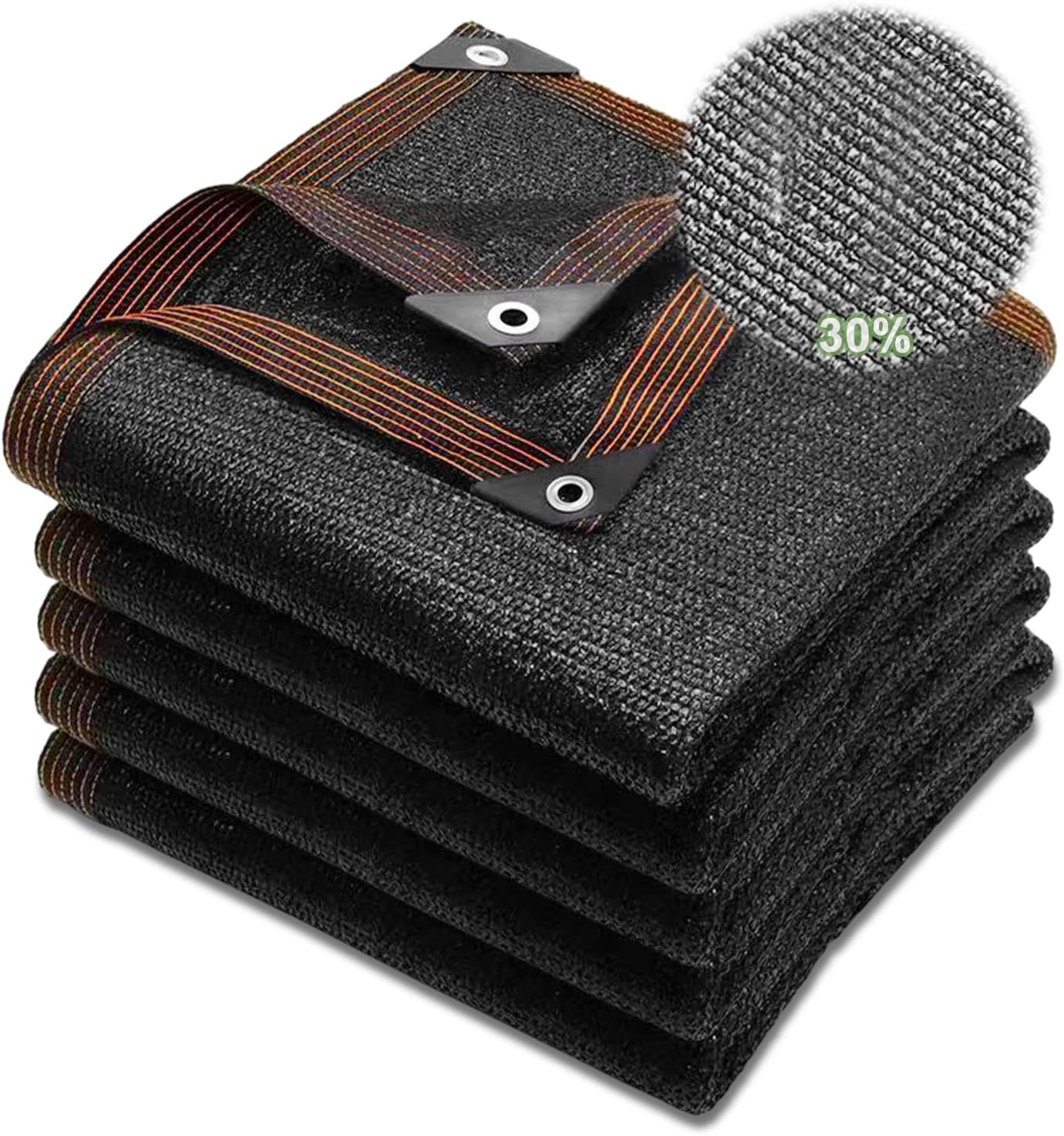
If daily vent operation is difficult, compare automatic vent openers by load, brackets and travel. For excessive sun, work through how to shade a greenhouse and the more specific shade-netting guide.
Separate frost protection from warm growing
The temperature needed to keep a particular plant alive is not always the temperature needed for active growth. Read how cold an unheated greenhouse gets before estimating the benefit of the enclosure. Then use frost protection to group plants, reduce avoidable heat loss and make a backup plan.
Bubble insulation and greenhouse heaters solve different parts of that problem. Insulation changes heat loss and light; a heater adds heat and needs appropriate control and a safe supply. Do not run a heater simply to make an unsuitable winter crop fit the space.
Match irrigation to the supply and containers
For stored rainwater, start with water-butt greenhouse irrigation and check whether the system needs gravity pressure or a pump. For a tap-fed setup, use the watering-system comparison and drip-irrigation guide. A timer schedules water; it does not detect that one pot is already wet.
On a level bench, capillary matting offers a different approach for compatible pots. Before a holiday, test the complete setup using watering while away and arrange a person who can respond if the supply or controller fails.