
Summer greenhouse care
How to shade a greenhouse
Choose and fit greenhouse shading without blocking ventilation or sacrificing more light than plants need, with practical UK seasonal advice.
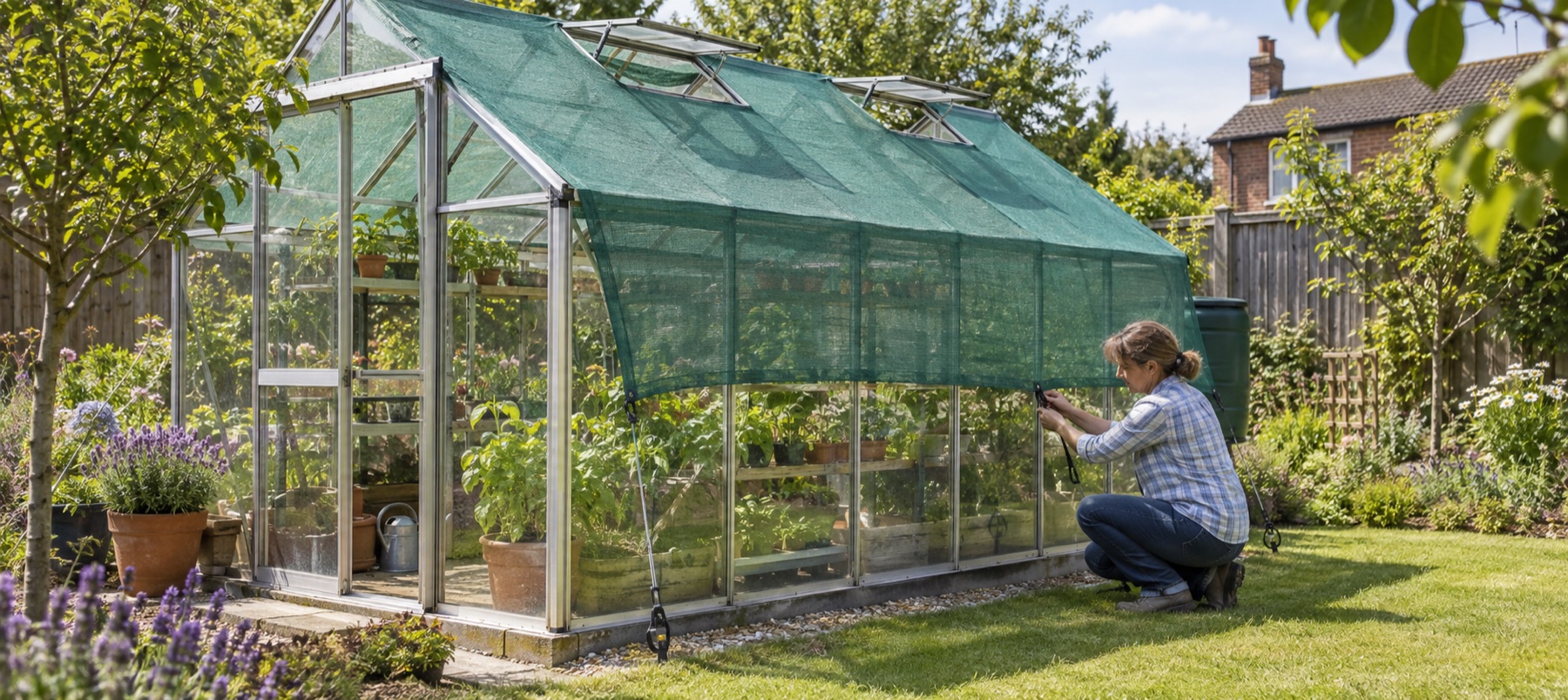
Open all available vents and doors before deciding that more shade is needed.
External shade is more effective than internal shade but must withstand wind safely.
Choose density for crop, aspect and glazing instead of assuming darker is better.
Keep roof vents, gutters, doors and automatic-openers clear through their full movement.
Shade solves solar gain, not poor airflow
A greenhouse warms because sunlight passes through the glazing and is absorbed by plants, soil, staging and paths. Shade reduces that incoming energy. Ventilation removes warmed air. They work together, but shade should not be used to disguise blocked or inadequate vents.
Start by opening roof vents, louvres and the door. Confirm automatic openers work, move plants away from inlet openings and read a shaded max/min thermometer at plant height. If the greenhouse still reaches damaging peaks or leaves scorch despite adequate root moisture, add the least shade that controls the problem.
External shade is the most effective
External blinds or mesh intercept sunlight before it reaches the glazing. The absorbed heat remains mostly outside, making this approach more effective than hanging the same material internally.
The trade-off is exposure. Wind can pull at fabric, clips and greenhouse frames. Use a purpose-suitable mesh with reinforced edges or eyelets, spread the load across secure fixing points and avoid tying it to gutters, vent handles or fragile glazing clips. Keep loose cords out of paths and away from children and wildlife.
Never climb onto a greenhouse roof. Fit and remove external shade from a stable ground-level system or use a competent installer for inaccessible structures.
Retractable external blinds
Retractable blinds provide the best control in changeable UK weather. They can be extended for a bright afternoon and withdrawn during dull periods, spring cold snaps or autumn. A properly designed system also leaves roof vents free.
They cost more and need space for rollers, guides or support wires. Check that the greenhouse frame can carry the system and that wind sensors or manual retraction procedures are understood. A blind left extended in a gale can damage more than the fabric.
Shade mesh
Mesh is cheaper and easier to adapt. Shade percentage describes how much light the material blocks under test conditions, not the exact temperature reduction in your greenhouse. Glazing, orientation, crop canopy, ventilation and local weather all alter the outcome.
A 30% mesh is a relatively light starting point for many high-light crops; denser products may suit more sensitive plants or intense exposure. Avoid choosing by percentage alone. Compare the temperature record and plant response before and after fitting, and uncover sections when conditions turn dull.
Support mesh so it does not rub on sharp frame corners or sag onto hot glazing. Allow roof windows to open completely. Where separate panels are used, overlap them just enough to prevent bright stripes without creating a thick insulated band over the ridge.
Internal blinds and screens
Internal blinds are sheltered from wind and easy to adjust, but sunlight has already passed through the glazing before reaching them. Heat absorbed by the blind remains inside unless ventilation removes it.
Leave an air gap between the screen and glazing, keep it away from heaters and do not create a pocket that traps hot air around roof vents. Condensation can wet fabric and encourage mould, so choose a washable material and inspect attachment points.
Removable shading paint
Greenhouse shading compounds are brushed or sprayed onto the outside of compatible glazing. They suit complex roofs where blinds would be awkward and cannot blow loose like fabric.
Check the product against glass, polycarbonate, seals and coatings. Apply an even layer without coating vents, automatic mechanisms or gutters. Removal can require an approved cleaner and safe access; test a small discreet area first. Never use ordinary masonry paint or an unknown whitewash on plastic glazing.
Which sides need shade?
The sun-facing roof and the south- or west-facing side usually receive the strongest summer load, but surrounding buildings and trees can change that pattern. Observe the greenhouse across the day before covering every surface.
Partial shade can preserve morning light while reducing late-afternoon peaks. Avoid shading the north side by default if it contributes little heat. Young seedlings on one bench may need a local screen while established tomatoes elsewhere benefit from full light.
Protect plants as well as air temperature
Well-watered roots help leaves cool through transpiration. Dry compost makes plants more vulnerable even when the air temperature looks acceptable. Water at the root, check emitters and avoid soaking foliage in strong sun.
Leaf scorch, wilt during adequate root moisture and collapsed tender growth suggest heat stress, but pests, root damage and nutrient problems can look similar. Use the temperature history and inspect several plants before increasing shade.
Do not forget wind and ventilation
Close or remove external mesh before forecast severe winds if its fixing system is not designed for them. Automatic vents need an unobstructed path above and below the frame. Door openings should remain clear, and any low louvre must still admit air.
Shade can make a greenhouse feel comfortable while humidity quietly rises. Continue ventilating, space plants and remove dead foliage. Internal screens in particular should not divide the house into stagnant compartments.
When to remove shade
As days shorten, reduce coverage gradually. The RHS advises removing shade as soon as ventilation alone can control overheating. Winter crops and overwintering plants often need every available unit of light, so a mesh left in place all year can reduce growth for no useful cooling benefit.
Clean, dry and store removable fabric away from rodents and sharp tools. Inspect clips and cords before reusing them. For shading paint, use the maker’s removal method without scratching glass or polycarbonate.
Sources and related guides
The RHS greenhouse ventilation and shading guide explains external and internal methods, seasonal timing and the balance between heat and light. Plan airflow first with our greenhouse ventilation guide, and track results with a greenhouse thermometer.
Helpful products
Removable shade and a way to measure its effect
The 30% mesh is a relatively light intervention for a measured area; check its dimensions, fixing and crop needs. A max/min thermometer helps show whether ventilation and shade have actually reduced temperature peaks.
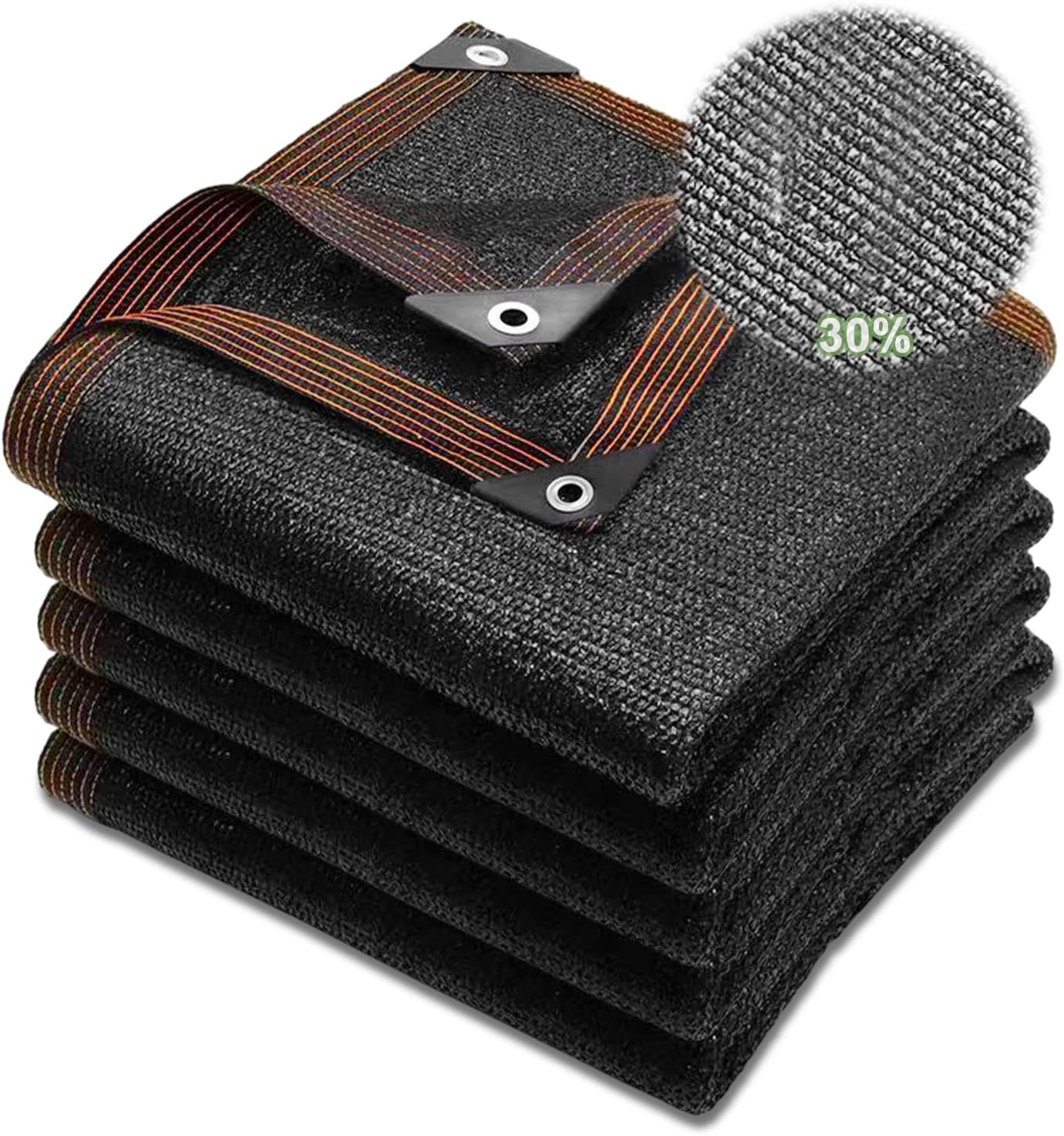
30% greenhouse shade cloth with eyelets
Best for: reducing harsh summer solar gain
A 3 × 4m green shade net with eyelets. Thirty-percent shading is a lighter intervention than opaque covers, but the right density and fixing depend on crop, aspect, glazing and wind exposure.
What stands out
- Allows light through
- Removable outside the hot season
- Eyelets simplify tidy fixing
Keep in mind
- Must be secured for wind
- Measure the exact roof and sides first
- 3 × 4m
- 30% shade
- eyeleted edge
- removable mesh

Brannan Quickset digital max/min greenhouse thermometer
Best for: easy daily max/min checks
A wall-mounted digital thermometer with current, maximum and minimum readings and a one-button reset. The published measuring range is −20°C to 50°C with ±1°C stated accuracy.
What stands out
- Large separate readings
- One-button reset
- Wall-mounted greenhouse format
Keep in mind
- No humidity reading
- No remote alerts or history graph
- −20°C to 50°C range
- ±1°C stated accuracy
- max/min memory
- AAA battery included
Common questions
Frequently asked questions
What is the best way to shade a greenhouse?
Retractable external blinds give the most control and external mesh is a practical removable alternative. Shading paint is simple for large glazed areas. The best choice is one you can adjust or remove without blocking ventilation.
What percentage shade cloth should I use on a greenhouse?
There is no universal percentage. Tomatoes and other high-light edible crops often need a lighter intervention than shade-loving ornamentals. Start with ventilation and the least shade that prevents damaging peaks, then judge plant response.
Should greenhouse shade cloth go inside or outside?
Outside is generally more effective because it intercepts sunlight before it enters and becomes heat. Internal mesh is easier to protect from wind but allows solar energy through the glazing first.
When should greenhouse shading be put up in the UK?
Use temperature records and plant symptoms rather than a fixed calendar date. The RHS describes shading as commonly needed from mid-spring to early autumn and advises reducing it gradually by September.
Can shade cloth cover greenhouse roof vents?
It must not restrict their travel or load automatic-openers. Cut, overlap or support the mesh so every vent can open fully, and prevent loose fabric catching in the mechanism.