
Whitefly under glass
How to control greenhouse whitefly
Identify glasshouse whitefly on UK greenhouse crops and manage it with inspection, removal, hygiene, careful monitoring and timely biological controls.
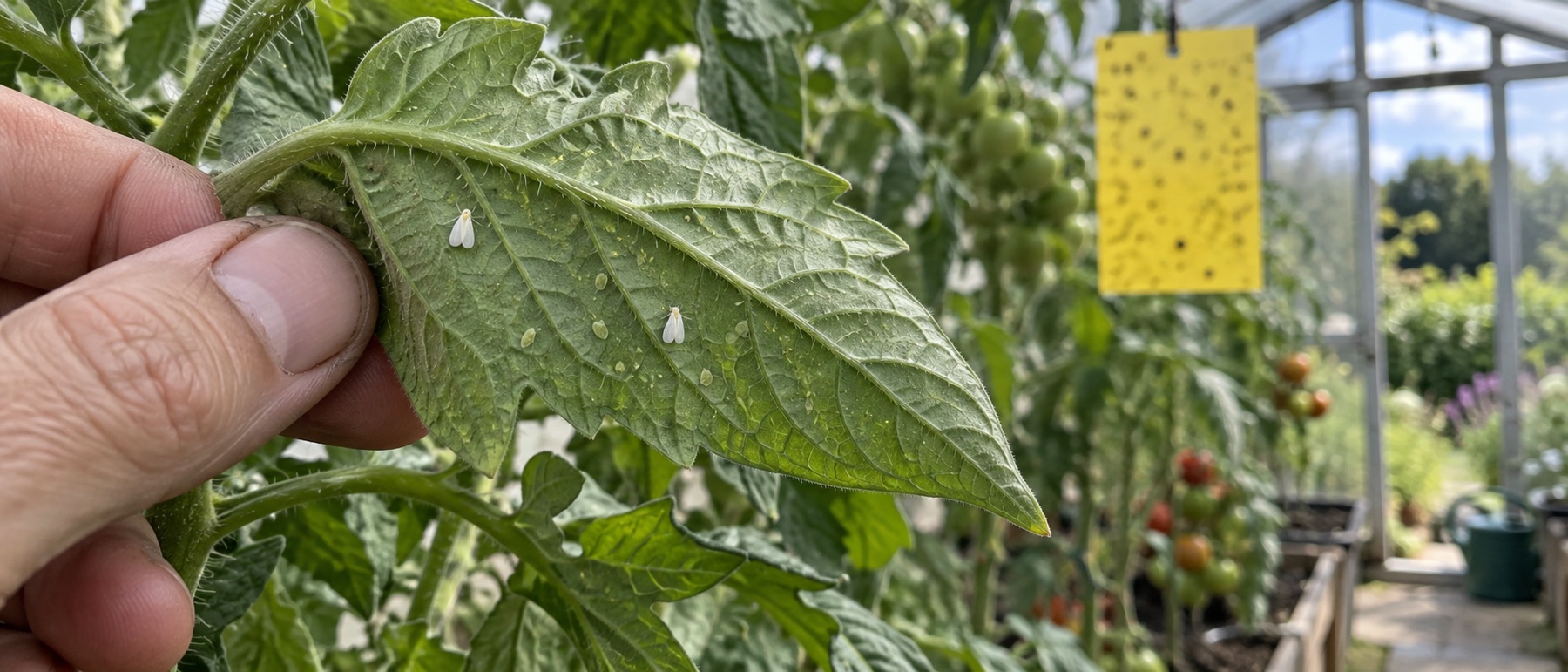
Disturb foliage gently; flying white adults alone are not the whole population.
Look beneath leaves for eggs and scale-like nymphs and above for honeydew or sooty mould.
Avoid using sticky cards indiscriminately during biological-control releases.
Never assume a pesticide is authorised for every greenhouse food crop.
Confirm the insect first
Glasshouse whitefly, Trialeurodes vaporariorum, is a common sap feeder on greenhouse vegetables and ornamentals. The adults are small and white and may rise in a cloud when a plant is disturbed. The more persistent stages are on the undersides of leaves: eggs and pale, flat, oval nymphs that can look like tiny scales. The RHS notes that some nymphs turn black after parasitism by Encarsia.
Honeydew is another clue. Both adults and nymphs excrete this sticky substance, which can support dark sooty mould on foliage and fruit below. Do not assume every white speck is whitefly: shed aphid skins can sit on upper leaves, and whiteflies on outdoor brassicas may be a different species. Inspect the insect and host plant before choosing a response.
Why a few adults can become a large problem
Whitefly breed rapidly under warm greenhouse conditions, and several stages can be present at once. Removing flying adults does not remove eggs and nymphs. The RHS explains that life-cycle speed depends on temperature and that whitefly can remain active through winter in a greenhouse if suitable host plants survive.
That is why an early inspection routine matters more than waiting for leaves to turn black with sooty mould. Check the lower surfaces of a few leaves on tomatoes, cucumbers and peppers during ordinary watering. Look at newly bought plants before they join the crop; quarantine where feasible to allow hidden eggs or nymphs to become visible.
Start with isolation and removal
Move a small infested potted plant away from clean seedlings if its needs allow. Remove badly affected leaves carefully where the plant can tolerate it, placing them directly into a container rather than shaking them through the greenhouse. Remove weeds and spent host plants that do not need to remain under glass. Wash hands and tools before handling clean material.
Do not strip a tomato so aggressively that you damage the crop or expose fruit abruptly to strong sun. Your response should match plant health and infestation level. Good ventilation can help limit sooty mould, but simply opening a vent will not eradicate whitefly. Our greenhouse hygiene guide covers the daily clean-to-dirty routine.
Use yellow cards with a clear purpose
Hang a small number of yellow sticky cards near susceptible plants if you need an early-warning signal. Check them regularly and confirm any capture against insects and nymphs on the plant. A rising count tells you where to inspect more closely; a clean card does not prove every leaf is clear.
The RHS is explicit that sticky yellow sheets mainly help monitor whitefly activity rather than provide full control. It also warns that they can catch non-target organisms, including parasitoid wasps. If you plan an Encarsia release, review card placement or remove cards according to the biological supplier's instructions. More cards are not automatically a better integrated-pest-management plan.
Consider timely biological control
The RHS identifies Encarsia formosa as an established biological control. The tiny wasp parasitises whitefly scale nymphs; parasitised nymphs darken, helping you monitor progress. It is available from specialist biological-control suppliers and works best before an infestation is heavy. It cannot give an instant knockdown of all life stages.
Order only after confirming the pest, checking the supplier's temperature and release requirements and considering any recent or planned pesticide use. Biological agents are living organisms, so storage, timing and compatible greenhouse conditions matter. Do not buy a release simply because one adult appeared on a card; monitor whether the population is establishing.
Be cautious with pesticide claims
There is no universal whitefly spray suitable for every tomato, cucumber, pepper and ornamental crop. UK authorisations, labels and permitted uses can change. If considering a chemical control, check the HSE pesticide databases and the exact current product label for the crop, greenhouse use, dose, protective measures and harvest interval. An online marketplace category or generic description does not establish legal suitability.
Chemical products may also harm beneficial controls or undermine a biological release. Follow current RHS and supplier guidance for compatibility. This article does not recommend a named pesticide because selection requires the specific crop, pest, current authorisation and situation.
Prevent the next outbreak
Inspect incoming plants and greenhouse leaf undersides regularly. Remove exhausted crops promptly, keep weeds from acting as hosts and avoid crowding plants so tightly that no one can see their lower leaves. Clean staging and glazing when crops are cleared; the RHS says winter glasshouse cleaning can help reduce overwintering whitefly.
Keep a note of where the first insects appeared and which plants were brought in shortly before. That evidence can reveal an introduction route and improve the next season's quarantine. If whitefly is one of several problems, return to the UK greenhouse pest guide rather than treating every symptom as the same insect.
Sources and related reading
Identification, symptoms, sticky-card limitations and Encarsia guidance come from the RHS glasshouse-whitefly advice. Use the HSE pesticide database for current legal product details and follow biological supplier instructions for any release.
Helpful products
Monitor adults, then inspect the leaves
Yellow sheets may reveal adult activity but are not complete control and can catch Encarsia and other beneficials. A hand lens helps you inspect the undersides of leaves for the immobile stages that cards cannot show.

Gardening Naturally yellow sticky greenhouse traps
Best for: early whitefly monitoring
Double-sided yellow hanging cards catch some adult flying insects and provide an early warning that whitefly are present. They do not remove eggs or nymphs and can also catch beneficial insects.
What stands out
- Visible early-warning signal
- Easy to position near susceptible plants
- No pesticide application
Keep in mind
- Not a complete whitefly control
- Can catch parasitoids and other non-target insects
- yellow sticky sheets
- double-sided
- hang near plants
- replace when covered

Carson SG-10 SureGrip hand magnifier
Best for: closer pest identification
A 2× glass hand lens with a small higher-power spot for examining insects on leaves and checking whether apparent specks are living pests. It helps observation, not control.
What stands out
- Makes small insects easier to distinguish
- No batteries or app
- Useful across several pest guides
Keep in mind
- Does not identify every species
- Must be focused close to the subject
- SG-10 model
- 2× main glass lens
- higher-power spot lens
- hand-held soft-grip format
Common questions
Frequently asked questions
How do I know if I have glasshouse whitefly?
Tiny white-winged adults rise when affected foliage is disturbed. On leaf undersides, look for flat pale oval nymphs; sticky honeydew and black sooty mould may appear on foliage beneath a larger infestation.
Do yellow sticky traps get rid of whitefly?
No. They catch some adults and are useful mainly for monitoring. Eggs and nymphs remain on leaves, and the traps may also catch beneficial parasitoid wasps.
What is Encarsia formosa?
It is a tiny parasitoid wasp used as a biological control against whitefly nymphs. The RHS says it works best when introduced before plants are heavily affected and does not give instant control; follow the supplier's temperature and release guidance.
Does washing the greenhouse remove whitefly?
Cleaning and removing unwanted host plants can reduce overwintering populations, but living infested plants still need inspection and an appropriate plan. Do not rely on a general wash as the only control.
Can I spray greenhouse tomatoes for whitefly?
Only with a product currently authorised in the UK for the exact crop and situation, used exactly as labelled. Check the HSE database and harvest restrictions; consider how spraying may affect beneficial controls.