
Greenhouse crop choices
What to grow in a greenhouse
Choose productive UK greenhouse crops for a small or large structure, from spring seedlings and summer tomatoes to autumn salads and overwintering plants.
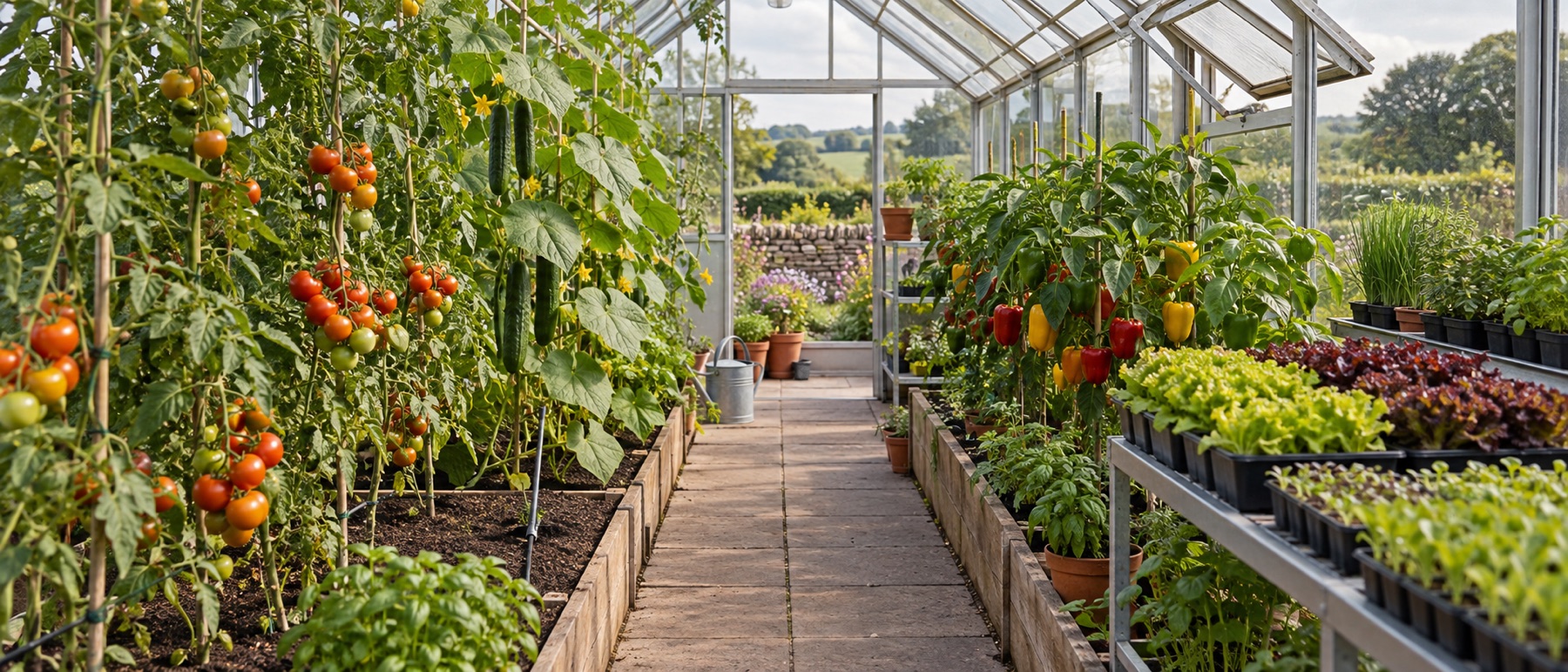
Tomatoes and cucumbers can dominate a small greenhouse at maturity.
Peppers, aubergines and herbs offer container-based alternatives.
Cool-season salads make use of space after summer crops are removed.
Ventilation, water access and paths determine how productive the layout remains.
Choose by outcome, not by catalogue size
A greenhouse is most valuable when it solves a specific growing problem: an earlier start for hardy seedlings, a more reliable summer crop of tomatoes and cucumbers, or a sheltered finish for autumn salad leaves. It is less useful as a place to squeeze in every attractive packet. In a small house, one overgrown cucumber can shade several pepper pots and turn the path into a daily obstacle.
Begin with the growing calendar and a sketch of the interior. Mark beds, pots, staging, the door and every vent. Then allocate each season's crops. The RHS notes that even a small unheated greenhouse can extend the season, but timing and the kind of crop still govern the result.
Spring nursery crops
The greenhouse can shelter hardy vegetable seedlings destined for outdoor beds: lettuces, brassicas, onions, leeks and peas are among the RHS examples. Clean modular trays make the space flexible because plants can leave as soon as outdoor conditions and hardening off allow. A sowing bench should not be treated as permanent storage for plants that have already outgrown their cells.
Tender seed such as tomatoes or peppers may need controlled warmth to germinate, especially early in the year. A sunny greenhouse alone does not guarantee a suitable night temperature. Start those seeds where the temperature and light work, then move them under glass when the growing-on environment is safe. Our seed-starting guide separates germination from planting out.
Tomatoes: high reward, regular attention
Tomatoes are the obvious summer greenhouse crop because shelter and warmth can make cropping more reliable. They also demand routine work: substantial root space, supports, watering, feeding, ventilation and frequent harvest. Tall cordon types use vertical space efficiently if there is a secure support and side shoots are managed. Bush types are simpler to prune but still need a suitable footprint.
Do not count a seedling tray as the final layout. Work out how many full-grown plants can be reached and watered without crowding the door or roof vent. The greenhouse tomato guide covers the full sequence, including containers and fruit problems.
Cucumbers and other climbing crops
Greenhouse cucumbers can be productive but need warmth, water, a strong vertical support and enough room for large leaves. Variety matters: choose one recommended for greenhouse cultivation and follow its fruiting and training instructions. The plant's height and leaf area may make it a poor neighbour for several short crops in a very narrow house.
Melons, climbing beans and other adventurous choices can work in the right conditions, but they are not effortless substitutes for tomatoes. Consider whether you can support and train the plant, provide its preferred environment and clear enough space for the full season. A crop that blocks a vent is costing more than its floor area suggests.
Peppers, chillies and aubergines
These tender crops can fit in containers and may suit gardeners who want a more varied harvest than several tomato plants. They still need warmth, good light and regular water. Starting them early can be sensible only with a suitable propagation and growing-on plan. In a cool summer, their progress may be slower than a packet illustration implies.
Containers offer layout flexibility, but the compost volume must match the mature plant. A very small pot dries quickly in a hot greenhouse and restricts roots. Group crops with similar watering needs, and keep them clear of the door's swing and the daily path.
Salads, herbs and useful short crops
Lettuce, spicy leaves, pea shoots and some herbs can occupy pockets of space before or after the main summer planting. Basil likes warmth and can be grown on under cover; hardy herbs have different needs and may prefer to avoid midsummer greenhouse heat. A shallow tray of leaves is not a permanent underplanting solution if a mature tomato later shades it completely.
The RHS suggests late-summer sowings of salad leaves and baby carrots where space allows. For the dark part of winter, establish hardy lettuce and pea shoots earlier rather than expecting rapid growth from a December sowing. Succession is a better productivity strategy than one enormous sowing.
Match crops to greenhouse format
A mini greenhouse or wall growhouse excels at raising trays and protecting compact pots, but it rarely has the height, air volume or root area for several full-size cordon tomatoes. A 6 × 4 walk-in may support a small deliberate crop mix. A 6 × 8 gives more flexibility for a central path, staging and tall plants, though vents and water access still matter.
If you have not chosen a structure, compare greenhouse sizes against the crops you actually want to grow. The best greenhouse is one that can hold the mature planting plan, not merely the spring trays.
Plan water, supports and airflow together
Set strong supports before a climbing crop fills the space. Clips or ties secure stems to a support; they do not anchor that support to the greenhouse. Use manufacturer-approved frame attachments, or a separate sound cane or trellis system. Check ties as stems thicken.
Place water at the root zone and inspect pots in hot weather. Drip lines can help with a row or a collection of containers, but the layout, pressure and water supply must be appropriate. Read the watering-systems comparison before choosing a timer. Leave air around foliage and keep vents moving freely; cramped plants are harder to monitor for pests.
What not to force into the greenhouse
Many hardy crops grow well outdoors after a protected start and need not occupy valuable summer floor area. Conversely, heat-loving plants can fail if the structure is too cold at night. A greenhouse cannot erase the plant's biology. Identify the benefit you expect from covering each crop and free the space when that job is done.
Keep a short record of variety, sowing period, final position and harvest. The next year's choices should reflect what your garden actually produced and what you enjoyed eating. If whitefly or other pests affected a crop, note that too and review the pest guide before repeating the same dense arrangement.
Sources and related reading
Crop and seasonal examples follow the RHS guide to growing vegetables in greenhouses. For crop-specific timings and culture, start with the relevant RHS plant guide and the seed packet rather than treating a broad crop list as a fixed planting schedule.
Helpful products
Support and water the crops you choose
Clips help adjust trained tomato or cucumber stems on an existing support. A drip kit can deliver water to container roots after its supply and layout are checked.

KINGLAKE 60-piece plant support clips
Best for: quick adjustments to trained vines
Thirty larger and thirty smaller reusable spring clips for fastening tomato or cucumber stems to an existing cane, string or trellis. They do not replace a properly anchored support.
What stands out
- Two opening sizes
- Quick to move as plants grow
- Also suits cucumber training
Keep in mind
- Must be checked for stem pressure
- Requires separate stakes or string
- 60 clips
- 30 large and 30 small
- reusable spring design
- support not included
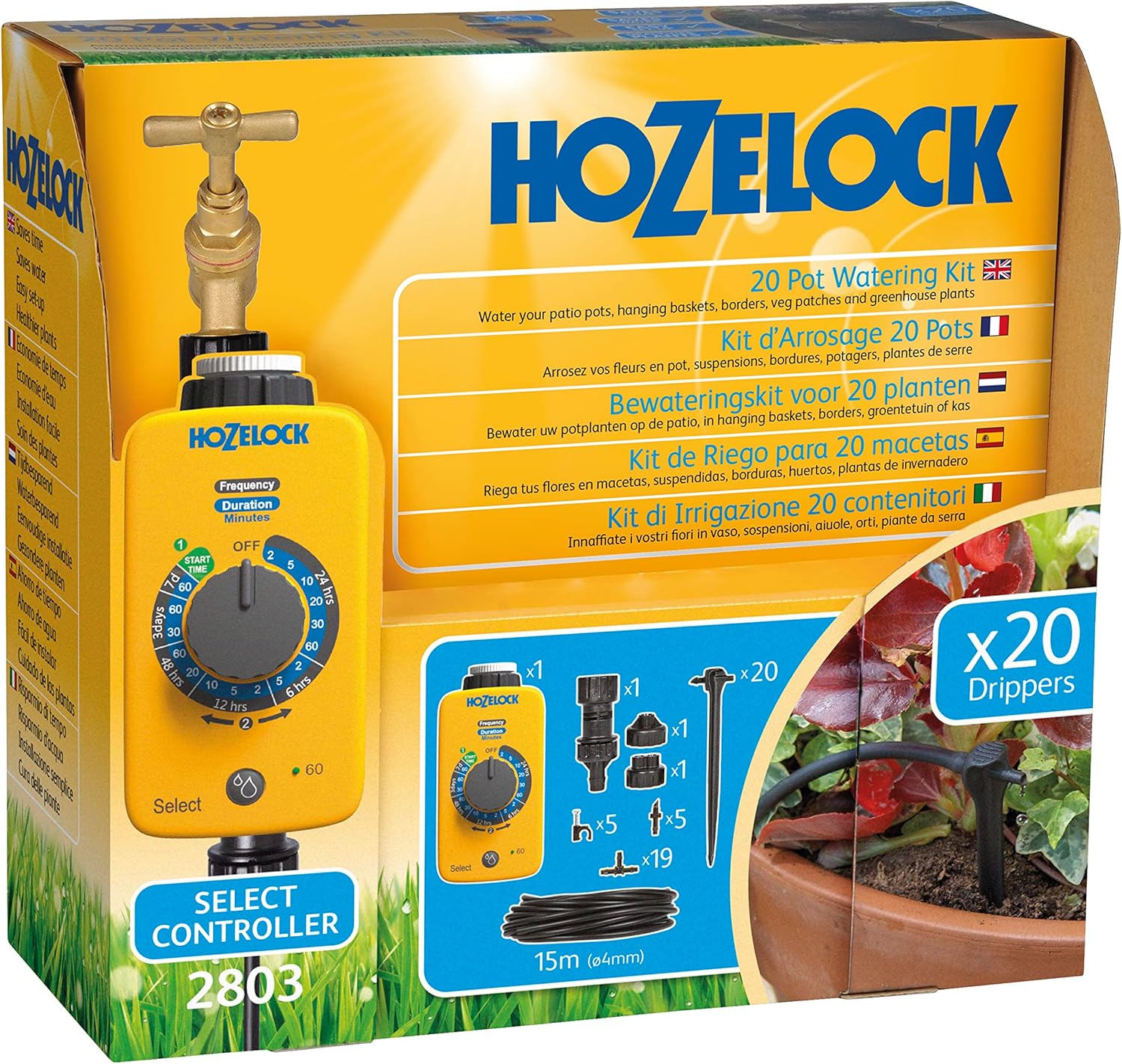
Hozelock 20-pot drip watering kit with Select Controller
Best for: timed watering for up to 20 pots
A complete mains-water drip kit for up to 20 containers, with a tap controller, supply pipe and individual drippers. The controller offers preset schedules while emitters place water close to roots.
What stands out
- Timer and distribution parts included
- Flexible cut-to-fit tubing
- Manual watering function
Keep in mind
- Requires a compatible pressurised tap supply
- Backflow protection and pressure must be checked
- up to 20 containers
- Select Controller
- 16 preset programmes
- root-zone drippers
Common questions
Frequently asked questions
What is the easiest crop to grow in a greenhouse?
Salad leaves and suitable lettuce cultivars are relatively forgiving when sown at the right season. Tomatoes are rewarding but need more regular training, feeding and water management.
What can I grow in a small unheated greenhouse?
Start hardy seedlings in spring, choose one or two well-spaced summer crops such as tomatoes or compact peppers, and use available autumn space for suitable salads. Measure the full-grown footprint before planting.
Can I grow cucumbers and tomatoes together?
They can share a greenhouse if space, support, watering and ventilation allow, but their ideal humidity and training patterns differ. Avoid cramming vines together or blocking roof vents.
Can herbs stay in a greenhouse all year?
It depends on the herb and winter conditions. Basil needs warmth, while some potted hardy herbs may benefit from shelter. Check the species and avoid keeping cool-season herbs in excessive summer heat.
Will a greenhouse grow vegetables all winter without heat?
Some hardy plants can survive and yield modestly, but short days sharply limit growth. Establish winter crops in late summer or autumn and expect slower harvests during the darkest period.