
Month-by-month growing
UK greenhouse growing calendar
A practical month-by-month UK greenhouse calendar for sowing, planting, summer crop care, autumn salads and winter maintenance, with regional and weather adjustments.
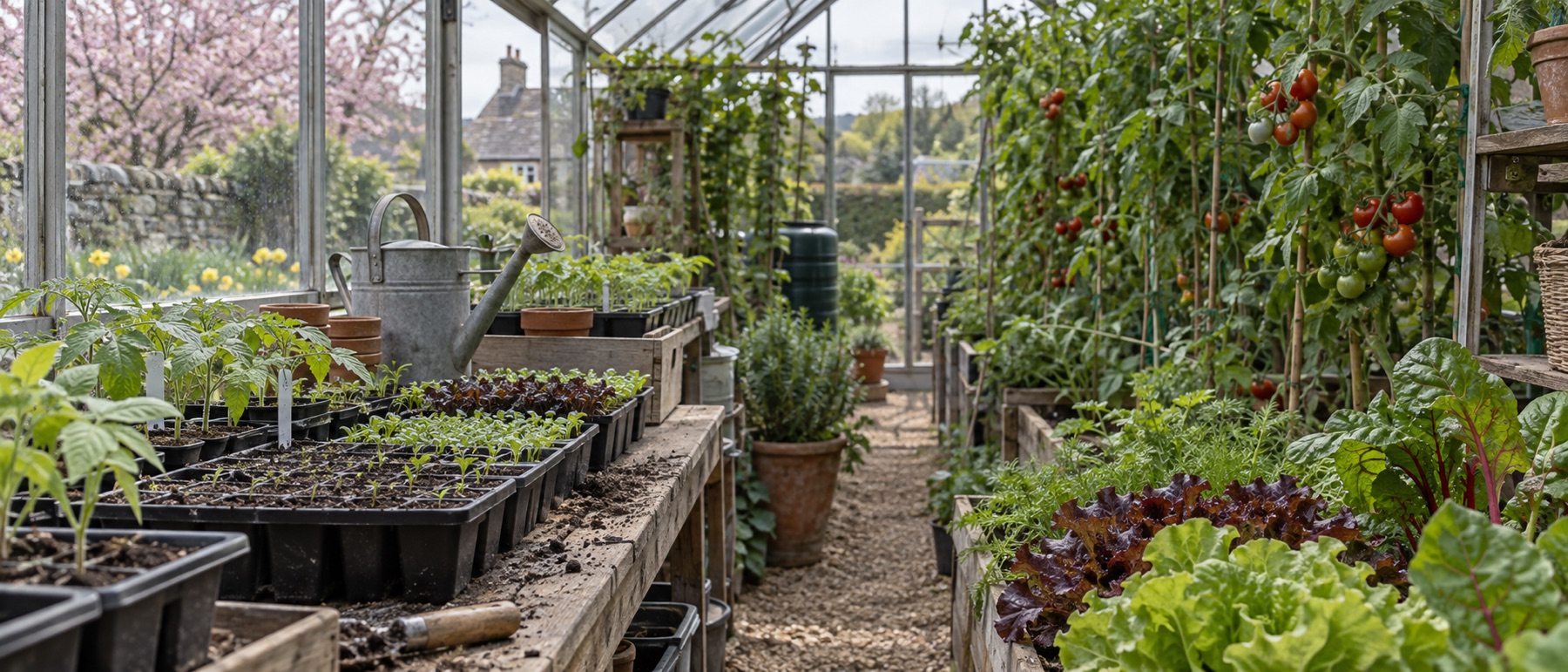
The same month can be very different in a sheltered southern garden and an exposed northern one.
Check seed packets and overnight readings before moving tender plants under glass.
Reserve summer floor space before filling every bench with spring seedlings.
Winter daylight limits growth even when crops survive the cold.
How to use this calendar
The table below is a planning framework for a typical UK unheated greenhouse, not a precise instruction for every postcode or crop. A heated building, a mild coastal garden and an exposed inland site will run differently. Seed packets, measured night temperatures and short-range weather forecasts take priority. The RHS likewise treats greenhouses as season-extending structures while noting that year-round heated production is rarely cost effective for home growers.
| Month | Greenhouse focus | Check before acting |
|---|---|---|
| January | Inspect overwintering plants, structure and supplies; plan sowings. | Light and night cold limit growth. |
| February | Start selected hardy crops; start tender seed only with suitable warmth and onward space. | Do not trust sunny daytime air temperature. |
| March | Increase hardy sowings; pot on early seedlings; prepare beds and staging. | Protect young plants from late frost. |
| April | Sow many fast-growing tender crops; ventilate on warm days. | Watch cold nights and hot covered trays. |
| May | Harden off outdoor plants; establish summer crops when conditions fit. | Final planting depends on crop and local weather. |
| June | Train tomatoes and cucumbers; water and ventilate consistently. | Keep paths, vents and supports clear. |
| July | Harvest, feed as needed and monitor pests frequently. | Heat and dry pots can change quickly. |
| August | Continue harvest; sow suitable late salads where space opens. | Do not crowd fading and new crops together. |
| September | Remove finished plants; establish autumn salads and herbs. | Shorter days slow new growth. |
| October | Clear debris, wash equipment and protect established cool-season crops. | Adjust watering downward as demand falls. |
| November | Ventilate when mild, inspect for pests and maintain structure. | Avoid persistently wet foliage and compost. |
| December | Harvest established hardy leaves sparingly; review the next season. | Growth may almost stop in low light. |
Late winter: prepare before accelerating
January and February are useful for inspecting glazing, cleaning reachable surfaces and checking doors, vents and staging. Remove diseased residue and wash reused seed trays. A greenhouse can be warmer than outdoors at lunchtime yet offer little protection from a hard overnight frost, so put a max/min thermometer at plant height and record several nights.
The RHS recommends sowing hardy vegetables such as lettuce, onions, peas and brassicas for later planting out. Tender tomatoes or peppers can begin early only when germination warmth and a light, frost-free growing-on area are available. A heated propagator warms a small zone but cannot make the entire greenhouse suitable for newly emerged plants. See how to start seeds in a greenhouse.
Spring: two competing uses of space
March and April bring more light but not an end to frost risk. Sow, prick out and pot on in batches. Fast-growing cucumbers, squash and courgettes should not be started so early that they become root-bound before final conditions are safe. A tray-heavy bench now may need to disappear when mature summer crops require the same light and headroom.
Ventilate as the sun strengthens. Closed glazing can overheat seed trays even when outdoor air is cool. Keep watering proportional to compost need and ensure covered propagators do not stay permanently saturated. As outdoor-bound plants develop, harden them off gradually rather than moving them from a warm greenhouse to exposed beds in one step.
Early summer: commit the final positions
Plant tender crops into greenhouse beds, suitably sized containers or growing bags when night conditions reliably support them. Tomatoes, cucumbers, peppers and aubergines have different space and warmth needs, so choose a realistic mix. Fit supports before roots fill the ground and leave a usable route to every watering point and vent.
Our what-to-grow guide compares crops by job and space. For the most common greenhouse crop, the tomato guide covers cordons, containers, watering and feeding.
High summer: maintain rather than just harvest
In June through August, check water daily in hot spells, especially in containers. A timed drip system may help but still needs inspection for blocked emitters and leaks. Open suitable vents and doors, use shade when ventilation alone cannot keep leaves comfortable and train climbing crops before they block airflow.
Look under leaves as well as at fruit. Whitefly, red spider mite and aphids can multiply quickly in warm conditions. Sticky cards can give early warning of some flying insects, but identification and an appropriate response matter more than a card covered with pests. Our UK greenhouse pests guide explains the first checks.
Late summer and autumn: sow into the gap
As crops finish, remove them rather than leaving exhausted foliage in place. The RHS suggests late sowings of lettuces, spicy salad leaves and baby carrots where space allows, then hardy lettuces, pea shoots and overwintering peas or broad beans in autumn. The key is to establish plants while light remains; seed sown very late in an unheated house may sit rather than grow.
Reduce irrigation as temperature and day length fall. A winter salad plant in cool compost needs less water than a July tomato. Clean empty staging and wash pots before storage or reuse. This is also a good moment to note which summer crops justified their footprint.
Winter: protect established plants and reset
Expect slow growth and harvest conservatively. Ventilate during suitable mild periods to reduce stagnant moisture, then close up before temperatures fall. Check frost protection and remove damaged leaves promptly. Inspect gutters, glazing and anchors after severe weather without climbing on the greenhouse or leaning on panels.
Use the quiet period for a greenhouse maintenance checklist and hygiene reset. Record which sowings were too early or too late for your garden. That local record will improve this general calendar far more than a rigid national date.
Sources and further reading
The sequence follows RHS advice on growing vegetables in greenhouses, including its late-winter, mid-spring, summer and autumn crop suggestions. Consult each crop's RHS guide and the seed packet for specific sowing and planting needs.
Helpful products
Track cold nights and start selected seeds
A max/min thermometer helps you adjust the calendar to your own greenhouse. A controlled propagator can warm selected seed trays, but seedlings still need light, space and safe conditions after germination.

Brannan Quickset digital max/min greenhouse thermometer
Best for: easy daily max/min checks
A wall-mounted digital thermometer with current, maximum and minimum readings and a one-button reset. The published measuring range is −20°C to 50°C with ±1°C stated accuracy.
What stands out
- Large separate readings
- One-button reset
- Wall-mounted greenhouse format
Keep in mind
- No humidity reading
- No remote alerts or history graph
- −20°C to 50°C range
- ±1°C stated accuracy
- max/min memory
- AAA battery included
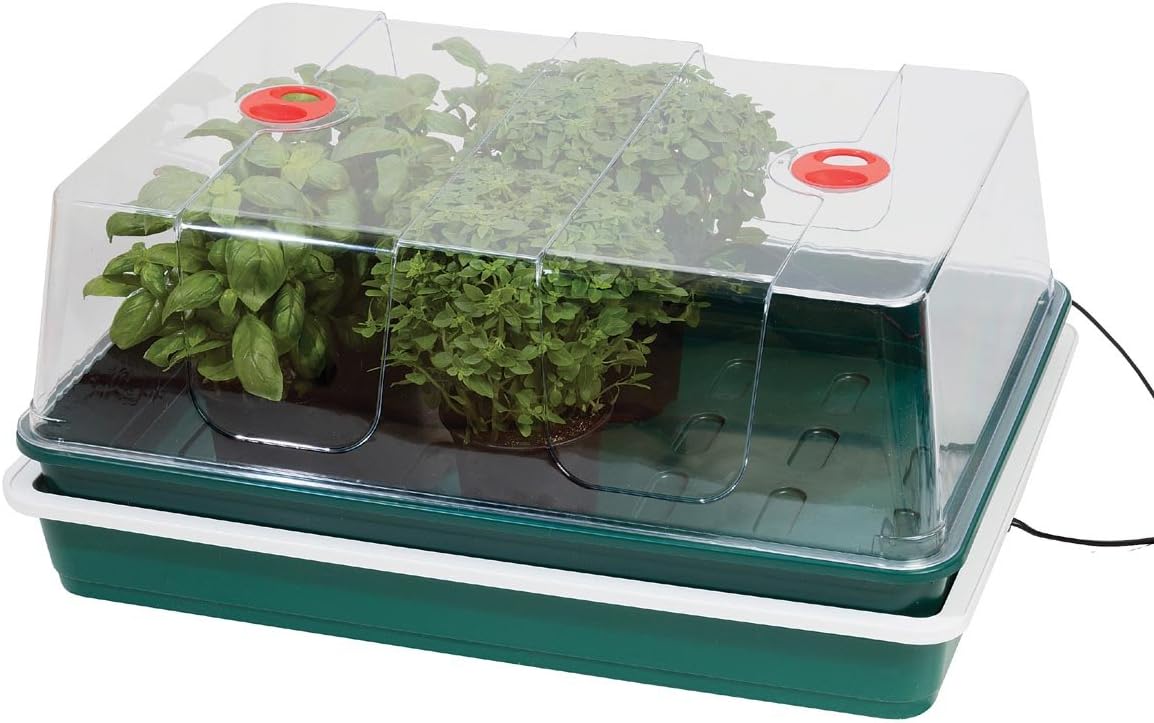
Garland 50W variable-temperature electric propagator
Best for: adjustable heat for several trays
A broad heated base with a tall clear dome and adjustable temperature control. Its listed 59 × 41cm footprint gives room for several seed trays, provided there is a safe supply and enough light.
What stands out
- Useful tray capacity
- Adjustable control
- Tall lid gives seedlings headroom
Keep in mind
- Wide bench footprint
- Warm base does not heat the whole greenhouse
- 59 × 41 × 27cm listed size
- 50W
- adjustable temperature control
- tall clear dome
Common questions
Frequently asked questions
What can I grow in an unheated greenhouse in winter?
Hardy salad leaves, suitable lettuce cultivars, pea shoots and some overwintering seedlings are possibilities. Growth is slow when light is scarce, so sow in time to establish plants before the darkest weeks.
When do greenhouse tomatoes go in?
Plant out when the greenhouse is reliably warm enough for the crop, not on a universal calendar date. The RHS advises waiting for suitable early-summer conditions; check overnight temperature and the current forecast.
Is a greenhouse useful in January?
Yes, for protection, monitoring and preparation, although light and temperature often limit active growth. Check structures and overwintering crops, clean where practical, and plan sowings rather than starting all tender seed immediately.
Can I sow cucumbers and courgettes in March?
They are fast-growing tender crops and can outgrow pots before planting conditions are safe. The RHS places these mid-spring sowings later than many hardy crops; follow the packet and work backwards from your final planting conditions.
Does a heated propagator change the whole calendar?
It may start germination earlier, but the seedlings still need adequate light, growing-on space and frost-safe conditions. Do not advance sowing dates beyond what the next stage of the plant's life can support.