
Greenhouse pest management
UK greenhouse pests guide
Identify common UK greenhouse pests, inspect plants effectively and choose proportionate hygiene, biological or authorised chemical responses without harming beneficial insects.
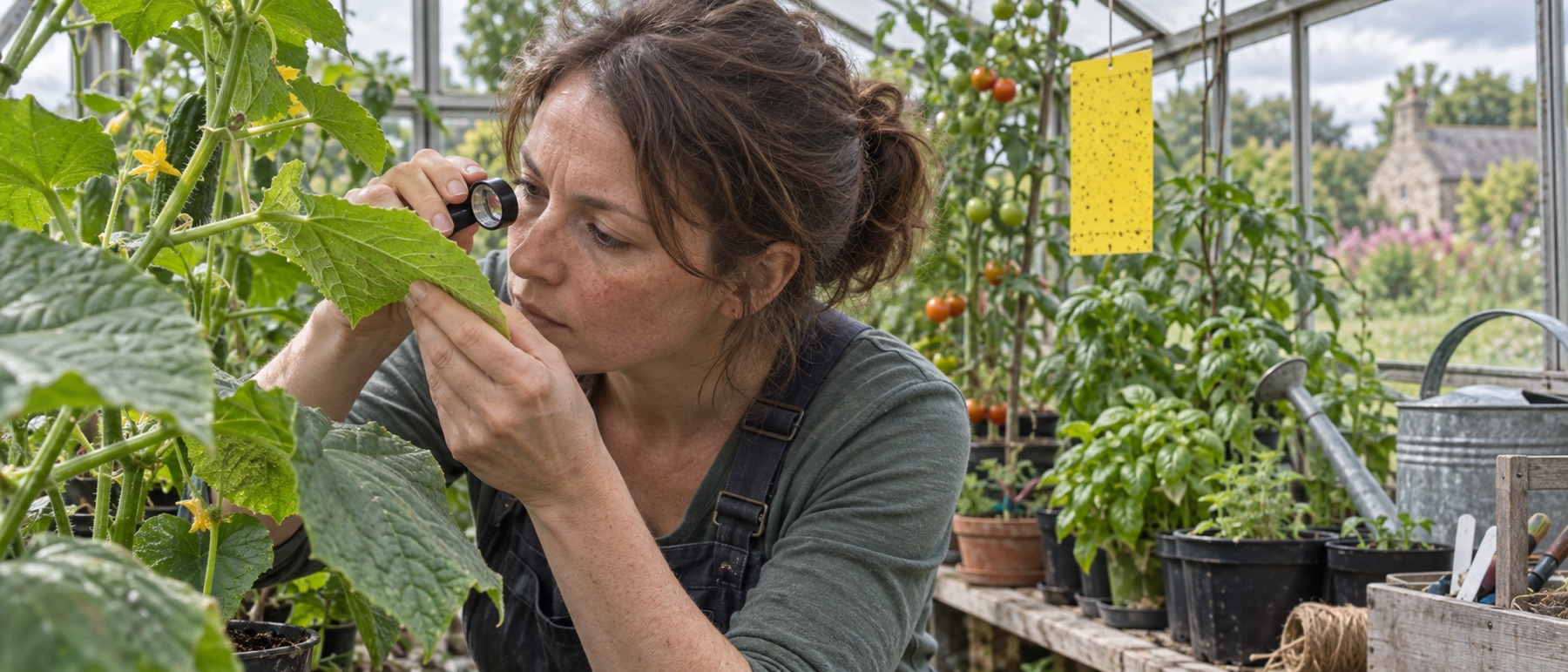
Inspect new plants before they join an established greenhouse crop.
Different pests and diseases produce overlapping symptoms; verify the cause.
Biological controls work best when introduced early and used under suitable conditions.
Check current UK pesticide authorisation and the exact label before any chemical use.
A five-minute inspection routine
Walk the greenhouse before watering so you can see wilting and leaf marks in their natural state. Look at growing tips, the undersides of representative leaves, stems near the compost, damaged fruit and the shaded corners of staging. Note whether insects fly up, crawl, remain fixed in place or leave webbing or sticky honeydew. Photograph a close-up and a whole plant before removing everything.
Keep newly bought plants apart where possible long enough to observe eggs and small pests. The RHS specifically recommends checking incoming plants for whitefly. One infested purchase placed beside a crop of tomatoes can become a house-wide problem while the gardener focuses on watering. Our greenhouse hygiene guide gives a clean-to-dirty work order.
Whitefly: small adults, persistent young stages
Glasshouse whitefly are tiny white-winged insects that rise when a plant is disturbed. Flat pale nymphs remain on leaf undersides. Honeydew on foliage can support black sooty mould. Warm greenhouse conditions let generations overlap, so trapping some adults will not remove the immature stages. See how to control greenhouse whitefly for identification, isolation and early biological-control choices.
The RHS says yellow sticky sheets chiefly help monitor whitefly, not deliver full control, and can capture parasitoid wasps. If using Encarsia formosa or another biological control, follow supplier instructions about sticky cards and other treatments. Do not present a card as a pesticide-free cure.
Red spider mite: look for fine webbing and speckling
Glasshouse red spider mites are difficult to see without magnification. Fine pale speckling on leaves and, in heavier infestations, webbing are common clues. They flourish in warm, dry conditions. Increase inspection of nearby plants, remove severely affected leaves where appropriate and consult the current RHS red spider mite advice before choosing a response.
Do not assume every pale leaf has mites; nutrient, watering and sun issues can also discolour foliage. A hand lens and examination of the leaf underside provide better evidence than spraying on the basis of colour alone. Biological predators need a compatible environment and should be introduced according to supplier guidance.
Aphids, thrips and other sap feeders
Aphids often cluster on soft growing tips and can distort new growth or leave honeydew. Thrips may cause silvery feeding marks and have different life stages that require correct identification. Glasshouse leafhoppers and other insects also occur. The treatment that suits one group may be ineffective or unnecessary for another.
Isolate a modestly affected pot where possible, remove small colonies by hand or a suitable water rinse if the plant tolerates it, and inspect neighbouring plants. Do not blast fragile seedlings with a hose or wet electrical equipment. Encourage ventilation and avoid overfeeding soft lush growth, which can be attractive to some pests.
Soil, compost and night-time visitors
Fungus gnats often fly around wet compost. Their presence can signal a medium kept too damp, though larvae may damage vulnerable young roots. Let suitable compost surfaces dry between waterings and remove decaying plant matter. Slugs and snails leave a different trail and may hide under pots, shelving or dense foliage; check at dusk and remove them by hand where practical.
Always identify the actual problem. A wilting seedling could have root disease, underwatering, waterlogging or a pest. It is possible to worsen the situation by applying a treatment to the wrong cause.
Make the greenhouse less favourable to outbreaks
Keep the central aisle and vents unobstructed, remove spent crops promptly and space plants so leaves can be inspected. Wash reusable pots and staging between batches. Avoid carrying pests from a suspect plant to clean seedlings on the same gloves or secateurs. Reduce volunteer weeds that provide alternate hosts.
These steps do not guarantee a pest-free greenhouse. They make early detection easier and reduce the shelter and residue that can support overwintering populations. The cleaning guide covers the structural work, while the hygiene guide covers everyday plant-handling habits.
Choose a proportionate response
For a few insects, monitoring and removal may be enough. If a population is increasing, identify the species and consult current RHS advice for cultural and biological approaches. Biological controls can take time and often work best before a severe infestation. A product that kills a pest indiscriminately may also undermine those beneficial organisms.
If considering a pesticide, check the HSE pesticide databases for the current UK authorisation and read the exact product label for crop, situation, dose, application, protective measures and harvest restrictions. An Amazon listing or generic article is not proof that a spray may legally be used on your tomatoes. This guide does not recommend a specific chemical treatment.
Record what happened
Note the first symptom, crop, location, weather and action taken. Return after a few days to see whether the population is growing, stable or declining. Replace monitoring cards when covered, but remember that fewer insects on a card may reflect location or season as much as successful control. Inspect the plant itself.
At season's end, remove infested crop residue and review the layout. A repeated whitefly problem in one crowded corner may suggest earlier introduction on new plants, poor access for inspection or surviving host plants—not a need to spray everything by default.
Sources and related reading
The RHS greenhouse-vegetable guide lists common under-glass pests and monitoring principles. The RHS glasshouse-whitefly guide details symptoms and biological controls. For chemical products, use the current HSE pesticide database and the product label.
Helpful products
Inspect pests before choosing a response
A hand lens helps you identify small insects on leaves. Yellow cards can make flying whitefly easier to notice, but use them sparingly because they can trap parasitoid wasps and other non-target insects.

Gardening Naturally yellow sticky greenhouse traps
Best for: early whitefly monitoring
Double-sided yellow hanging cards catch some adult flying insects and provide an early warning that whitefly are present. They do not remove eggs or nymphs and can also catch beneficial insects.
What stands out
- Visible early-warning signal
- Easy to position near susceptible plants
- No pesticide application
Keep in mind
- Not a complete whitefly control
- Can catch parasitoids and other non-target insects
- yellow sticky sheets
- double-sided
- hang near plants
- replace when covered

Carson SG-10 SureGrip hand magnifier
Best for: closer pest identification
A 2× glass hand lens with a small higher-power spot for examining insects on leaves and checking whether apparent specks are living pests. It helps observation, not control.
What stands out
- Makes small insects easier to distinguish
- No batteries or app
- Useful across several pest guides
Keep in mind
- Does not identify every species
- Must be focused close to the subject
- SG-10 model
- 2× main glass lens
- higher-power spot lens
- hand-held soft-grip format
Common questions
Frequently asked questions
What are the most common greenhouse pests in the UK?
The RHS highlights glasshouse whitefly and red spider mite among common under-glass problems. Aphids, thrips, fungus gnats, slugs and other pests can also occur, depending on the crop and conditions.
Should I spray as soon as I see an insect?
No. First identify it and the level of damage; it may be harmless or beneficial. Where treatment is justified, choose a crop- and pest-appropriate method and check current UK product authorisation and label directions.
Are yellow sticky traps enough for whitefly?
No. They catch some adults and help monitor activity but do not remove eggs and nymphs on leaf undersides. They may also catch beneficial parasitoids, so use them carefully around biological controls.
How often should I inspect greenhouse plants?
A quick look during routine watering and a more deliberate check of leaf undersides and growing tips each week is a practical rhythm. Increase checks in warm weather or when a pest is already present.
Can a dirty greenhouse cause pests?
Dirt does not create insects, but neglected plant residue, weeds and crowded plants can harbour pests or make early signs harder to spot. Cleaning and quarantine reduce opportunities for problems to establish.