
Summer crops
Growing peppers and chillies in a UK greenhouse
Grow sweet peppers and chillies from warm sowing to harvest under UK glass, with clear advice on variety, planting, water, support and fruit ripening.
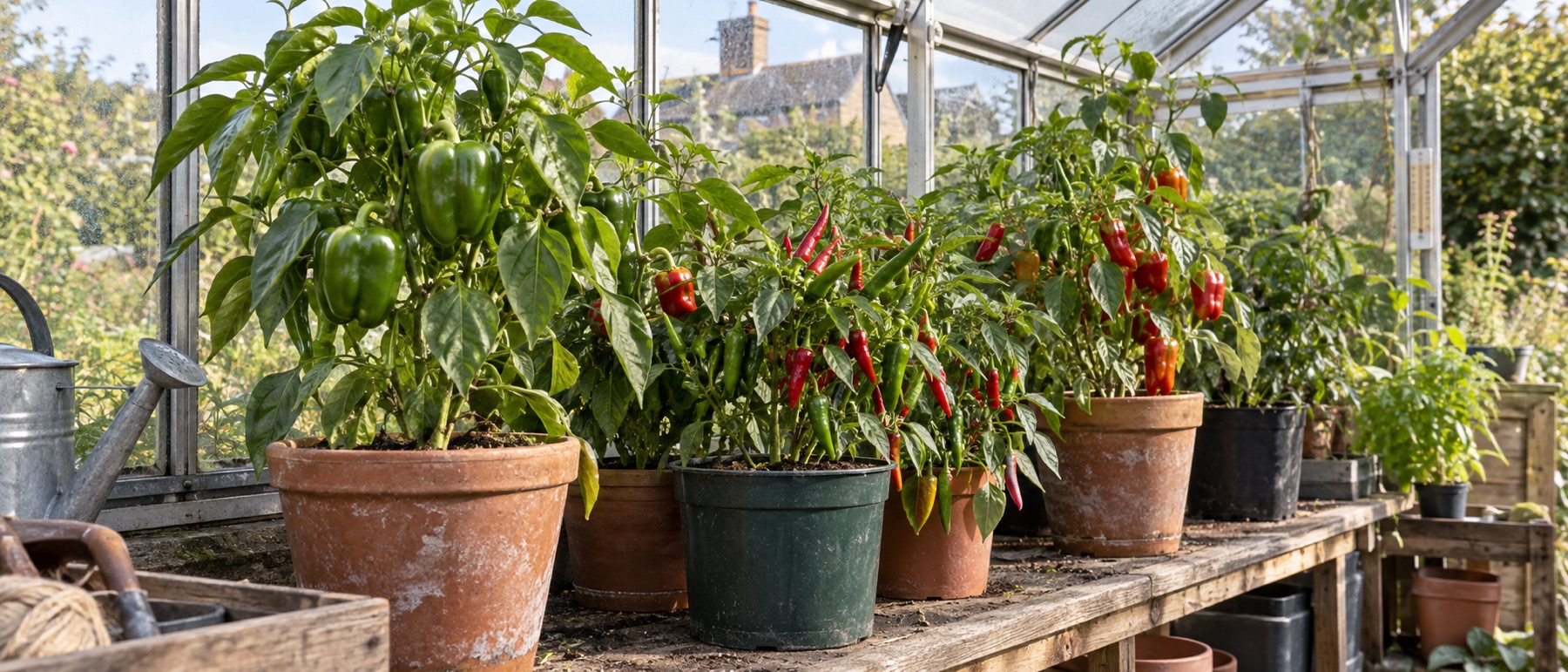
Sow with suitable warmth and move emerged seedlings into strong light.
Wait for a reliably suitable greenhouse night temperature.
Choose a pot or border position with enough root space and support.
Maintain even moisture and harvest according to the fruit you want.
One guide, two related crops
Sweet peppers and chillies are both Capsicum crops that appreciate the extra warmth of a UK greenhouse. A single plan works for many of their needs: good light, a warm start, a sheltered growing position, steady water and careful ventilation. They are not identical, however. A compact chilli in a pot may ripen at a different rate from a large-fruited bell pepper, and some varieties become much taller than others. Read the packet's mature height, fruiting time and container advice before deciding how many plants the greenhouse can hold.
The RHS sweet-pepper guide and RHS chilli guide both describe greenhouse growing as especially useful in the UK. A warm greenhouse does not remove the need for light; starting seeds far too early can create oversized plants waiting for a still-cold final position.
Sow, pot on and move under glass
Sow in fresh seed compost at the warmth specified for the chosen variety. A controlled propagator can warm the small root zone without heating the whole greenhouse. Once seedlings emerge, give them strong light and suitable growing-on warmth rather than leaving them sealed under a humid lid. Pot on when roots and true leaves are ready, handling stems gently. The leggy-seedling guide helps if growth becomes stretched.
Do not confuse a sunny afternoon with a warm night. The RHS says sweet peppers can cope with a minimum night temperature around 12°C but grow better above 15°C, and positions planting in an unheated greenhouse around mid-May when conditions permit. A cold northern site may need later. Check several night minima in your own structure and use the seedling-moving guide for a gradual transfer.
Choose root space and supports
Peppers and chillies grow well in containers, but a pot that is too small dries quickly and may hold back a larger cultivar. Choose size from the seed supplier's guidance, provide drainage and leave room for air and harvest access. A greenhouse border can buffer moisture, but its soil requires long-term care; growbags versus borders compares the trade-offs. Add a cane or other support to taller, fruit-heavy plants while roots are still small. Tie stems loosely and revisit them as they thicken.
Group plants with similar water needs rather than assuming one drip setting serves everything in the house. Keep the growing medium evenly moist, not waterlogged. The RHS notes that dry conditions can cause sweet-pepper flower buds to fall; high greenhouse heat can also reduce fruiting. Ventilate and shade when needed, particularly during heatwaves. The overheating guide covers that response.
Feed, inspect and harvest
Container plants rely on nutrients in a finite growing medium. Follow the crop and fertiliser instructions, especially once flowers form; do not treat yellow leaves as proof of a single nutrient problem without checking roots, watering and pests. Inspect leaf undersides for aphids and other greenhouse visitors. Keep foliage accessible rather than packing pots into a still corner.
Harvesting green fruits can encourage more production, while leaving some to ripen develops the mature colour and, for many chillies, changes flavour and heat. Use the cultivar's description to judge the desired stage. Late in the season, reduced light slows ripening; a greenhouse extends the season but does not create summer conditions indefinitely. The UK greenhouse calendar helps plan when to clear plants and prepare for cool-season crops.
Helpful products
Warm sowing and steady summer care
A variable-temperature propagator can support germination; a thermometer checks greenhouse night lows. Drip watering is useful for pots only after its output is tested in the actual compost.
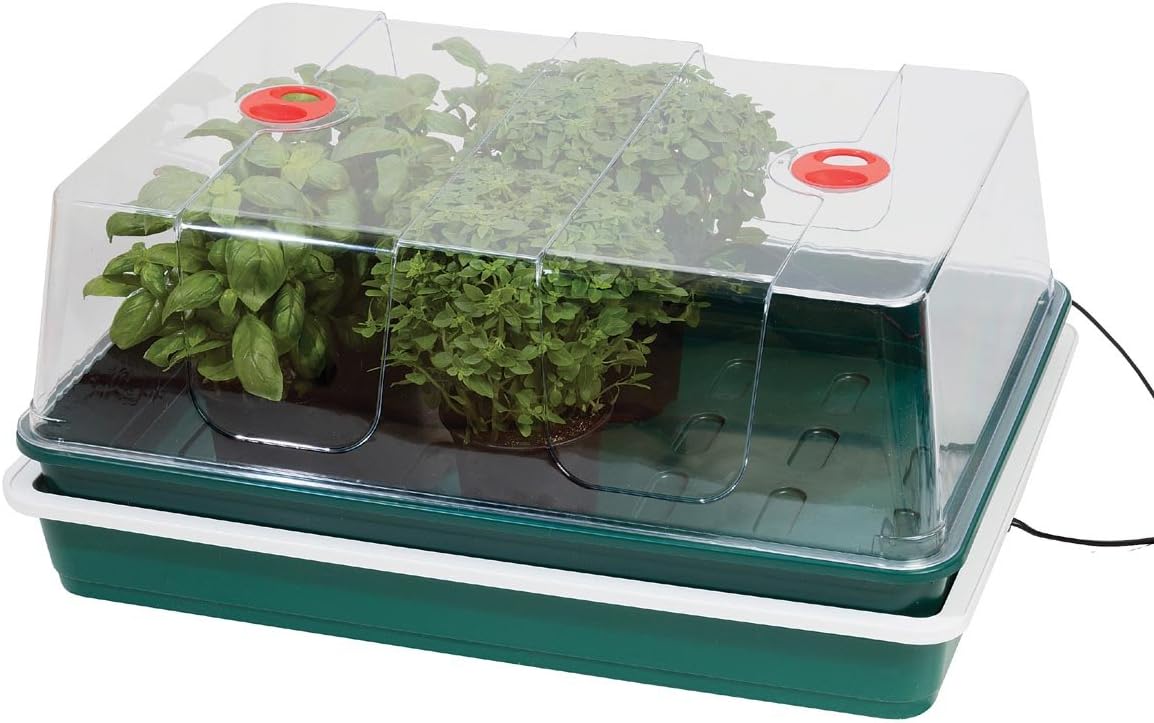
Garland 50W variable-temperature electric propagator
Best for: adjustable heat for several trays
A broad heated base with a tall clear dome and adjustable temperature control. Its listed 59 × 41cm footprint gives room for several seed trays, provided there is a safe supply and enough light.
What stands out
- Useful tray capacity
- Adjustable control
- Tall lid gives seedlings headroom
Keep in mind
- Wide bench footprint
- Warm base does not heat the whole greenhouse
- 59 × 41 × 27cm listed size
- 50W
- adjustable temperature control
- tall clear dome

Brannan Quickset digital max/min greenhouse thermometer
Best for: easy daily max/min checks
A wall-mounted digital thermometer with current, maximum and minimum readings and a one-button reset. The published measuring range is −20°C to 50°C with ±1°C stated accuracy.
What stands out
- Large separate readings
- One-button reset
- Wall-mounted greenhouse format
Keep in mind
- No humidity reading
- No remote alerts or history graph
- −20°C to 50°C range
- ±1°C stated accuracy
- max/min memory
- AAA battery included
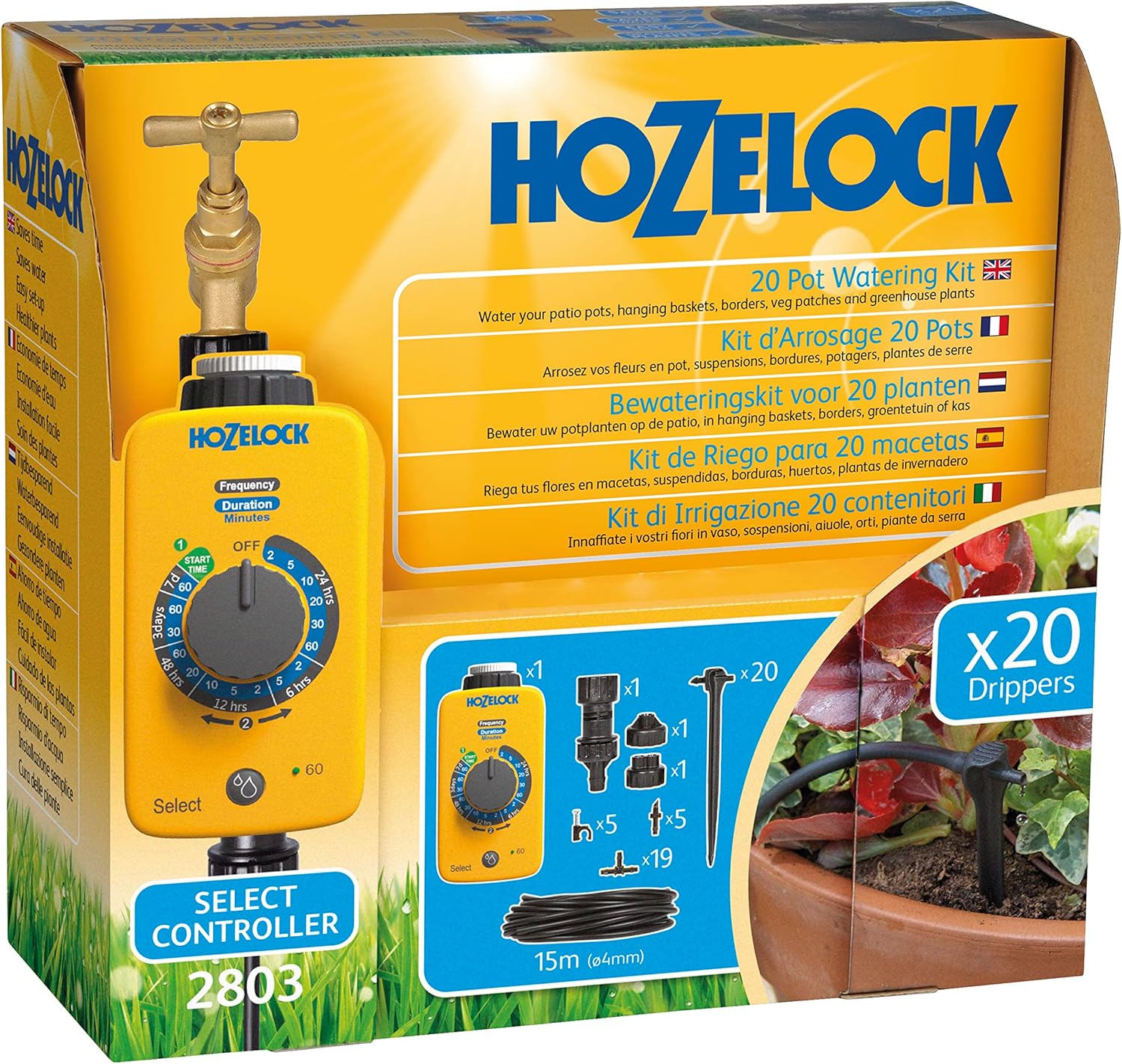
Hozelock 20-pot drip watering kit with Select Controller
Best for: timed watering for up to 20 pots
A complete mains-water drip kit for up to 20 containers, with a tap controller, supply pipe and individual drippers. The controller offers preset schedules while emitters place water close to roots.
What stands out
- Timer and distribution parts included
- Flexible cut-to-fit tubing
- Manual watering function
Keep in mind
- Requires a compatible pressurised tap supply
- Backflow protection and pressure must be checked
- up to 20 containers
- Select Controller
- 16 preset programmes
- root-zone drippers
Common questions
Frequently asked questions
Can sweet peppers and chillies grow together in a greenhouse?
Yes. Both like bright, warm conditions, although their cultivar size and ripening time can differ. Leave access for watering, ventilation and picking.
When can pepper plants go into an unheated greenhouse?
Check the local night temperatures and crop guidance rather than relying only on a date. RHS guidance places many young peppers into an unheated greenhouse around mid-May when conditions suit them.
Do chillies need bigger pots than sweet peppers?
Pot size depends on the cultivar and its expected mature size, not just whether fruit is hot or sweet. Follow the supplier's guidance and avoid a small root volume drying rapidly.
Why are pepper flowers falling off?
Water stress and excessive heat can contribute. Check root-zone moisture, ventilation and greenhouse temperature before assuming a nutrient deficiency.
Can I pick peppers before they turn red?
Many varieties can be picked green or at a later ripe colour. The flavour and heat can change with ripening, so follow the cultivar description and your preferred use.