
Seedling troubleshooting
How to stop greenhouse seedlings going leggy
Diagnose tall, weak greenhouse seedlings and correct the balance of light, warmth, space and watering before the next sowing.
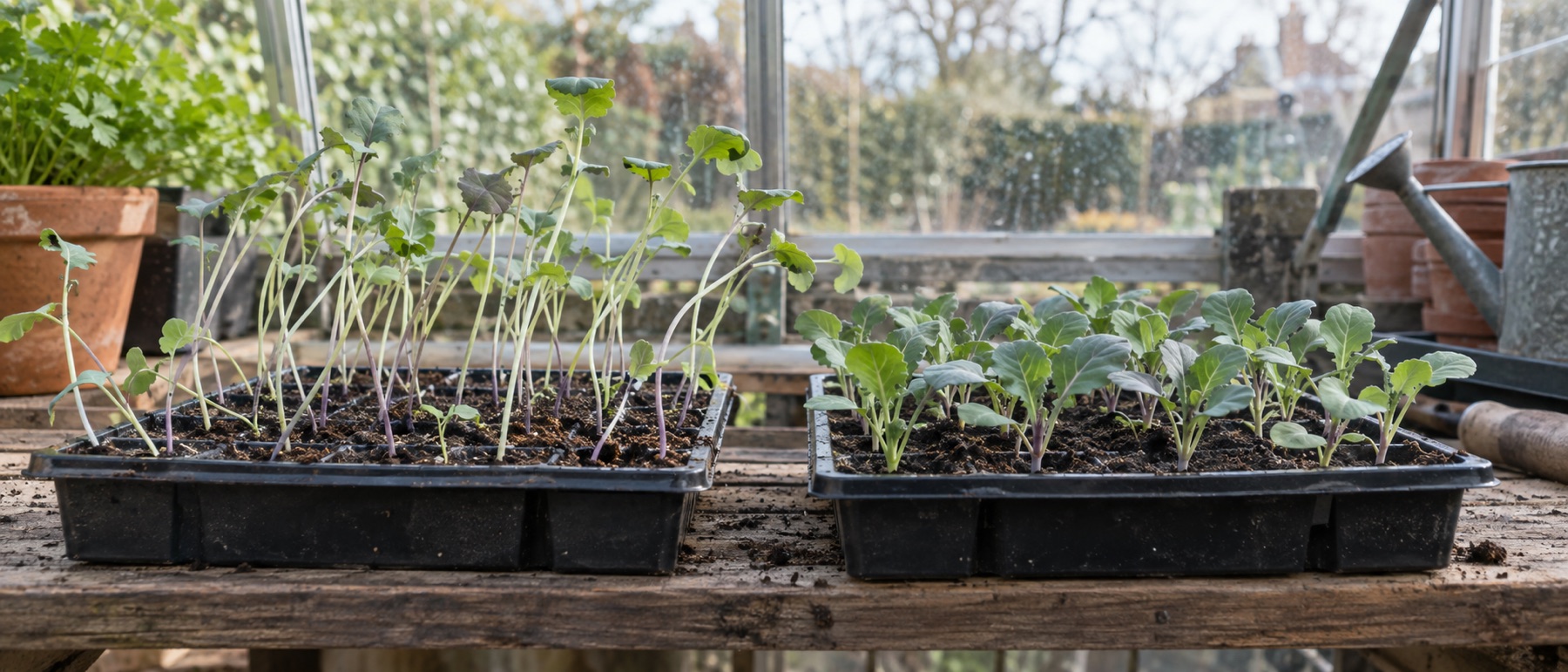
Inspect the actual light at tray level, including nearby shading.
Move emerged seedlings out of excessive propagator warmth.
Thin crowded trays and turn them if they lean one way.
Restart severely collapsed or weak batches rather than hoping all will recover.
Diagnose the stretch
Leggy seedlings have long, thin stems, often leaning towards the brightest side of the greenhouse. Leaves may be small and pale and the plants may fall when watered. The principal mismatch is too little usable light for the warmth driving growth. The RHS seed-sowing advice emphasises giving emerging plants light and appropriate growing conditions; a greenhouse roof does not guarantee strong light if the bench is shaded by shelves, opaque covers or nearby trees.
Look at the tray at the time of day when the problem occurs. A top shelf may receive useful daylight while a lower shelf remains dim. Condensation, dirt on glazing, tightly packed trays and an opaque propagator lid all reduce light. In early UK spring, even a clean greenhouse has short days; starting a heat-loving crop very early can produce weak plants if you cannot provide enough light. The practical correction may be to sow later, not to make the propagator hotter.
Change the environment after emergence
Warmth helps germinate some seeds, but seedlings need a different setup after they appear. Remove a dome or open its vents as instructed for the crop, then move trays into brighter, appropriate growing-on conditions. Avoid putting delicate seedlings straight into fierce sun; increase exposure gradually and monitor moisture. A max/min thermometer helps you find whether the greenhouse is excessively hot by day yet too cold overnight. See when to move seedlings before shifting indoor-raised trays into an unheated structure.
Thin seedlings according to packet spacing once they are ready. Crowded plants shade each other and make a humid, poorly ventilated canopy. Give trays enough room for air to circulate and rotate them if they lean consistently towards one direction. Water the compost rather than repeatedly wetting foliage, and let excess drain. These changes also reduce the conditions associated with damping off.
Decide whether to save or resow
If stems are only slightly elongated but still firm, potting on at the right stage and providing better light may allow strong new growth. Handle by a leaf rather than crushing the stem. Do not assume that burying every seedling deeply is safe. Tomatoes can root from buried stems, but other crops may rot if their crowns are buried; check the relevant crop instructions. If stems have collapsed or pinched at soil level, investigate disease rather than treating it as mere legginess.
Very weak seedlings are a poor foundation for a long-season greenhouse crop. If a tray has a high proportion of fallen, thin plants, resowing at a better light window can be more productive than nursing it for weeks. Clean any reusable tray before the next sowing, use a suitable fresh seed compost and give each crop the conditions on its packet. Our propagation guide separates germination, seedling growth and final planting so one heated location is not expected to do all three jobs.
Avoid the repeat next season
Plan backwards from the likely move date instead of sowing everything on the earliest possible day. Reserve bright bench space before filling propagators. Label sowings, check them daily and move them promptly when they emerge. If a cool spell forces you to keep plants inside longer, choose the brightest suitable location and give them more space as they grow. The UK growing calendar is a planning framework, but the weather and available light still decide the precise transition.
Helpful products
Use heat only for the stage that needs it
A controlled propagator helps temperature-sensitive seed germination; it cannot replace bright growing light once seedlings emerge. A max/min thermometer helps spot overheated days and cold nights.
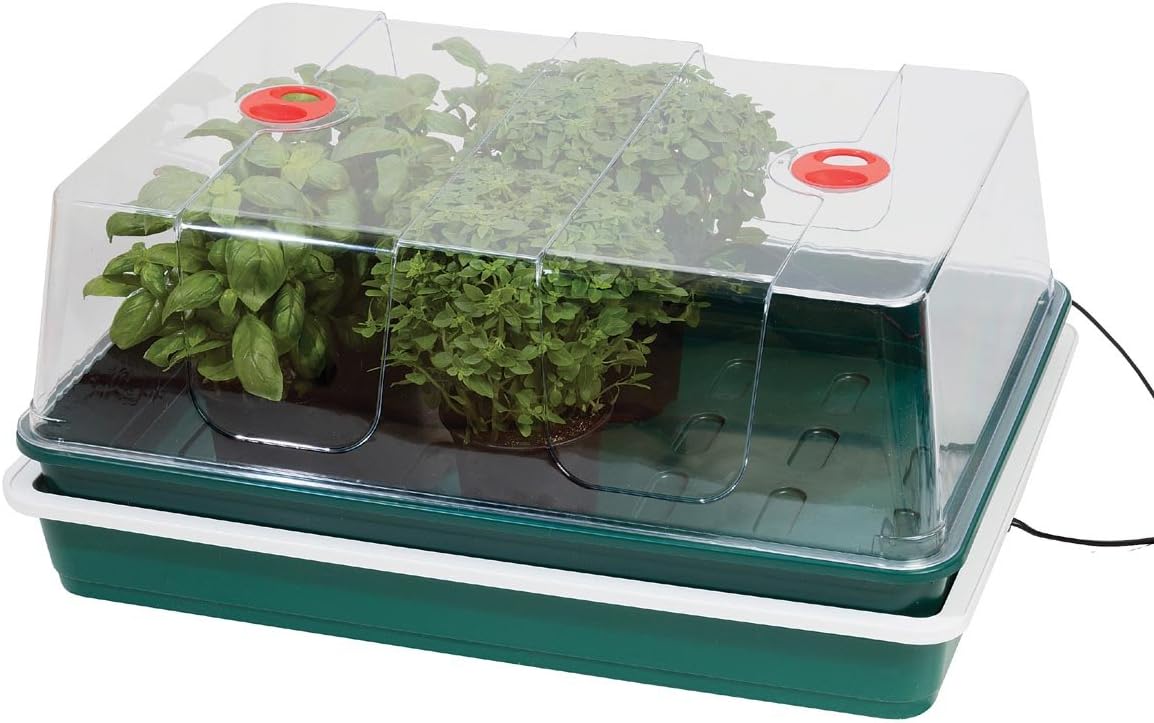
Garland 50W variable-temperature electric propagator
Best for: adjustable heat for several trays
A broad heated base with a tall clear dome and adjustable temperature control. Its listed 59 × 41cm footprint gives room for several seed trays, provided there is a safe supply and enough light.
What stands out
- Useful tray capacity
- Adjustable control
- Tall lid gives seedlings headroom
Keep in mind
- Wide bench footprint
- Warm base does not heat the whole greenhouse
- 59 × 41 × 27cm listed size
- 50W
- adjustable temperature control
- tall clear dome

Brannan Quickset digital max/min greenhouse thermometer
Best for: easy daily max/min checks
A wall-mounted digital thermometer with current, maximum and minimum readings and a one-button reset. The published measuring range is −20°C to 50°C with ±1°C stated accuracy.
What stands out
- Large separate readings
- One-button reset
- Wall-mounted greenhouse format
Keep in mind
- No humidity reading
- No remote alerts or history graph
- −20°C to 50°C range
- ±1°C stated accuracy
- max/min memory
- AAA battery included
Common questions
Frequently asked questions
Why are my greenhouse seedlings tall and thin?
Inadequate light relative to warmth is a common cause. Crowding and leaving seedlings under a warm lid after emergence can make the problem worse.
Can leggy seedlings recover?
Mildly stretched seedlings may grow more sturdily after light, temperature and space improve. Very weak, fallen or damaged seedlings may be better resown.
Should I bury a leggy stem deeper?
Some crops, including tomatoes, can form roots on buried stems, but many seedlings should not have their stems buried indiscriminately. Follow crop-specific potting guidance.
Does watering less fix leggy seedlings?
Watering cannot replace light. Keep compost appropriately moist but not saturated, and correct the light and temperature balance first.
Will a heated propagator stop legginess?
No. Heat is mainly useful for germination of crops that require it; after emergence, seedlings still need adequate light and suitable growing-on conditions.