
Seedling health
Preventing damping off in greenhouse seedlings
Recognise damping off in seed trays and reduce losses with clean equipment, fresh compost, uncrowded sowing, careful watering and ventilation.
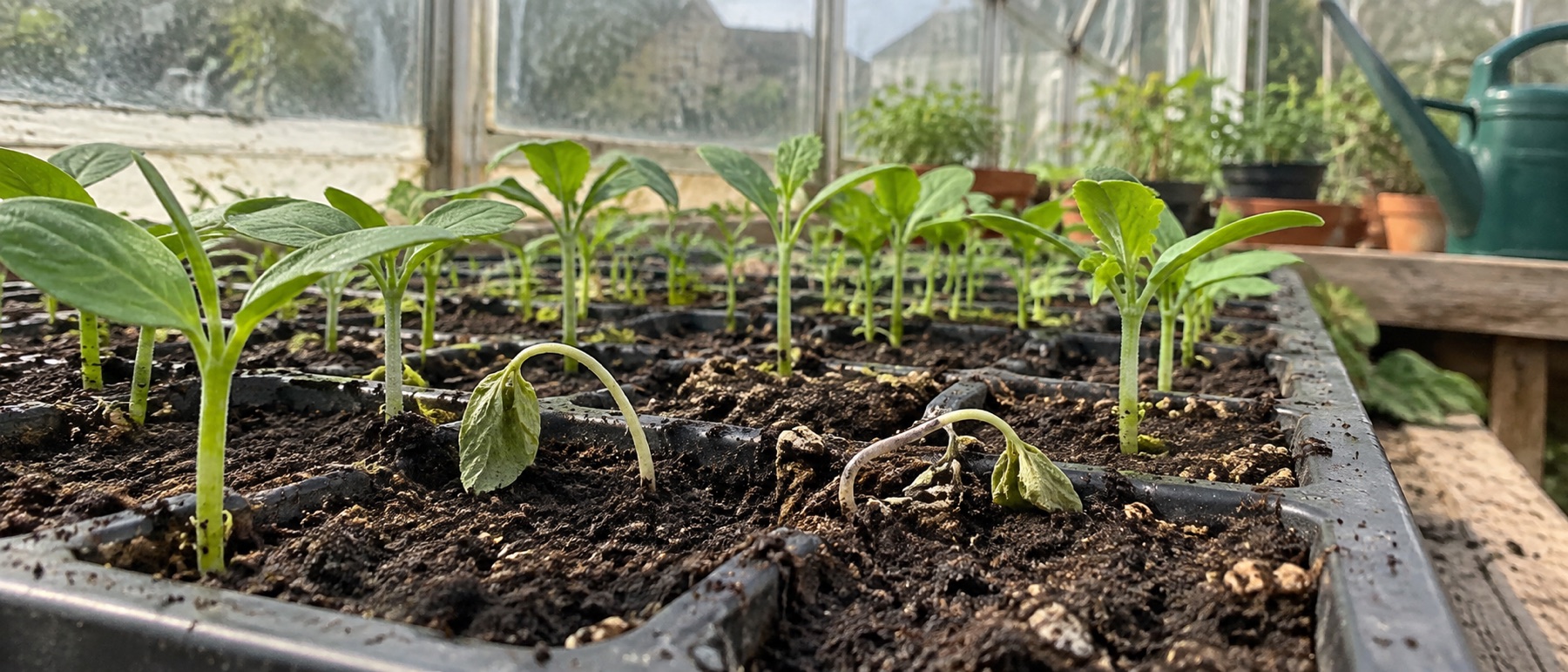
Start with clean pots and fresh commercial seed compost.
Sow thinly and avoid a permanently wet surface.
Ventilate covers and the greenhouse without chilling tender crops.
Remove affected material and do not reuse contaminated trays for seedlings.
Recognise the problem without guessing
The RHS damping-off guide explains that several fungi and fungus-like organisms can affect seedlings before or after they emerge. A tray may germinate patchily, or a group of young plants may suddenly fall over with darkened, narrowed stems at compost level. Whitish growth can appear on decaying seedlings. A seedling bent towards light but with a firm, intact stem may instead be leggy; a dry tray may simply have wilted. Inspect the stem base and root zone before deciding what happened.
The problem is particularly damaging under glass during low-light, cool periods, when seedlings grow slowly. Crowding, high humidity and poor air movement favour disease. It can spread through contaminated compost, trays and water. There is no useful reason to keep a collapsed plant among healthy seedlings while you investigate.
Prevent it at sowing
Use fresh commercial seed compost and clean containers with drainage holes. For reusable pots and trays, brush off all old compost, wash them and let them dry; follow the RHS advice on appropriate disinfection when needed. Do not reuse containers from a tray that already had damping off for another seedling batch. The greenhouse hygiene guide covers the wider workflow for separating dirty and clean equipment.
Sow at the recommended spacing and thin when appropriate. A crowded canopy stays wet and reduces circulation around stems. Moisten compost evenly, but do not leave trays standing in stagnant water. Check below the surface before watering again: a pale, dry-looking top does not prove the root zone is dry. Water gently so seed and compost are not splashed between cells. For seedlings, the RHS recommends mains water where possible; a covered, clean water butt is still no guarantee of pathogen-free water.
Balance warmth, light and air
A propagator cover can retain the humidity needed for germination, but it should not become a permanent sealed chamber after seedlings emerge. Open vents or remove the lid according to the crop and check condensation. Give plants enough light and space to grow promptly. Ventilate the greenhouse when conditions allow, without directing a cold draught at tender seedlings. Extra heat without adequate light produces weak growth rather than protection.
Check trays at least daily during germination. A warm, wet, crowded tray can change quickly. Put suspect trays away from clean sowings, avoid moving their drainage water between benches, and wash hands and tools after handling them. The seed-starting guide sets out the full sequence from sowing to growing on.
What to do after a loss
Remove affected seedlings and their immediate contaminated growing material promptly. If collapse is widespread, discard the whole sowing rather than transplanting apparently healthy plants out of a diseased tray into a new one. Clean the bench and tools, review water and airflow, then resow in fresh medium and new or properly cleaned containers. Consider whether the batch was sown too early for the available light.
The RHS states that there is no fungicide available to gardeners for damping-off control. Avoid marketing a general greenhouse cleaner or pot brush as a cure. The useful purchase decision is modest: a brush to remove old media, clean trays where suitable, and enough bench space to avoid crowding. The lasting improvement is a more consistent propagation routine, not a chemical treatment.
Helpful products
Clean reusable pots and surfaces
A pot brush removes old compost from reusable containers, while washable cloths help clean sound staging and tray surfaces. Neither treats infected seedlings or replaces fresh compost and moisture control.

Esschert Design flower-pot bristle brush
Best for: soil removal from larger pots
A rounded coconut-fibre brush made to remove old soil from flower pots. The maker specifies pots from about 12cm diameter, so it is for larger pots rather than narrow seed-module cells.
What stands out
- Shape suits round pot interiors
- Removes dry compost before wet washing
- Hanging loop for drying
Keep in mind
- Too broad for small module cells
- Not a soft glazing brush
- TG114
- for pots from about 12cm diameter
- beech-wood handle
- coconut-fibre bristles

VALENGO 100% cotton cleaning cloths, seven pack
Best for: soft wiping and drying
Seven washable, low-lint jersey-cotton cloths listed at about 43 × 43cm each. A clean cloth is useful for wiping pots, staging and delicate panels where the manufacturer specifies soft cotton.
What stands out
- Suitable soft material for permitted delicate-surface cleaning
- Reusable and washable
- Separate cloths for clean and dirty jobs
Keep in mind
- A gritty cloth can still scratch a panel
- Not a substitute for rinsing loose dirt first
- seven cloths
- 100% cotton listed
- about 43 × 43cm each
- machine washable
Common questions
Frequently asked questions
What does damping off look like?
Seeds may fail to emerge, or newly emerged seedlings suddenly collapse at the stem base. Whitish growth can occur on decaying material, but not every fallen seedling is damping off.
Can I rescue seedlings that have collapsed?
A seedling whose stem has rotted and collapsed will not normally recover. Remove affected material and prevent spread to healthy trays.
Is damping off caused by too much water alone?
It is caused by several disease organisms. Persistent wetness, crowding and poor air circulation create conditions that favour them.
Should I use rainwater for new seedlings?
The RHS advises mains water where possible for seed trays. If using stored rainwater, keep collection and storage clean and covered.
Is there a garden fungicide for damping off?
The RHS says no fungicides are available to gardeners for its control, so focus on prevention and clean replacement sowings.