
Greenhouse monitoring comparison
Best greenhouse thermometers
Compare max/min greenhouse thermometers for simple digital readings, quick reset and temperature-plus-humidity monitoring, with placement advice.
Our recommendations
Thermometers for three monitoring styles
All three work without an app. The differences are display, reset method and whether humidity is included.

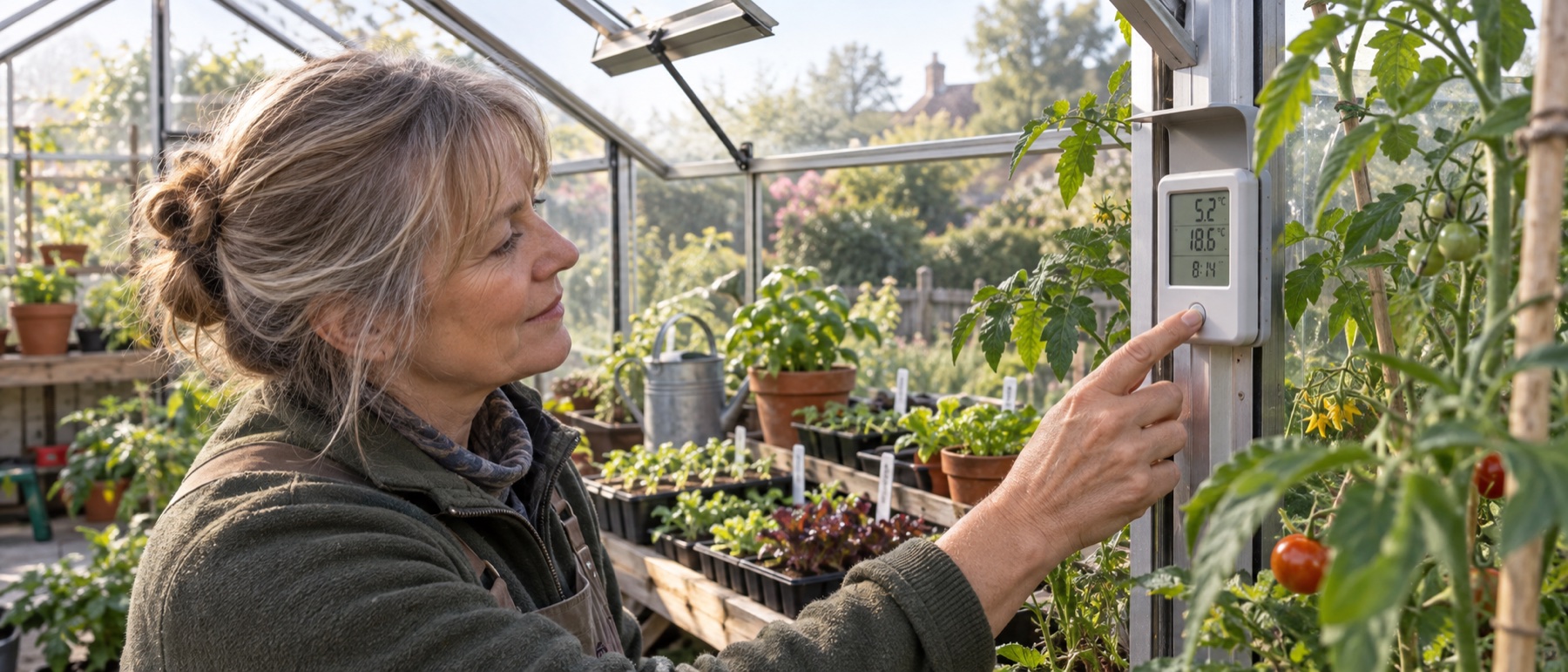
Digital max/min greenhouse thermometer
Best for: tracking overnight lows and daytime peaks
A simple wall-mountable display that records the highest and lowest temperature since the last reset. Those extremes are more useful than one midday reading when deciding on shade or frost protection.
What stands out
- Makes temperature swings visible
- Easy to read and reset
- No app or account required
Keep in mind
- Place away from direct sun
- Manual readings do not provide remote alerts
- digital display
- maximum and minimum memory
- °C and °F
- wall mountable

Brannan Quickset digital max/min greenhouse thermometer
Best for: easy daily max/min checks
A wall-mounted digital thermometer with current, maximum and minimum readings and a one-button reset. The published measuring range is −20°C to 50°C with ±1°C stated accuracy.
What stands out
- Large separate readings
- One-button reset
- Wall-mounted greenhouse format
Keep in mind
- No humidity reading
- No remote alerts or history graph
- −20°C to 50°C range
- ±1°C stated accuracy
- max/min memory
- AAA battery included

Brannan max/min thermometer and hygrometer
Best for: temperature plus humidity at a glance
An analogue dial instrument combining current humidity with current, maximum and minimum temperature. It adds a quick humidity indication without requiring an app, account or wireless connection.
What stands out
- No app or pairing
- Shows humidity as well as temperature
- Easy to scan from the aisle
Keep in mind
- Humidity is current rather than logged
- Manual reset and reading required
- analogue display
- max/min temperature
- current humidity
- wall mountable
| Recommendation | Display | Records | Humidity | Best use |
|---|---|---|---|---|
| Thermometer World digital max/min | Digital | Current, maximum and minimum | No | Simple low-complexity monitoring |
| Brannan Quickset digital | Digital | Current, maximum and minimum | No | Fast daily reset and large readings |
| Brannan thermometer/hygrometer | Analogue dials | Current, maximum and minimum temperature | Current humidity | Temperature and humidity at a glance |
How we chose these thermometers
We focused on current Amazon UK products that record maximum and minimum temperature and can be read without an app, subscription or wireless network. These simple instruments answer the first questions most greenhouse owners have: how hot did it become after the door was closed, and how cold did it become before dawn?
We used published functions and specifications rather than customer ratings. None replaces a calibrated scientific logger; the aim is practical trend monitoring for ventilation, shade and frost protection.
Best simple option: Thermometer World digital max/min
This compact green display shows current, maximum and minimum temperature in °C or °F and can be wall mounted. It is the easiest entry point here for gardeners who want the day’s range without additional functions.
Its simplicity is the advantage: no pairing, history graph or humidity screen to interpret. The limitation is the same—readings must be copied and reset manually, and there is no remote alert if temperature crosses a threshold while you are away.
Best quick-reset display: Brannan Quickset digital
The Brannan uses separate large current, maximum and minimum readings with a front reset button. The listing specifies a −20°C to 50°C range and ±1°C accuracy, powered by one included AAA battery.
It suits a routine where the thermometer is read each morning and reset without removing it from the wall. The published accuracy is adequate for operational decisions, but two units can still differ slightly; use one consistent instrument for trend comparisons.
Best with humidity: Brannan max/min thermometer and hygrometer
This analogue instrument adds a current humidity dial to max/min temperature tracking. It provides an immediate picture of temperature range and moisture level without electronics or an app.
Humidity is only a current reading, not a recorded maximum and minimum. It is therefore best for spotting persistently damp conditions during visits rather than reconstructing an overnight humidity cycle.
Placement determines usefulness
Sunlight can heat a thermometer casing far above the surrounding air. Hang the instrument in a simple ventilated shield or a naturally shaded position at plant height, not against south-facing glass. Keep it away from the heater, doorway, roof ridge and irrigation spray.
If the greenhouse contains distinct zones, move a second thermometer between them or use two consistent instruments. Floor-level seedlings, a screened heated compartment and a sunny high shelf may experience materially different temperatures.
Read patterns, not isolated numbers
Record the maximum, minimum, outside conditions and any action taken. A short table quickly shows whether opening a second vent reduced the daytime peak, whether shade works only on clear afternoons, or whether a tube heater protects the plants farthest from it.
Reset at the same time each day during critical periods. If you forget to reset, mark the interval rather than assigning the reading to one night.
Verify a suspicious reading
When a temperature seems implausible, move the instrument to a shaded indoor room beside a known reference and allow both to stabilise. Replace the battery in a digital model and inspect analogue pointers for sticking. Do not calibrate by holding the case in your hand because body heat changes the result.
A one-off difference matters less than repeatable bias. If a thermometer consistently reads one degree high, note it; if it jumps or fails to reset, replace it.
Temperature thresholds are crop-specific
The RHS warns that greenhouse plant damage can occur when temperatures build above about 27°C, while its heating guidance describes about 4°C as a frost-free level for a typical domestic greenhouse. Those are useful operating references, not universal promises for every plant.
Seedlings, tomatoes, citrus and dormant tender perennials have different tolerances. Use the thermometer to support a crop plan, not to chase one “perfect greenhouse temperature” all year.
When a connected sensor is worth considering
A wireless logger can provide graphs and alerts, but connectivity, range, battery life, data retention and moisture suitability need careful checking. For many gardens, a reliable max/min display plus a daily visit is more robust. Choose remote monitoring when it changes what you can do—for example, closing shade or checking a heater—not because an app is available.
Sources and related guides
The RHS ventilation and shading guide recommends max/min monitoring and discusses damaging summer heat. The RHS heating guide explains thermometer placement and checking thermostats. Apply the readings with our ventilation guide and frost-protection guide.
Common questions
Frequently asked questions
What type of thermometer is best for a greenhouse?
A max/min thermometer is more useful than a current-only display because it captures the hottest and coldest points between visits. Add humidity if damp-air management is an important concern.
Where should I put a greenhouse thermometer?
Place it in shade at representative plant height, with air able to move around it. Keep it away from direct glazing, doors, heaters, hot staging and wet irrigation spray.
How often should I reset a max/min thermometer?
Reset at a consistent time after recording the high and low. Daily readings are useful during heatwaves, cold snaps and setup changes; weekly records may be enough in stable conditions.
Why does my greenhouse thermometer show a very high temperature?
Direct sun on the casing or a position close to hot glazing can exaggerate the reading. Compare it with a second shaded position before changing ventilation or shade.
Do I need a hygrometer in a greenhouse?
It is helpful for recognising persistent high humidity, particularly in winter or dense planting. It does not directly measure leaf wetness or replace ventilation, spacing and inspection.