
Plant-health routine
Greenhouse hygiene guide
Keep a UK greenhouse cleaner through practical plant quarantine, tool and tray washing, crop-residue removal, water management and a seasonal reset.
Work from clean seedlings towards suspect plants, not the other way round.
Remove leaves and weeds before they become hidden under staging.
Dry washed equipment before putting it away or restocking plants.
Identify a problem before choosing any disinfectant or pesticide.
Hygiene is a routine, not one annual scrub
A deep clean in autumn or early spring is useful, but a greenhouse can be re-contaminated the next day by an infested plant, dirty module tray or overlooked pile of leaves. The aim is to interrupt easy routes by which pests and plant diseases move between batches. That calls for small repeatable habits as well as structural cleaning.
The RHS advises washing glasshouses and removing unwanted plants to help reduce overwintering whitefly populations. Its greenhouse-growing guidance also recommends clean pots and trays and fresh peat-free compost for sowing. Those are practical starting points, not a claim that every surface must be chemically sterilised.
Before new plants come in
Inspect bought plants in good light. Turn over several leaves, examine soft tips and look for sticky honeydew, webbing, mottling or insects that fly when disturbed. Keep a new plant apart from established crops long enough to reveal a developing issue where space and plant needs permit. Do not place an uncertain purchase directly among young tomatoes because it looks healthy from across the bench.
If you share tools between separate greenhouses or outdoor plots, clean off soil and debris before moving them. Label new plants and keep a note of where they came from if a later problem needs tracing. Quarantine is not a magical fixed number of days; repeat inspection matters because eggs and small nymphs may be missed initially.
Set up a clean propagation bench
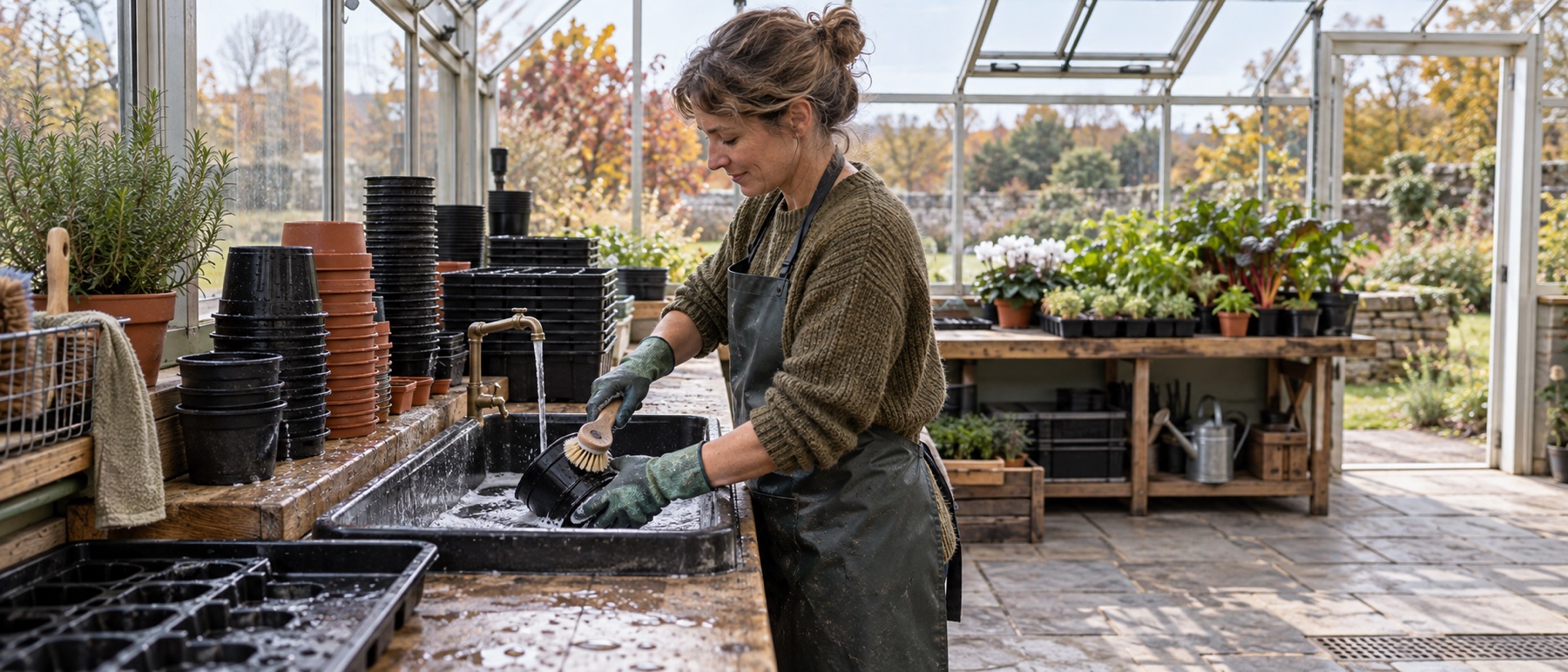
Clear old compost and plant material from the work surface. Wash reusable pots and trays thoroughly, especially corners and drainage holes, then allow them to dry. Use fresh suitable peat-free seed or multipurpose compost rather than adding old, potentially contaminated material to the sowing mix.
Store fresh compost closed and away from standing water. Keep labels, dibbers and small tools together so you do not borrow a dirty tool halfway through handling clean seedlings. Our propagation guide explains why seed, cutting and growing-on zones have different moisture and airflow needs.
For larger empty flower pots, a rounded pot brush can loosen old compost before the wash. It will not reach narrow module cells; use a smaller suitable brush or soft cloth for those. Wash the tools themselves afterwards and let them dry before returning them to the clean bench.
Work clean to dirty each visit
Water and handle healthy seedlings first. Move next to established healthy crops, and inspect any suspect or infested plants last. Wash hands or change gloves and clean secateurs before returning to a clean tray. If a cut stem shows disease symptoms, do not continue cutting neighbouring plants with the same uncleaned blade.
This sequence is especially helpful in a small greenhouse where everything is within arm's reach. Put an isolation tray at the door or a separate protected spot rather than dragging a problem plant through the entire structure. Keep cut foliage in a container as you work; do not let it drop beneath staging.
Remove residue promptly
Collect fallen leaves, spent crops, split fruit and volunteer weeds regularly. These can harbour pests, retain moisture and obscure the early signs of a problem. Clear under shelves and behind growbags, not only the visible aisle. Replace damaged or waterlogged cardboard packaging used as improvised storage.
Remove heavily affected material carefully so insects or spores are not shaken across clean plants. A sealed bag may be appropriate for some diagnosed problems; the disposal route depends on the pest or disease and local rules. Do not assume that a domestic compost heap will neutralise every pathogen or pest stage.
Manage water as part of hygiene
Water according to plant need, preferably at the root zone when suitable, and empty trays that hold standing water unnecessarily. Wet leaves in still air can favour disease, while excessively dry, hot conditions can favour some mites. The answer is not always 'keep everything drier'; it is to match water, airflow and crop requirements.
Check irrigation for leaks and blocked emitters. A dripping joint can keep one corner persistently damp even when the plants elsewhere are dry. Clean filters and lines according to the system instructions. Remove algae from paths before it becomes a slip hazard and check that drainage still works.
Clean surfaces without damaging the structure
For routine work, sweep debris then wash accessible glazing, staging, shelves and floors with warm water and suitable soft tools. The RHS advises cleaning only what is safely reachable and never leaning body weight on glazing or climbing the greenhouse roof. Follow the greenhouse maker's instructions for polycarbonate, seals and finishes; abrasives and inappropriate solvents can damage them.
A soft hand brush can make close work on permitted smooth surfaces easier, while clean cotton cloths suit gentle wiping and drying. Rinse off grit first and keep a separate cloth for glazing; a dirty cloth is abrasive regardless of its fibre. Do not use a hand brush as an excuse to lean over a roof or put pressure on unsupported glazing.
The full greenhouse-cleaning guide gives a step-by-step structural sequence. If equipment includes electrical heaters, propagators or powered irrigation controls, isolate and remove them before wet cleaning around their positions. Let the space dry with appropriate ventilation before putting equipment back.
Do not confuse cleaning, disinfection and pest control
Cleaning physically removes soil and organic debris. A disinfectant has a specific labelled purpose and may be less effective on a dirty surface. A pesticide targets a particular organism and may have restrictions for food crops and enclosed spaces. They are not interchangeable words or a reason to apply a stronger product routinely.
For a diagnosed issue, read current RHS crop and pest advice. Before using a pesticide, check the HSE database and the precise UK product label for authorisation, crop and use conditions. Do not mix products or assume that a garden-cleaning product is approved for spraying living plants.
Seasonal reset
At the end of a summer crop, remove the plant and support materials, sort reusable clips, wash containers and inspect under benches. Clean reachable glazing so scarce winter light is not lost to dirt. Check the frame and gutters at the same time, then leave room for any autumn salads without crowding them among dying vines.
In late winter, review stored trays, discard broken ones and prepare a clean sowing surface. This reset should be shorter if daily and weekly housekeeping was maintained. Use the maintenance checklist for frame and weatherproofing tasks, and the pest guide for symptoms that need identification rather than a general wash.
Sources and further reading
The RHS greenhouse-cleaning guide, RHS vegetable-greenhouse guide and RHS glasshouse-whitefly advice underpin this routine. For products intended to control pests, consult HSE's current pesticide information.
Helpful products
Simple tools for the hygiene routine
Use the rounded brush for larger empty pots, the soft hand brush only on surfaces that permit it, and separate clean cotton cloths for gentle wiping. None is a substitute for identifying a pest or disease.

Esschert Design flower-pot bristle brush
Best for: soil removal from larger pots
A rounded coconut-fibre brush made to remove old soil from flower pots. The maker specifies pots from about 12cm diameter, so it is for larger pots rather than narrow seed-module cells.
What stands out
- Shape suits round pot interiors
- Removes dry compost before wet washing
- Hanging loop for drying
Keep in mind
- Too broad for small module cells
- Not a soft glazing brush
- TG114
- for pots from about 12cm diameter
- beech-wood handle
- coconut-fibre bristles

Vikan 41942 soft hand washing brush
Best for: gentle hand washing of accessible surfaces
A 270mm short-handled brush with soft split bristles for wet cleaning accessible, delicate surfaces. Vikan names glass and Perspex; always check the greenhouse surface maker's instructions before use.
What stands out
- Soft fibres for delicate permitted surfaces
- Easy to rinse and dry
- Short handle gives close control
Keep in mind
- Not a long-reach roof tool
- Panel compatibility still needs checking
- 270mm length
- soft split bristles
- short handle
- washable design

VALENGO 100% cotton cleaning cloths, seven pack
Best for: soft wiping and drying
Seven washable, low-lint jersey-cotton cloths listed at about 43 × 43cm each. A clean cloth is useful for wiping pots, staging and delicate panels where the manufacturer specifies soft cotton.
What stands out
- Suitable soft material for permitted delicate-surface cleaning
- Reusable and washable
- Separate cloths for clean and dirty jobs
Keep in mind
- A gritty cloth can still scratch a panel
- Not a substitute for rinsing loose dirt first
- seven cloths
- 100% cotton listed
- about 43 × 43cm each
- machine washable
Common questions
Frequently asked questions
Do I need to disinfect a greenhouse every year?
Not automatically. The RHS says warm water is adequate for much routine cleaning. Remove debris and wash surfaces first; choose a product only for a diagnosed need and where its label permits that use.
Can I reuse seed trays?
Yes, if they are sound and thoroughly cleaned between batches. Remove old compost, wash recesses and drainage holes, rinse as appropriate and dry before filling with fresh medium.
Should diseased greenhouse leaves go on the compost heap?
It depends on the disease and the composting process. When identification is uncertain or a problem can persist in home compost, keep that material out of the normal heap and follow local disposal guidance.
How do I quarantine a new plant in a small greenhouse?
Keep it physically apart where practical, inspect leaf undersides and growing tips repeatedly and use separate handling or wash tools afterwards. If there is no safe separation space, delay adding it beside vulnerable crops.
Is a tidy greenhouse automatically pest-free?
No. Flying insects and infested new plants can still arrive. Hygiene makes early detection and proportionate control easier, but regular inspection remains essential.