
Winter temperature reality
How cold does an unheated greenhouse get?
Why an unheated greenhouse can freeze, how to measure its real overnight minimum, and which practical steps help protect plants without promising a fixed temperature lift.
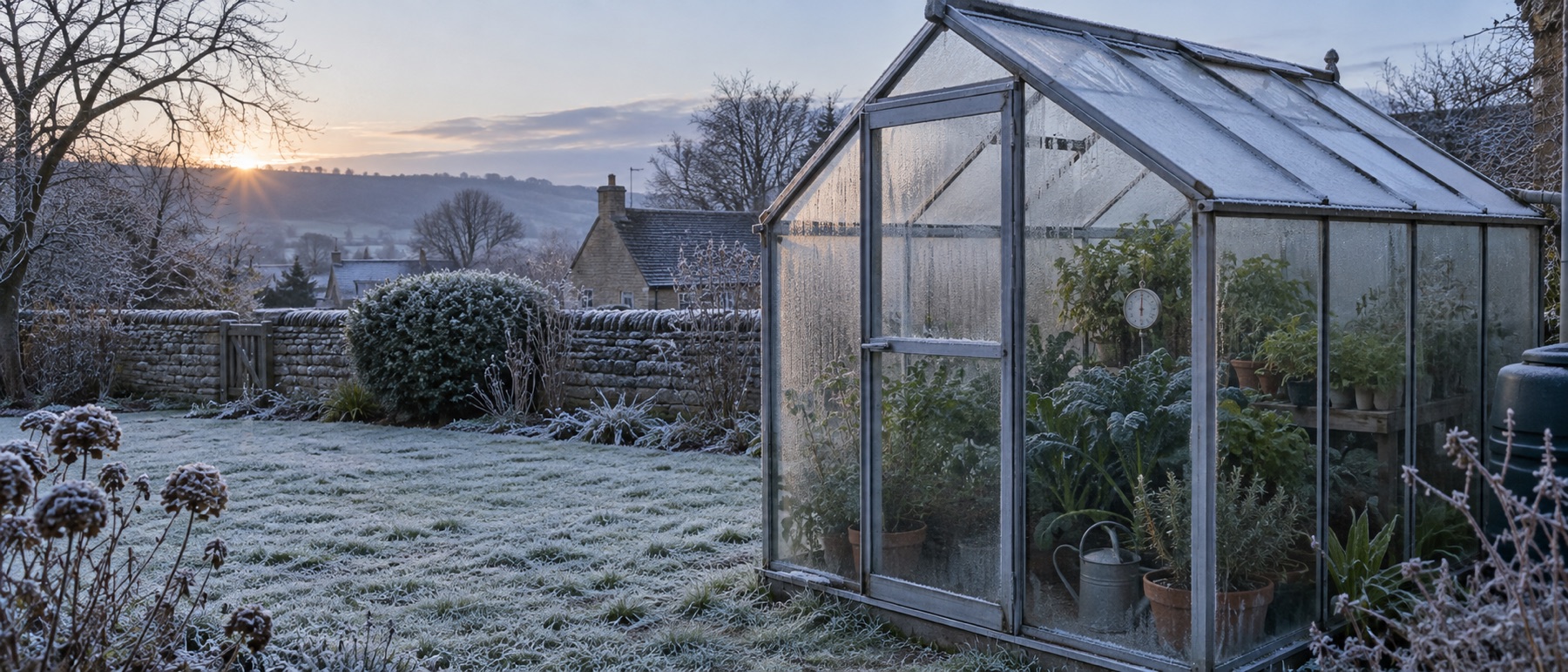
Use a max/min thermometer through several cold nights.
Read the minimum near the plants, not against the glazing.
Select crops for the measured conditions, including possible frost.
Use insulation or a small protected zone where it genuinely helps.
The honest answer is a range, not a fixed offset
There is no reliable rule that an unheated greenhouse stays a certain number of degrees warmer than the garden. On a bright winter afternoon it can be noticeably warmer; during a long clear cold night it loses that heat. The overnight minimum may approach the outside air temperature and can go below freezing. Glazing type, gaps, wind, foundation, sun exposure and thermal mass all change the outcome.
The RHS greenhouse-heating guidance treats unheated growing as a useful way to shelter suitable plants, not a promise of frost-free conditions. This distinction matters for citrus, tender ornamentals and seedlings. Choose crops for what your greenhouse actually does at dawn, not how warm it felt at lunchtime.
Measure the coldest hours properly
Set a max/min thermometer at the height of the leaves or pots you most need to protect. Put it out of direct sun and away from glazing, doors, a heater or a warm wall. Note the minimum after several cold nights, reset it, and compare with the local forecast. A sensor near the roof will not represent a tray on the floor; a single reading on one mild night does not establish the winter range.
Check how the temperature behaves after a sunny day, an overcast windy day and a clear frost night. These conditions expose different weaknesses. If you use a digital instrument, ensure its outdoor/greenhouse operating range and battery performance are appropriate. For help comparing simple instruments, see best greenhouse thermometers.
Match the protection to the plant
Hardy crops and plants merely needing shelter from winter rain may be well served by an unheated greenhouse. Frost-sensitive plants need a different plan: move them indoors, create a smaller protected inner area, or use a correctly specified heater where a safe supply exists. The frost-protection guide sets out those options in more detail.
Removable bubble insulation can slow heat loss, especially around a smaller zone. It also reduces precious winter light and can increase condensation if the greenhouse is sealed. Close major draught gaps where the maker permits, but retain an ability to ventilate on mild days. A fleece cover over a crop can give an extra layer, provided it does not touch delicate foliage in a way that worsens damage and is removed when light is needed.
Keep a useful winter temperature record
+A simple record needs four things: the indoor minimum at plant height, the nearest available outdoor observation or forecast, the night's conditions and any protection used. Note whether the vents were shut, lining was fitted or a plant cover was in place. A warm sunny day followed by cloud is not a fair comparison with a clear, windy night.
Use that record to plan for the vulnerable plants, not to declare the structure safe after one mild week. A thermometer records air at its own position; leaves near cold glazing and containers on the floor may experience different conditions. When a forecast approaches a plant's known tolerance, allow for uncertainty and move or protect it in advance rather than waiting for damage.
Do not forget the daytime swing
An unheated greenhouse can overheat in sunshine even in winter. Monitor the maximum as well as the minimum, and open vents when conditions allow. Persistent damp under winter lining can encourage plant-health problems. Water less often than in summer and assess compost before each application. The practical goal is a stable, observed environment for the chosen crops—not an unverified claim that a cold greenhouse is always safe.
Helpful products
Measure before promising protection
A max/min reading tells you what the plants actually experienced; bubble lining may reduce heat loss but does not turn the greenhouse into a heated room.

Brannan Quickset digital max/min greenhouse thermometer
Best for: easy daily max/min checks
A wall-mounted digital thermometer with current, maximum and minimum readings and a one-button reset. The published measuring range is −20°C to 50°C with ±1°C stated accuracy.
What stands out
- Large separate readings
- One-button reset
- Wall-mounted greenhouse format
Keep in mind
- No humidity reading
- No remote alerts or history graph
- −20°C to 50°C range
- ±1°C stated accuracy
- max/min memory
- AAA battery included

Elixir Gardens greenhouse bubble insulation, 1.5 × 10m
Best for: winter inner lining
Clear horticultural bubble insulation listed as a 1.5m by 10m roll with 10mm bubbles, UV-resistant triple-laminated film. Measure the glazing bays and allow for safe vent and door movement before ordering.
What stands out
- Sized for greenhouse lining
- Can be removed when light becomes more valuable
- Clear film admits some winter light
Keep in mind
- Reduces available light
- Needs compatible clips and a condensation-management plan
- 1.5 × 10m listed roll
- 10mm bubbles
- UV-resistant listing
- triple-laminated film
Common questions
Frequently asked questions
Is an unheated greenhouse warmer than outside at night?
It may be slightly warmer at some times, but not by a reliable fixed amount. During a long cold night the inside can approach outdoor temperature and fall below freezing.
Will an unheated greenhouse keep plants frost-free?
No. Do not rely on the glazing alone for frost-sensitive plants. Check overnight minima and use an appropriately protected growing area or move plants when the forecast and readings demand it.
Why is my greenhouse warm by day but freezing at dawn?
Sunlight warms the enclosed air quickly, while a lightweight unheated structure loses heat after sunset. The same greenhouse can have a large day-to-night swing.
Does a water butt keep a greenhouse warm?
Water stores some heat, but a container of water does not provide dependable frost prevention. The RHS describes this as a negligible improvement compared with proper insulation and suitable heating when needed.
Where should I put the thermometer?
Position it in shade at the height of the plants you care about, away from glazing, a heater or direct sun. Read and reset the minimum regularly during cold spells.