
Mini greenhouse guide
Mini greenhouse buying guide
Choose a mini greenhouse for seedlings, herbs and compact crops by comparing footprint, height, shelves, glazing, access, ventilation and patio position.
Our recommendations
Mini greenhouse formats for small spaces
Low growhouses, tall wall greenhouses and compact walk-ins use similar patio area in very different ways.
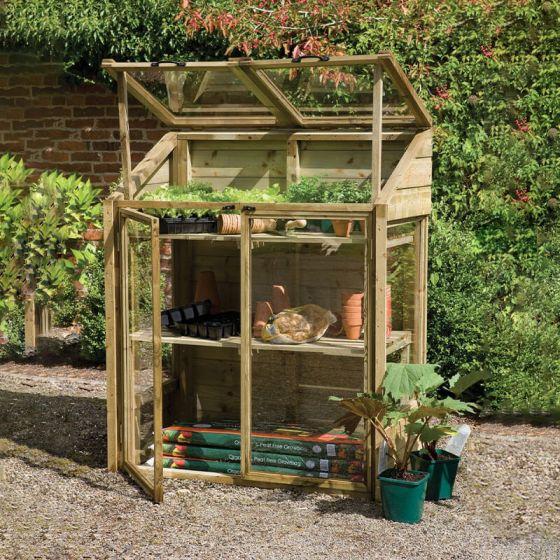
Forest Wooden Mini 4 × 2 growhouse
Best for: the smallest fixed footprint
A 1.2m-wide timber growhouse with two front doors, two independently opening glazed lids and two internal shelves. It trades walk-in access for a genuinely shallow 0.62m footprint.
What stands out
- Very shallow footprint
- Shelves and growbag-level space
- Independent lids for flexible access
Keep in mind
- Not walk-in
- Capacity falls quickly as plants grow tall
- 1.20 × 0.62m
- pressure-treated timber
- two shelves
- split lid

Forest Victorian 5 × 2 tall wall greenhouse
Best for: vertical growing space on a shallow patio
A 1.47 × 0.72m tall timber greenhouse with a back panel, double doors, adjustable shelving, two roof vents and one automatic vent opener. It uses height rather than garden depth.
What stands out
- Shallow footprint with full-height storage
- Adjustable and folding shelves
- One automatic vent opener included
Keep in mind
- Not walk-in
- Supplied unpainted
- 1.47 × 0.72m base
- pressure-treated timber
- styrene glazing
- two roof vents

Forest Wallscape 4 × 4 lean-to greenhouse
Best for: a compact timber lean-to
A timber walk-in lean-to with a 1.18 × 1.24m base, acrylic glazing, single door and large opening roof vent. Its open back is designed to sit against a suitable wall or fence.
What stands out
- Walk-in space within a short footprint
- Large opening roof vent
- Door can be fitted at either end
Keep in mind
- Needs a suitable supporting surface
- No floor is included
- 1.18 × 1.24m base
- pressure-treated timber
- acrylic glazing
- open back
| Option | Footprint | Interior format | Access | Ventilation |
|---|---|---|---|---|
| Forest Wooden Mini 4 × 2 | 1.20 × 0.62m | Two shelves and lower space | Front doors and split lids | Two opening lids |
| Forest Victorian 5 × 2 | 1.47 × 0.72m base | Adjustable tall shelving | Double front doors | Two roof vents; one auto opener |
| Forest Wallscape 4 × 4 | 1.18 × 1.24m base | Compact walk-in | Single end door | Large opening roof vent |
What a mini greenhouse does well
A mini greenhouse concentrates protected growing space into a shallow footprint. It can bring seed trays closer to the house, shelter herbs on a patio and create a transition area for young plants before they move outside. Because you stand outside it, almost the whole footprint can support plants.
The trade-off is limited flexibility. Shelves that are perfect for trays can obstruct tall plants. A small volume heats and cools faster than a walk-in greenhouse. Doors and lids open into the patio, so the working area may be larger than the closed dimensions suggest.
Choose the correct format
Low growhouse
A low 4 × 2 style uses shelves and a lower bay behind front doors. Opening lids give top access and release heat. It is the most efficient choice for propagation, salads and compact pots when height is not required.
Tall wall greenhouse
A tall 5 × 2 structure uses vertical space for several shelf levels. Folding or removable shelves are valuable because they allow the same greenhouse to accept taller plants later in the season. It needs wall height, door clearance and secure anchoring even though it is not walk-in.
Compact lean-to
A 4 × 4 walk-in uses more depth but gives a standing aisle and direct access to floor crops. It can be the better “mini” solution for a gardener who cannot bend over a low growhouse or wants to grow taller plants. An open-backed model needs a suitable wall or fence.
Measure open doors and lids
Mark the closed footprint, then open every moving part in the plan. Upward-opening lids may meet a window sill, pipe or low branch. Front doors can block a narrow side passage. A tall wall greenhouse may fit below the eaves but still need clearance above an automatic vent.
Keep a comfortable standing position in front. If you have to lean over furniture or step into a border to reach the back shelf, routine watering and pest checks become harder.
Plan the shelves by season
Assign each level a job. Upper shelves receive strong light and often warm first; lower shelves can be cooler and shadier. In early spring the structure might hold several trays. By late spring those plants need potting on, which multiplies the required area. In summer, one chilli or tomato can occupy the height previously used by several shelves.
Look for shelves that fold, remove or leave a lower bay clear. Measure the vertical gap as well as the width and depth. A headline capacity expressed in trays is less useful if the plants outgrow the shelf before they can move outside.
Glazing and safety
Styrene and acrylic glazing keep compact timber structures lighter and avoid large glass panes beside a busy patio. Check how each panel is held, how it is cleaned and whether replacements are available. Scratches reduce clarity over time, so use non-abrasive cleaning methods recommended for the material.
Inspect hinges, stays and catches. Lids need secure props, and doors should latch closed in wind. A lightweight structure with open glazing presents a much larger surface to gusts than its small footprint suggests.
Ventilation in a small volume
Mini greenhouses can overheat quickly. Opening lids or roof vents should be easy to reach and able to remain secure. An automatic opener can help on a compatible vent, but it should not be treated as the only safety measure. Leave space around openings and check the temperature at plant height.
During cold periods, close vents before evening when appropriate and avoid keeping foliage wet overnight. Insulation can slow heat loss, but it must not block all fresh air or sit against hot electrical equipment.
Watering without soaking the shelves
Small pots dry quickly, while lower shelves can stay damp after runoff. Use trays where appropriate, water individual pots rather than flooding the cabinet and check that timber and the supporting surface can drain. Remove standing water that encourages algae and pests.
If you add micro-irrigation later, keep every emitter visible and test the system with the doors open. One blocked outlet matters more in a tiny greenhouse holding young plants.
Position and securing
Choose a level surface with useful light and manageable wind. A wall can provide shelter, but a narrow gap may collect debris and prevent cleaning. Follow the manufacturer's fixing guidance; do not assume the weight of damp compost makes the structure secure.
Keep the greenhouse away from footballs, bins, doorways and busy circulation routes. On a balcony or roof terrace, structural loading, wind exposure and building rules require specific assessment rather than garden assumptions.
Which model fits which grower?
Choose the Forest Wooden Mini 4 × 2 for the smallest fixed footprint and straightforward tray access. Choose the Forest Victorian 5 × 2 when vertical shelving and adjustable space matter more than walk-in access. Choose the Forest Wallscape 4 × 4 when a compact standing aisle and floor crops justify the extra depth.
For broader patio planning, read best greenhouses for patios. If you are comparing mini space with a conventional walk-in, use the 6 × 4 greenhouse guide.
For the Forest mini shown here, the manufacturer's product information is a source for the included shelves and assembly documents. Compare those details with the actual plants you need to shelter, not simply the floor area.
Common questions
Frequently asked questions
Are mini greenhouses worth it?
They are worthwhile when the main need is protected space for seedlings, herbs and compact pots. They use little depth and warm quickly, but capacity and temperature can change fast, so ventilation and an organised seasonal plan matter.
What can I grow in a mini greenhouse?
Seed trays, young plants, herbs, salads, chillies and compact containers can work well. Tall tomatoes, cucumbers and large overwintered pots may outgrow fixed shelves unless the interior can be reconfigured.
Does a mini greenhouse need full sun?
It needs useful light but can overheat rapidly in intense sun. Choose a bright position you can ventilate and monitor, avoiding deep shade and places where reflected heat from walls makes summer control difficult.
How do I stop a mini greenhouse blowing over?
Place it on a firm level surface and secure it using the manufacturer's approved method. Do not rely on pots or loose weights, and keep doors and lids latched when unattended.
Is a wooden or metal mini greenhouse better?
Timber offers a traditional appearance and substantial framing, while metal can be slimmer and lower maintenance. The better option is the one with suitable glazing retention, access, ventilation and anchoring for the site.