
Ground and growing beds
Can a greenhouse go on soil?
Learn when an open-soil greenhouse layout is possible and why a freestanding frame still needs a level, stable, anchored perimeter.
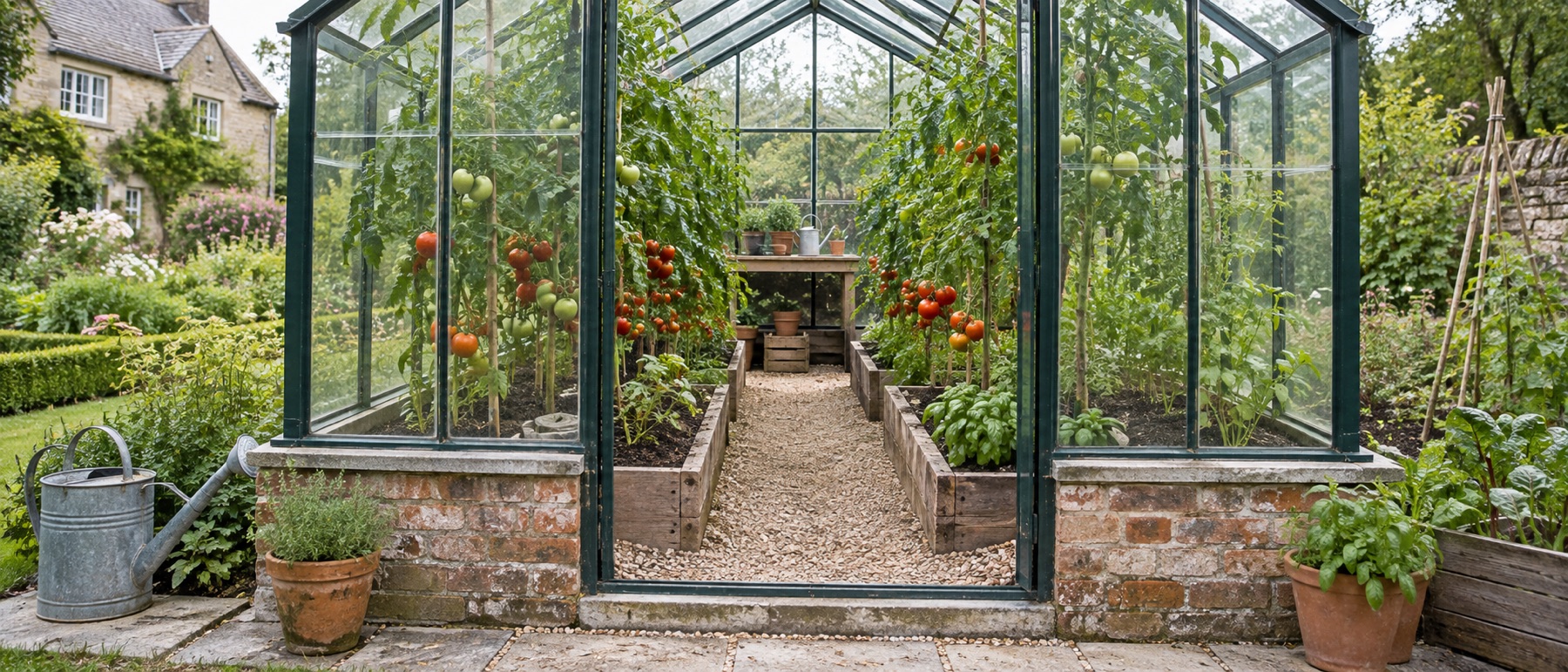
Keep the planted interior distinct from the structural support line.
Remove soft or organic material beneath any required foundation.
Confirm approved anchor methods and wind exposure.
Plan clean access, soil renewal and drainage inside.
Separate the growing surface from the structural base
“On soil” can mean two very different things. One is a greenhouse with planted soil beds inside a correctly supported perimeter. The other is a kit placed directly on uneven, organic ground without a foundation. The first can work with the right model and site; the second risks settlement, racking and unreliable anchoring.
Greenhouse frames are precision assemblies. A base that moves can stop doors sliding properly, loosen glazing and put stress into joints. The support line must follow the exact installation manual, even if most of the inside remains open earth.
Choose the exact frame before digging
Check whether the product includes a steel perimeter base, needs an optional base or has another ground detail. Read the support and anchoring diagrams, not only the sales headline. A supplied base frame does not mean the ground beneath it needs no preparation. The perimeter-base guide explains this distinction.
Mark the overall structure, doorway and bed positions. Allow room for a central path and for reaching both sides of the beds without stepping on them. If you intend to use a wheelbarrow or mobility aid, design the opening and path width around the actual equipment before selecting the greenhouse.
Test the ground
Identify topsoil depth, drainage, slope and any buried services. Soft, filled or waterlogged ground needs more than a quick levelling rake. The maker may allow an anchored ground perimeter in suitable conditions, or may require paving, concrete or another firm support. Follow the particular manual and get site-specific advice where conditions are difficult.
Avoid digging through significant tree roots or undermining nearby walls. A greenhouse can alter how rain reaches the soil, while the roof concentrates runoff along its edges. Direct water away from the structural base and keep wet soil from building up against vulnerable components.
Plan the growing beds
In-ground beds offer root volume for tomatoes, cucumbers and long-season crops. They are not maintenance-free. Test and improve soil as appropriate, remove persistent weeds and avoid overworking wet ground. Over time, crop rotation, adding organic matter or replacing problematic soil may be necessary. A defined path keeps feet off the beds and makes watering more controlled.
Containers remain a good alternative if soil quality is uncertain or you want to rearrange the greenhouse. A mixed layout—one soil bed and one staging side—can be a practical compromise. Our layout guide offers ways to allocate the floor area.
Secure the structure and protect access
The base and frame must be anchored using the manufacturer's system into a suitable substrate; soil beds do not provide an anchor by themselves. Plan the doorway threshold so the path remains safe in wet weather. Keep vents, gutters and outside glazing reachable. The anchoring guide covers the checks before glazing.
If in-ground planting is the priority but the site cannot support an approved perimeter foundation, consider raised beds, growbags or large containers on a paved or concrete floor. Do not trade structural stability for direct soil access.
Different product systems take different approaches: Canopia's Hybrid foundation guidance includes conditions for ground installation. Do not transfer that permission to another model; ask the actual maker to confirm its support and anchor method for the proposed soil.
Helpful products
Check the base system before planning beds
An included perimeter base can support an open interior only when installed on its approved foundation. Compare the supplied and optional base details for these models.
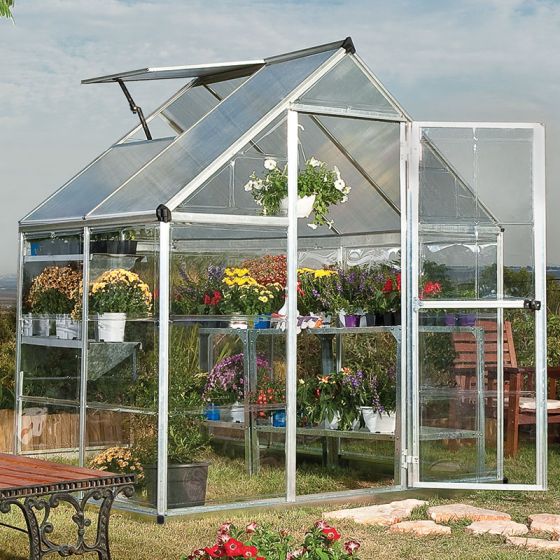
Palram Canopia Hybrid 6 × 4 greenhouse
Best for: a compact first walk-in greenhouse
A compact walk-in with a 1.85 × 1.25m base, diffusing twin-wall roof panels and clear polycarbonate sides. It is the most balanced fit here for a small garden that can still keep a central path.
What stands out
- Compact walk-in footprint
- Clear sides and diffusing roof
- Steel perimeter base included
Keep in mind
- Single 565mm door
- One roof vent means summer airflow needs planning
- 1.85 × 1.25m base
- aluminium
- polycarbonate
- one roof vent
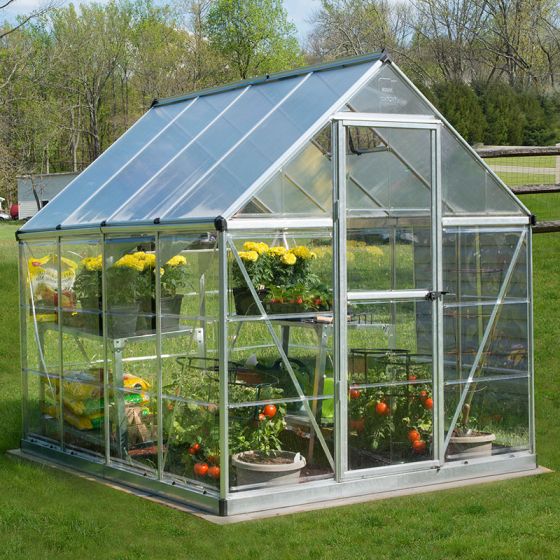
Palram Canopia Hybrid 6 × 8 greenhouse
Best for: more useful growing length
The same 1.85m width extended to 2.46m at the base. The extra length makes a more workable layout for staging plus floor crops if the site can spare the footprint and access around it.
What stands out
- Length for staging and tall crops
- Clear walls and diffusing roof
- Perimeter base included
Keep in mind
- Needs much more prepared base
- Door remains 565mm wide
- 1.85 × 2.46m base
- aluminium
- polycarbonate
- integrated gutters
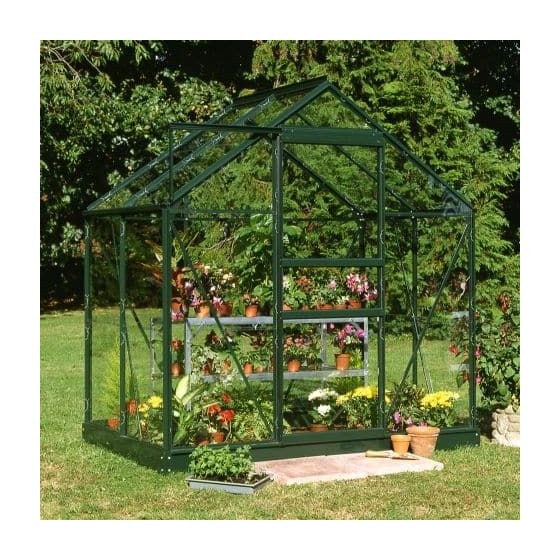
Halls Green Frame 6 × 4 greenhouse
Best for: toughened glass in a compact plot
A traditional-looking 6 × 4 with a green aluminium frame and large panes of toughened glass. It is the clearest fit if you want glass in a small footprint and accept a separate base.
What stands out
- Large-paned toughened glass
- Low-maintenance coated aluminium
- Roof vent and gutters included
Keep in mind
- Matching base costs extra
- Heavy panes need careful assembly
- 1.93 × 1.33m base
- green aluminium
- toughened glass
- optional base
Common questions
Frequently asked questions
Can I put a greenhouse directly on bare earth?
Do not assume that a frame can simply sit on soil. The maker's instructions must specify suitable support and anchoring. An open-soil interior is different from an unsupported perimeter.
Are in-ground greenhouse beds better than pots?
They offer more root volume and potentially steadier moisture, but require soil management and may limit layout changes. Pots are more flexible and easier to isolate if soil problems occur.
Will soil rot a metal greenhouse base?
Metal bases vary in finish and intended installation. Keep soil and wet compost away from parts the manual says must remain clear, and inspect corrosion-prone joints as part of maintenance.
What if the site is sloped?
Do not prop one side on loose bricks or soil. The perimeter needs a designed level support, potentially involving earthworks or professional foundation advice.
How do I control weeds and pests in open beds?
Start with clean, suitable soil, remove perennial weeds, rotate or refresh growing media as needed, and maintain hygiene and airflow. Open beds still need inspection and seasonal care.